The economics of Aston Martin’s 2026 Honda engine struggles
Aston Martin faces technical hurdles with the RA626H power unit, leaving the team with only three points after fourteen rounds. To address performance gaps, the FIA has allowed Honda to exceed the cost cap by an extra £14 million.

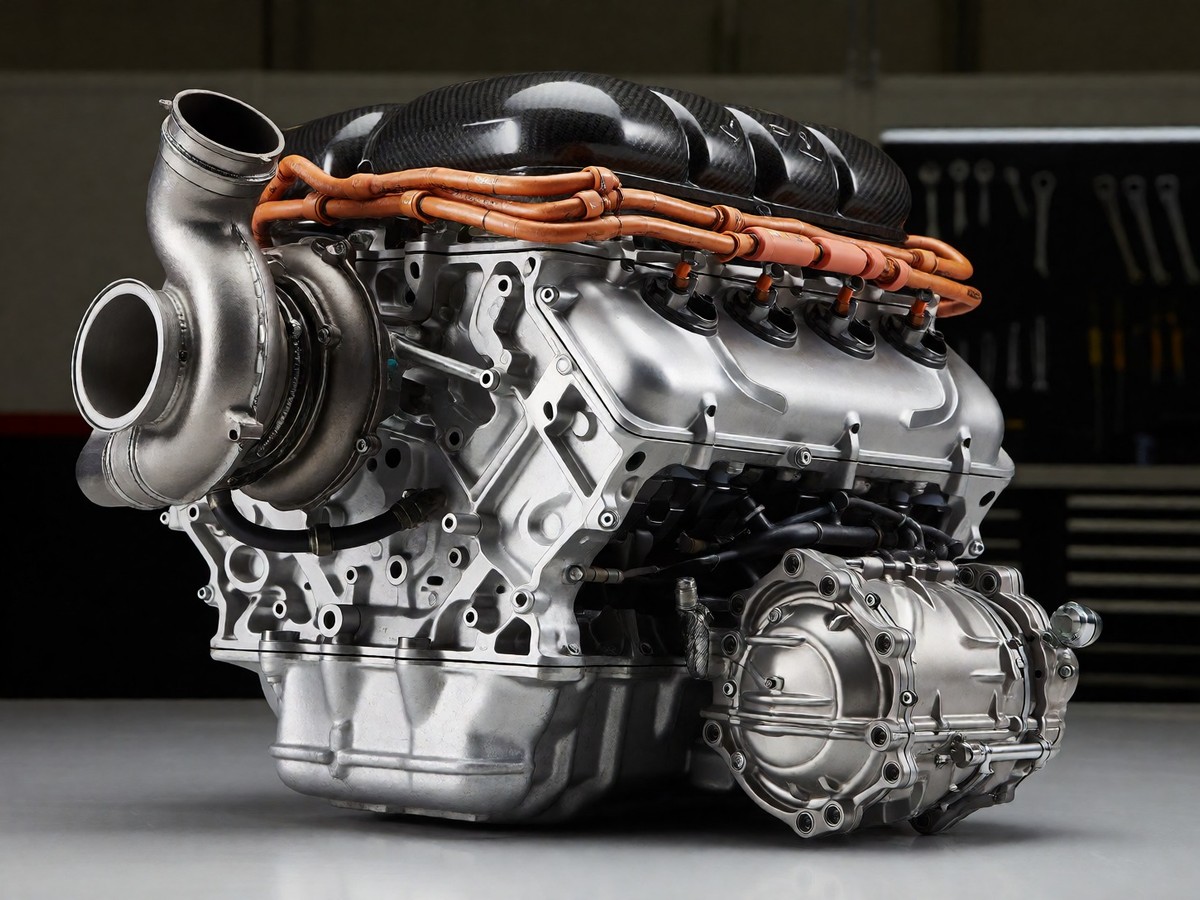
Aston Martin holds 3 points after 14 rounds of the 2026 Formula 1 season. This performance places the team 10th in the constructors’ championship. Fernando Alonso sits 19th in the drivers’ standings, while Lawrence Stroll’s team has yet to score a single point with its second driver. The RA626H engine suffers from severe vibration issues that caused multiple retirements during the early stages of the year. Honda is currently attempting to address the severe vibration issues in the RA626H power unit, which caused several retirements early in the 2026 season and left the team with only three points after fourteen rounds of racing. Shintaro Orihara, the Honda trackside general manager, said a Spec 2 upgrade introduced at Zandvoort provided a step forward in performance. This update gained between 0.05 and 0.1 seconds per lap, but this improvement remains insufficient to move the team out of the bottom third of the grid.
Technical challenges of the 355-kW power unit
The 2026 power unit utilizes a 355-kW motor. This design is very compact to fit the new chassis regulations. Engineers face difficulties developing a lightweight battery for this system. They must also manage the balance between a small engine and high power output. Koji Watanabe, the president of Honda Racing Corporation, says that everything is very difficult for the team. The team works to show results next year despite these technical hurdles.
The current regulations require a significant increase in electrical deployment. While the previous generation of hybrid engines generated 120 kW of electric power, the 2026 units provide 350 kW. This shift creates energy management challenges because batteries have limited charge and discharge capacities. Nikolas Tombazis, the FIA sporting director, says the FIA will implement additional measures before the start of next season to improve energy flow. These changes aim to prevent cars from decelerating abruptly on straights.
Leadership shifts at Honda
Honda replaced Tetsushi Kakuda with Yoichiro Fukao on October 1. Kakuda led the power unit program that delivered four drivers’ titles to Red Bull. Fukao has served as the deputy F1 project leader twice before, specifically in 2017 and 2022. This leadership change occurs mid-season rather than at a standard program checkpoint. You know that F1 development cycles usually follow a seasonal pattern, so this mid-season shakeup stands out.
The move functions as a way for Honda to demonstrate urgency without a public admission of failure. Fukao must manage the program during a period when Honda has already stated that no further major power unit updates are planned before 2027. The team seeks to convince Lawrence Stroll and Fernando Alonso that the second era of Honda in Formula 1 will succeed. The technical leadership change represents the fastest lever available to the manufacturer.
The ADUO system and cost cap relief
The FIA uses the Additional Development and Upgrade Opportunities, or ADUO, system to assist struggling manufacturers. This system allows manufacturers to develop their engines during the season if they fall behind the benchmark engine. The FIA evaluates the Internal Combustion Engine performance through an ICE Performance Index. This index considers engine speed and MGU-K contribution, but it excludes aerodynamic influence and fluid temperatures.
The level of assistance depends on the performance gap between a manufacturer and the best engine. If a manufacturer’s performance index is at least 2% but less than 4% behind the leader, they receive one homologation update this season and one for the following season. If the index is at least 4% behind the leader, the manufacturer receives two additional upgrades this season and two more for the following season. Honda is currently approximately 12% to 13% behind the leading engines.
The FIA allowed Honda to exceed the cost cap by an extra £14 million to address these power unit issues. This extra spending aims to protect the entertainment value of the sport by keeping the competition close. F1 reporter Tim Hauraney noted that teams allow this leniency to ensure the competition remains healthy. Honda needs to address its side of the technical struggle to remain competitive.
| Sponsor | Annual Value | Tier |
|---|---|---|
| Aramco | $75m | Title Partner |
| Maaden | $20m | Principal Partner |
| Cognizant | $15m | Global AI Services Partner |
| CoreWeave | $6m | Official AI Cloud Computing Partner |
| Cohere | $4m | Official Generative AI Partner |
Financial implications for Aston Martin
Aston Martin relies on substantial sponsorship revenue to fund its expansion and technical hires. The team has secured a $75m deal with Aramco as a title partner. Maaden provides $20m as a principal partner, while Cognizant contributes $15m for global AI services. Other partners include CoreWeave at $6m and Cohere at $4m. These funds support the team’s efforts to build a championship-winning car under the leadership of Adrian Newey.
The team’s points position affects its share of the centralized revenue pool. Because Aston Martin has only three points, its prize money for the following year remains low. This financial reality complicates the team’s ability to manage the costs of its aggressive expansion. The team’s commercial executive Jefferson Slack said the organization has exceeded its budget projections due to high interest.
The partnership with Honda remains a central part of the team’s identity. Lawrence Stroll rebuilt the team around the arrival of Honda as a works partner. This decision was based on the idea that the Honda name would signal competitiveness to sponsors and drivers. I conclude that Honda’s technical failure in the first half of 2026 forces a massive reorganization of their development strategy.
Regulatory shifts and the future of engines
The FIA is discussing a simpler engine for 2030 or 2031. These discussions include lower costs and the use of sustainable fuel. Liam Parker, the Formula 1 communications director, expects V8 engines to return within five to ten years. He believes the sport will reduce the electrical share of its power units in the coming decade. This would move the sport away from the complex hybrid systems used in 2026.
Sustainable fuel is already a requirement for the 2026 regulations. The fuel uses carbon from non-fossil sources to reduce the environmental impact of the sport. This approach aims to reduce fossil carbon without removing the internal combustion engine. Manufacturers spend several years designing these power units to work with specific fuel compositions.
The current regulatory framework requires long preparation times. Manufacturers must build new facilities and test equipment before any change takes effect. A confirmed change normally arrives years before the first race of a new era. Will the technical leadership change provide enough stability to prevent another mid-season crisis?
Historical context of Honda’s F1 involvement
Honda has a history of entering and exiting Formula 1. The company first entered the sport in 1964. Since the death of founder Soichiro Honda in 1991, the company has exited F1 three times as an engine supplier. It also exited twice as a team owner.
The partnership with McLaren ended in 2017 after the project struggled with the hybrid era. At that time, Honda president Takahiro Hachigo discussed the company’s focus on electrification and carbon neutrality. This exit followed a period where the engine was described as feeling like a GP2 motor. Honda later returned to the sport to partner with Red Bull, but that relationship also concluded in 2021.
The decision to return with Aston Martin follows a period of instability. Honda’s decision to build the current power unit follows a period where it had reversed its earlier decision to leave the sport. This stop-start sequence meant the manufacturer lost preparation time against rivals who used every month to prepare for the 2026 regulations.
The Newey era and the Aston Martin mission
Adrian Newey joined Aston Martin to design a car capable of winning championships. He is working on an entire overhaul of the AMR26 to prepare for the Belgian Grand Prix. Newey focuses on designing the car to suit the specific requirements of the power unit. Jefferson Slack describes Newey as a relentless and motivated designer.
The team’s mission is to become world champions, which requires a high-performing engine. Becoming a customer of another engine supplier would go against the goals of the technical department. Aston Martin remains committed to the Honda deal despite the current difficulties. The team also maintains its relationship with Mercedes for road car power units.
Martin Whitmarsh, the team’s CEO of performance technologies, said the road car ties to Mercedes remain unchanged. The Silverstone-based team is separate from the road car company owned by Lawrence Stroll. The team focuses on racing activities and the Honda partnership to win in Formula 1. The team has also secured the exclusive right to use the Aston Martin branding in perpetuity.