Ferrari pushrod suspension and 2026 energy management struggle
Ferrari utilizes pushrod actuation on the SF-26 to improve aerodynamic stability and airflow. This mechanical shift impacts ride height management, which proved critical when Charles Leclerc faced disqualification at the United States Grand Prix due to excessive plank wear.

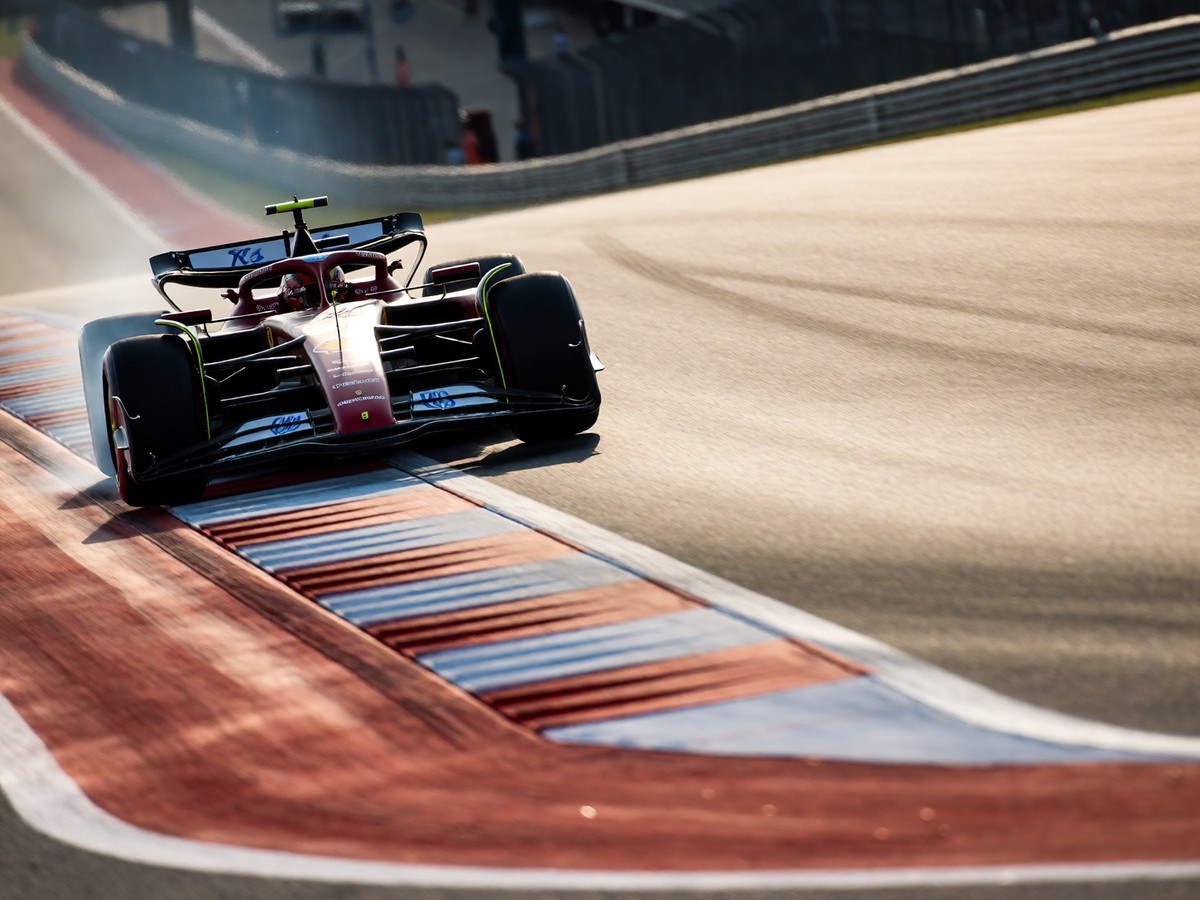
Ferrari uses pushrod actuation for both the front and rear suspensions on the SF-26. This is a change from the pullrod setup used in the previous season. The pushrod design moves the rockers to a higher position. Higher rockers clean the air before it reaches the floor boards and the underfloor. This setup minimizes the disruption of air at low levels. Mercedes and Red Bull also use pushrod suspension this year. Alpine and Cadillac still use pullrod for the front suspension.
Engineers adjust ride height by changing pushrod or pullrod length. Lower ride height increases downforce and lowers the center of gravity. A lower center of gravity improves turn-in and braking. However, a car that is too low will bottom out on the track. This causes the diffuser to stall and leads to a loss of downforce. The car also loses stability and produces sparks. Higher ride height gives the car more suspension travel for bumps and kerbs. When Leclerc approaches the aggressive kerbs at the Circuit of the Americas, the mechanical stiffness of his suspension determines whether the car maintains a stable aerodynamic platform or suffers a sudden loss of downforce.
The FIA monitors the thickness of the skid block under the car. The plank must be 10mm thick when new. The rules allow a maximum wear of 1mm. This means the minimum thickness is 9mm. Both Lewis Hamilton and Charles Leclerc failed this test at the 2025 United States Grand Prix. The FIA found their planks were excessively worn during post-race inspections. This violation of Article 3.5.9 e resulted in their disqualification from the race. Max Verstappen won the race, Lando Norris finished second, and Carlos Sainz finished third after the disqualifications. Alex Albon moved to ninth and Logan Sargeant moved to tenth. Sargeant scored his first-ever point in Formula 1.
The 2026 power units have a 350kW electrical limit. Teams manage this energy to maximize performance on long straights. To save energy, teams use engine maps that minimize deployment in power-limited periods. A power-limited period begins after the throttle reaches 98% or higher for one second. During this one second, the car is in a power-limited pending mode. In this mode, the battery deployment can be cut to a minimum of 200kW. After one second, the power can reduce by up to 100kW per second. Leclerc experienced a problem in China when he dropped to 95% throttle at Turn 10. This small lift reset the engine mode sequence. He could not enter the power-limited pending mode as planned. He ran at a higher power level for longer than intended and ran out of deployment on the back straight. His peak speed was 320km/h compared to 329km/h on his previous lap. He was 15km/h slower for much of the straight. Esteban Ocon also experienced this in China when he dropped to 97% throttle at Turn 13 and lost 0.3 seconds.
| Component | 2026 Specification/Limit |
|---|---|
| Minimum Weight | 724kg |
| Maximum Width | 190cm |
| Maximum Height | 95cm |
| Maximum Wheelbase | 340cm |
| New Plank Thickness | 10mm |
| Minimum Plank Wear | 9mm |
| Maximum Power Output | 350kW |
Ferrari’s SF-26 has a hole in the lower bodywork near the diffuser. This hole allows airflow to move to the inner wall of the diffuser. This is similar to the mouse hole slots used in older cars. This helps the airflow stay attached to the diffuser. Ferrari also uses three lateral vanes and a leading edge tower on the floor boards. These components fight the in-washing effect of the floor boards. The floor boards are designed to point inward to narrow the wake and help overtaking. The vanes help send some air outward to maintain floor efficiency. Mercedes uses bigger elements but lacks the leading edge tower used by Ferrari.
You might think the driver controls every aspect of the power delivery, but the 2026 software code dictates much of the energy deployment. This complexity makes qualifying counterintuitive. Leclerc noted in China that pushing hard in Q3 can confuse the engine side of things. He felt that losing energy was easier than gaining it. The regulations force drivers to execute software code rather than just driving a racing car on the edge of adhesion. Oscar Piastri said that even if drivers want to do something differently, they cannot because the system is programmed in.
Ferrari started Charles Leclerc on the red Soft tires at the United States Grand Prix. Most other drivers used the Medium compound. The Soft tire is the C3 compound. The extra grip on the Soft tire gave Leclerc better traction in the opening corners. However, the Soft tire has a higher degradation rate. Leclerc had to manage the tire to maintain his pace. Lando Norris tried to undercut Leclerc, but Ferrari extended his stint to maximize the tire’s performance window. Lando Norris’s McLaren had graining on the front. The thermal degradation at the rear was a bigger concern for McLaren. Max Verstappen’s Red Bull RB21 has a tendency to understeer. His front tire temperatures increased during the opening laps.
Ferrari’s decision to prioritize the 2026 car over the 2025 SF-25 development led to a fourth-place finish in the 2025 standings. The team is now focusing on the 678 project. The pushrod suspension on the 2026 car is a logical step for aerodynamic stability. The team is also using its 15% extra wind tunnel time to improve the new car. Will the new suspension architecture overcome the handling issues seen in previous seasons?