The tactical impact of engine mode deployment on qualifying performance
Fernando Alonso utilizes decades of technical experience to manage power delivery and reliability challenges. His ability to extract pace from power-deficient cars, such as his 2014 Ferrari, remains a vital component of his tactical approach to qualifying.

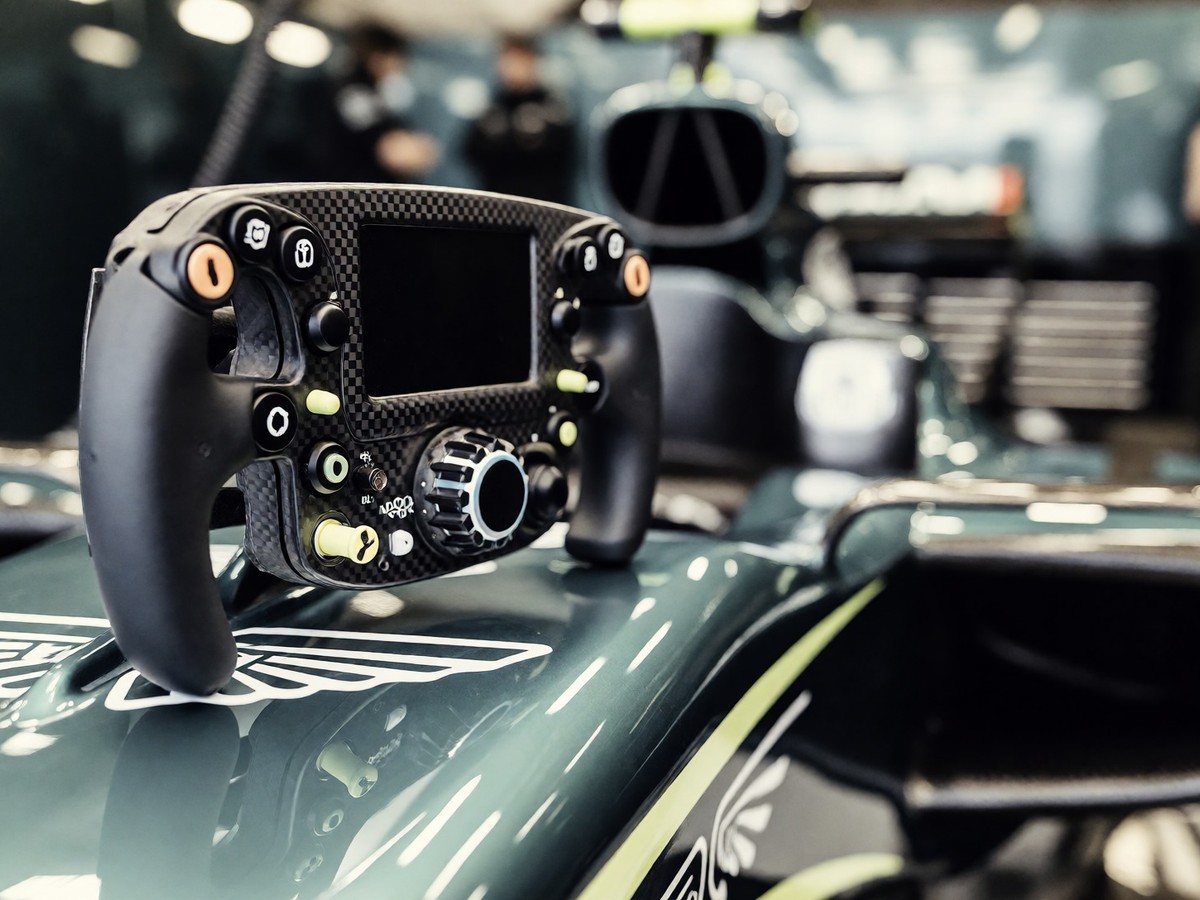
Technical variations in engine mode deployment impact the qualifying strategies of top-tier drivers who rely on precise power delivery. For Fernando Alonso, a driver who rates himself 9/10 in everything, these technical nuances define his approach to every single lap. He possesses a razor-sharp eye for detail and a reputation for brilliant tactical thinking. You know how much a driver relies on precise engine mapping to find the edge during a qualifying session. His career shows a pattern of managing shifting technical variables to compensate for car performance. He handles the intricacies of power delivery and aerodynamic changes through experience and tactical precision.
Managing power deficits in high-pressure sessions
Alonso experienced several seasons where his car lacked the necessary force to compete against the field. In 2008, his Renault car lacked power because of an imposed moratorium in development. He scored only nine points in the first seven races that season. Later, during his 2015 stint with McLaren, the Honda engine lacked power and overall speed. This left him vulnerable to being passed by competitors during races. He scored points only twice that season, earning a tenth in the British Grand Prix and a fifth in the Hungarian Grand Prix. This struggle resulted in a 17th place finish in the Drivers’ Championship.
The power struggles of the past provide a baseline for how he approaches current technical challenges. In 2014, his Ferrari car had less power than the Mercedes models. He achieved no race wins that year and finished sixth in the championship with 161 points. Despite this, he qualified faster than his teammate Kimi Raikkonen sixteen times by an average of more than half a second per lap. This ability to extract pace from a power-deficient car remains a hallmark of his driving style. He adapts his input to the specific limitations of the power unit.
| Performance Variable | Historical Context | Impact on Results |
|---|---|---|
| Engine Power | 2008 Renault / 2015 McLaren | Low points scoring / Vulnerability |
| Aero Grip | 2011 Ferrari | Difficult qualifying performance |
| Reliability | 2005 Renault | Championship win |
| Development | 2008 Renault | Early season power loss |
Reliability as a strategic variable
Reliability issues often force a driver to change their tactical approach during a race weekend. In 2005, Alonso won the World Championship because his Renault was more reliable than Kimi Raikkonen’s car. Regulation changes that prohibited teams from changing tyres during a race and required engines to last for two races before they could be changed favored his car. He won seven victories, six pole positions, and fourteen podium finishes to earn 133 points. He became the youngest World Drivers’ Champion as a result.
In contrast, engine failures have historically disrupted his momentum. In 2003, his Renault engine broke during the Grand Prix of Austria while he was running in the points. He also suffered an engine failure during the Japanese Grand Prix while he held second place. These failures forced him to rethink his race management. He had to balance the need for speed with the necessity of preserving the engine. This technical reality shapes how he manages his intensity throughout a race weekend.
The 2006 season also highlighted how technical regulations and reliability interact. He won six of the first nine races and led the championship with 84 out of a possible 90 points. However, an FIA-imposed ban on the Renault tuned mass damper device changed the competitive balance. This development, combined with increased development for the Ferrari, meant he tied on points entering the penultimate round in Japan. He won that race after Michael Schumacher retired due to an engine failure while leading.
Tactical intelligence and historical performance
Alonso’s ability to manage a car’s performance depends on his historical experience with diverse technical packages. In 2003, he became the youngest driver to achieve a pole position at the Malaysian Grand Prix. He also became the youngest race winner at the Hungarian Grand Prix. He finished that season in sixth place with 55 points. His early career at Minardi in 2001 saw him finish tenth in the German Grand Prix despite driving a non-competitive car. These early experiences built the tactical foundation he uses today.
His time with Ferrari demonstrated his ability to extract performance from conservative designs. In 2011, his car lacked aerodynamic grip and tyre handling during qualifying. He still extracted additional pace to claim ten podium finishes. He won the British Grand Prix after a strategy error from Red Bull. He out-qualified his teammate Felipe Massa fifteen times that year and finished fourth overall with 257 points. His experience in managing different tyre compounds and car characteristics remains a vital asset.
In 2012, he entered the season-ending Brazilian Grand Prix 13 points behind Sebastian Vettel and needed to finish third and for Vettel not to score points for a third championship. He finished second while Vettel finished fourth, despite spinning on the opening lap, which resulted in him finishing as runner-up with 278 points. His ability to recover from mistakes and manage the gap to rivals is a key part of his tactical profile. He uses every available piece of information to optimize his performance.
Navigating technical regulation shifts
Changes in technical regulations frequently alter the way a driver approaches a weekend. Alonso has driven under many different sets of regulations over a quarter of a century. He has expressed dissatisfaction with certain modern regulations. In 2024, he noted his lack of happiness with the current rules. He sees the potential move to a 60:40 split of V6 and electrical power as a positive step. This suggests he views technical shifts as opportunities to adapt his driving style.
The transition from the high-performance eras of his early career to the current hybrid era requires constant adjustment. In 2008, his Renault car lacked power because of a development moratorium, yet he was able to improve his performance later due to aerodynamic developments. He won in Singapore and Japan after those changes. He scored 43 points in the final five races of that season. This shows his capacity to adjust to a car as its technical characteristics evolve.
He also navigated the complexities of the 2007 season with McLaren. He achieved four victories in Malaysia, Monaco, Europe, and Italy. He led the championship until Lewis Hamilton overtook him. He finished the season third with 109 points. He lost the title because Hamilton finished second more often than he did. These points-scoring nuances show how much he values every single placement in the standings.
The importance of technical development
Technical development cycles dictate the trajectory of a driver’s success. In 2009, his Renault car was noncompetitive because it lacked a dual diffuser system and outright speed. He scored 26 points and finished ninth in the championship. He also eschewed an aerodynamic front wing because he did not believe it would help him. This decision shows his willingness to reject certain technical solutions if they do not suit his driving style.
In 2013, he drove an aggressively designed Ferrari. This allowed him to win in China and Spain. However, he became slower than Vettel after a change in tyre compound at the German Grand Prix. Front and rear bodywork components intended to improve his car’s performance were ineffective. This highlighted the difficulty of managing a car when technical updates fail to deliver the expected results. He finished that year in second place with 242 points.
His ability to adapt to technical changes remains a core part of his competitiveness. He has moved from the high-revving engines of his Renault days to the complex hybrid systems of today. His decision to stay in Formula 1 stems from a "fire inside" and the desire to continue competing at the highest level. He values the technical challenge of the sport as much as the racing itself.
Experience in the modern era
Alonso is the first man to reach 400 Grand Prix starts. This longevity provides him with a depth of experience that few other drivers possess. His time with Alpine in 2021 showed he can still achieve podium finishes. He returned to the podium that year despite facing poor reliability. His performance in his first season with Aston Martin included eight podiums. He continues to use his experience to guide his team through technical transitions.
The technical leadership at Aston Martin also influences his approach. The presence of Adrian Newey on the team provides a new level of aerodynamic expertise. Alonso hopes this collaboration helps him return to winning ways. He seeks a quick car to enjoy the racing, as he believes drivers need competitive machinery to perform. His focus remains on the technical direction of the team.
| Team Period | Key Technical Challenge | Resulting Performance |
|---|---|---|
| Renault (2003-2006) | Engine reliability/Mass damper | Double World Champion |
| McLaren (2007-2009) | Power deficit/Aero issues | Competitive but inconsistent |
| Ferrari (2010-2014) | Power deficit vs Mercedes | Multiple podiums/Runner-up |
| Alpine (2021) | Reliability issues | Podium finishes |
| Aston Martin (2022) | Current technical platform | 8 podiums |
The 2026 season and Aston Martin
The 2026 season represents a period of significant transition for Aston Martin. Mike Krack, the team’s Chief Trackside Officer, views Alonso’s decision to re-sign for 2027 as a strong signal of trust in the team. He notes that the team went through tough times at the beginning of the project when they could almost not drive. He believes the presence of both Alonso and Lance Stroll provides motivation and leadership.
Alonso’s commitment to the team is tied to the trajectory of their technical development. He has seen the team occupy the back of the grid during difficult periods. He also sees the potential in the team’s current direction. His decision to stay is a vote of confidence in the engineers and the technical path they have chosen. He wants to be in a position to win again.
Will the technical direction of the car satisfy his drive for victory? The team continues to work on improving its performance through technical innovation. Alonso remains focused on the data and the car’s response to his inputs. He relies on his tactical knowledge to maximize the results during a difficult season.
Future prospects and technical evolution
The future for Alonso at Aston Martin depends on the team’s ability to deliver a competitive package. He has expressed a preference for certain technical directions, such as the power distribution in future engines. His ability to provide feedback to engineers is a vital part of the team’s development. He uses his vast experience to help refine the car’s behavior.
Alonso’s career has been defined by his ability to navigate technical hurdles. From the reliability struggles of 2005 to the power deficits of 2014 and 2015, he has consistently found ways to remain competitive. He does not let technical setbacks derail his tactical planning. He remains a driver who thrives on the challenge of mastering a complex machine.
His decision to remain in Formula 1 is driven by a desire to compete. He finds enjoyment in the racing and the technical struggle of the sport. As Aston Martin continues to evolve, Alonso’s tactical expertise will remain a central part of their effort to move up the grid. He continues to prove that experience is a powerful tool in a sport dominated by technical precision.