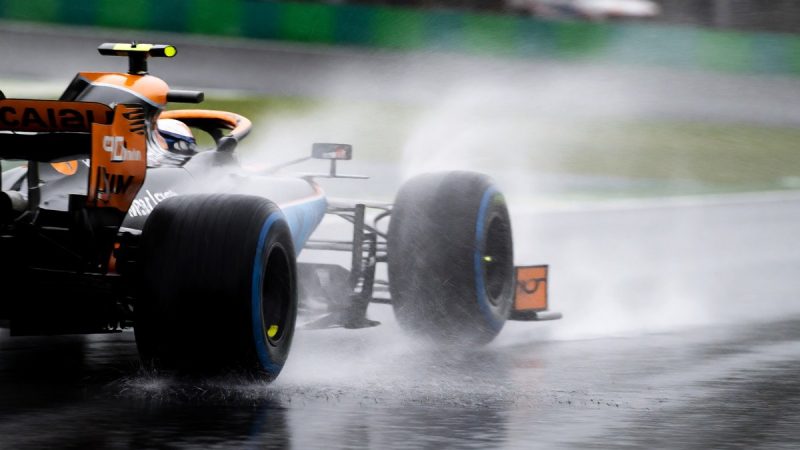
Verstappen’s Red Bull tire warm-up vs Leclerc’s Ferrari heat buildup
Max Verstappen's ability to manage tire integrity through extreme heat will outperform Charles Leclerc's soft-tire-dependent approach for Q3 lap one grip at Interlagos. The 60C track temperature and 46% drop in micro-roughness create significant thermal challenges for tire management.

The thermal intensity of the Interlagos asphalt
The black asphalt at Interlagos absorbs much more solar heat than the previous washed-out grey surface. Early afternoon temperatures on Thursday reached 60C. This heat creates significant thermal challenges for tire management. Micro-roughness on the surface dropped 46% compared to last year. Macro-roughness shows a 30% drop. These figures suggest the track provides less grip than the previous season. This loss of grip results in more sliding and higher tire temperatures. Higher track temperatures directly impact tire temperatures and amplify any thermal degradation.
Thermal degradation is a major factor for performance because excessive heat causes the polymer chains in the rubber to absorb energy. This energy causes a rupture at the surface, a condition called "blistering". If temperatures are too low, the polymer chains lose thermal energy and become ordered and stiff. This causes sections of the rubber to fall off during the race, a condition drivers call "graining".
Tire physics and the mechanics of grip
Two ways exist for a tire to generate grip: indentation and adhesion. Both mechanisms involve the viscoelasticity of rubber deforming asymmetrically to generate a friction force. Indentation occurs where the track’s roughness excites the rubber. Adhesion occurs where a molecular bond forms between the rubber and the track. The roughness of the track affects the amount of friction force generated. If the friction force is too low, the tire will skid over the surface and wear away. This increases degradation and shortens the wear life of the tire.
Heat also causes internal pressure to rise according to the formula P = nRT. This increase in pressure reduces the contact patch where the rubber touches the track. A smaller contact patch means less grip and forces drivers to slow down. Managing these variables requires precision in thermal dynamics and tire stability.
2026 tire specifications and Pirelli compounds
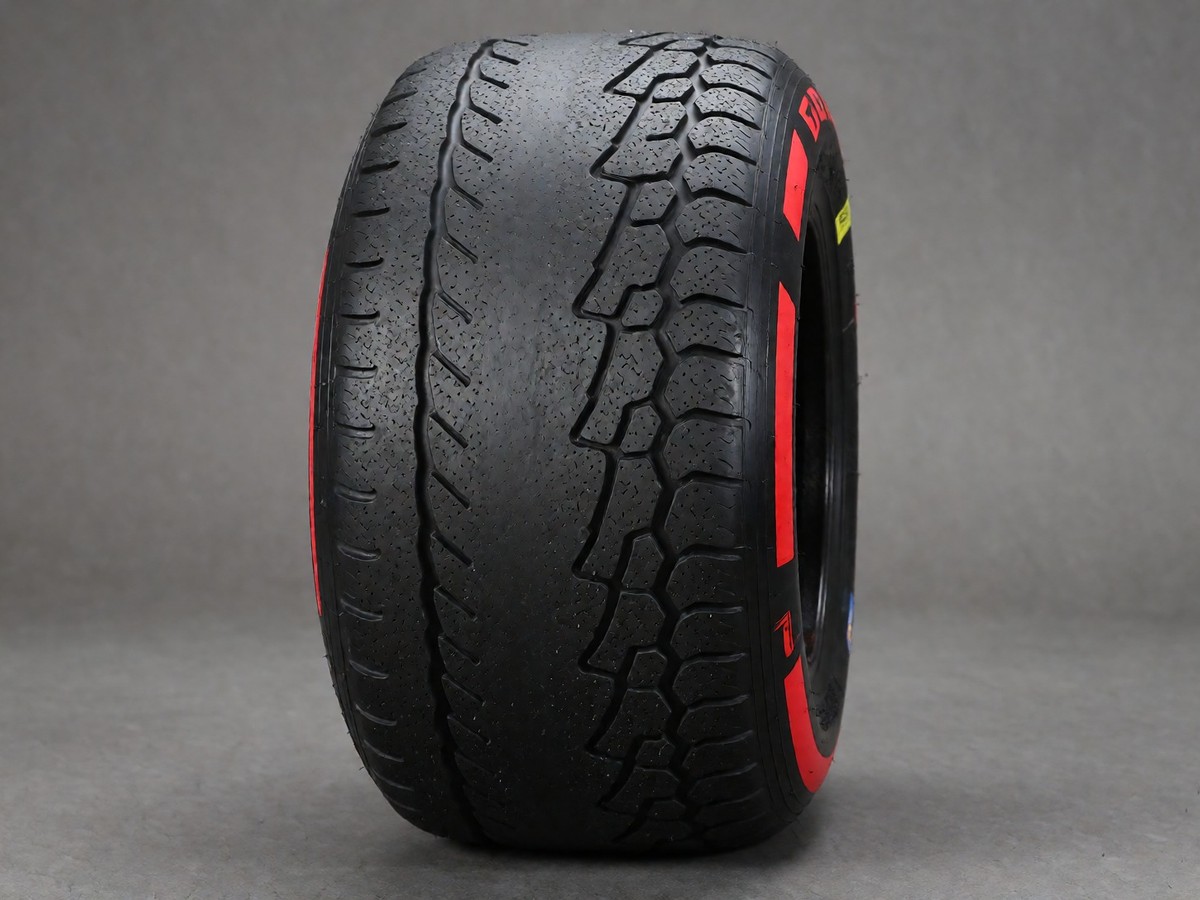
Pirelli provides three dry weather compounds for the Brazilian Grand Prix: the C2 hard, the C3 medium, and the C4 soft. This selection is one step harder than the compounds used in 2024. The soft compound provides the highest grip but wears out quickly. The hard compound lasts longer but provides less grip. Drivers receive two sets of hards, three sets of mediums, and eight sets of softs. An extra set of softs is reserved for those who reach Q3.
The 2026 regulations changed the tire profile significantly. The wheel rims stay at 18 inches, but the tires are narrower. The front tread is reduced by 25mm and the rear tread is reduced by 30mm. For a standard three-day race weekend, each driver gets 13 sets of dry tires. In a dry race, they must use at least two different slick compounds.
| Compound | Color | Characteristics |
|---|---|---|
| Soft | Red | Maximum grip, fast warm-up, high wear |
| Medium | Yellow | Balanced grip and longevity |
| Hard | White | High endurance, slower warm-up |
Sensor technology and real-time telemetry
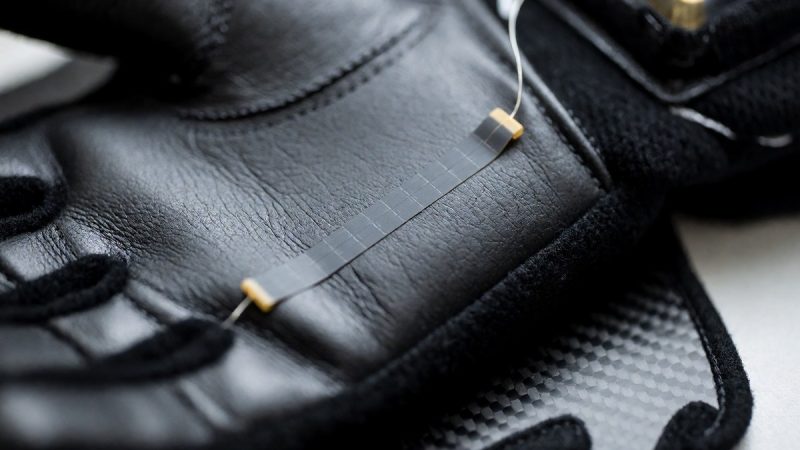
The FIA TPMS equipment includes a wheel sensing unit that transmits data wirelessly to a remote receiver. This unit sends pressure measurements, rim temperature, internal air temperature, and inner carcass temperature. Each sensor has a unique serial number to distinguish readings between individual tires. Inside every TPMS sensor, a pressure cavity tracks changes in air pressure in real time. This sensor uses a microcontroller, an RF transmitter, and a temperature sensor. A tiny battery powers the sensor and lasts between five and ten years.
To save power, the sensors sleep when the car is parked and wake up with wheel movement. Sensors transmit new data every 30 to 60 seconds while driving, but they may signal more frequently during rapid changes. Pirelli uses Cyber Tyre technology to embed sensors in tires to transmit real-time data on pressure, temperature, and wear. This telemetry facilitates data-driven decisionmaking for racing strategies. The Motor Racing Telematics market integrates 5G and edge computing to enable low latency data exchange.
Technicians follow specific steps to replace or install these sensors:
- First, the technician identifies the vehicle year, make, and model.
- Second, the technician reads existing sensors by checking the sensor ID, pressure, temperature, battery status, and frequency.
- Third, the technician programs the new sensor using options like "Auto Create", "Copy by Activation", or "Copy by Input".
- Fourth, the technician installs the sensor.
- Fifth, the technician remounts the tire.
- Sixth, the technician inflates the tire to spec and seats the bead.
- Seventh, the technician installs the wheel back onto the vehicle and torques the lug nuts to approximately 4 Nm.
- Finally, the technician performs the relearn procedure.
| Feature | Direct TPMS | Indirect TPMS |
|---|---|---|
| Hardware | Physical sensor in tire | ABS wheel speed sensors |
| Data Source | Pressure transducer | Rotational speed differences |
| Installation | Requires sensor programming | Requires system reset |
2026 power unit and aerodynamic regulations
The 2026 power units rely on electrical energy for significant performance. The electrical side of the power unit deploys 475 bhp under acceleration. The FIA reduced the maximum permitted recharge from 8MJ to 7MJ to reduce excessive harvesting. Peak superclip power is 350kW, which reduces the maximum superclip duration to approximately 2 to 4 seconds per lap. MGU-K deployment is 350kW in key acceleration zones and 250kW in other parts of the lap.
The 2026 regulations also produce smaller and lighter cars. The minimum weight is 724kg, the wheelbase is 340cm, and the width is 190cm. The FIA predicts a 30% reduction in downforce and a 55% reduction in drag. Drivers use active aerodynamics to manage these changes. They switch between Z-mode for downforce and X-mode for low drag. The new rear wings have three elements that open to shed drag, while the front wing has a two-element active flap to balance the car.
Verstappen’s management of thermal loads
Max Verstappen manages extreme thermal and physical challenges effectively. At COTA, he used a medium-soft tire strategy on bumpy asphalt that peaked at 47 degrees centigrade. He completed a 15-lap run on mediums. In Hungary, Red Bull ran a 29-lap stint on soft tires. This strategy yielded second place despite the car’s difficulties.
Verstappen’s ability to manage tires in high-heat environments is a hallmark of his performance. His team remains operationally sharp, which allows for aggressive tactical moves. In Hungary, Red Bull executed a strategy that kept him on softs for 37 laps, a move that surprised Ferrari. His ability to control the tires despite the extreme conditions shows a high level of technical management.
Leclerc’s soft tire reliance and humidity risks
Charles Leclerc often relies on soft tires for immediate grip. At COTA, the soft tire gained nearly two meters in the sprint from 0-150kph at the start. This choice gained him nearly half a grid position. However, in Malaysia, starting on soft tires in damp conditions led to a drop from second to last.
The track surface in Malaysia was old and presented as a bed of jagged rocks with very little rubbery bitumen binding it together. This surface offers low chemical grip but high degradation as the jagged asphalt shreds the tire. Water in the holes of the tarmac makes the soft tire choice risky when the surface appears dry but holds moisture. Leclerc’s reliance on the soft tire to find immediate grip can backfire when the thermal management or the moisture levels change.
Mathematical modeling and the Q3 verdict
Modern tire degradation analysis uses machine learning and telemetry to predict race outcomes. Advanced predictive models achieve high accuracy, such as a regression R2 of 0.847 and a classification accuracy of 92.3% for degradation categories. Teams use over 50 tire performance indicators, including temperature gradients and pressure variations. The Skewed T model performs best in terms of predictive accuracy, beating the base model by nearly a tenth. During the 2025 Austrian Grand Prix, the Skewed T model achieved a root mean squared prediction error of 0.325, while the ARIMA(2,1,2) model recorded 0.613. In stint 2 of that event, when an extreme outlier exists in the positive direction, the Skewed T model shows a 0.316 CRPS while other models range from 0.377 to 0.396. For Lewis Hamilton, the hard compound tires degraded at 0.054 seconds per lap and the medium compound tires at 0.060 seconds per lap.
You already know that real-time pressure data changes how teams plan their pit stops. The thermal environment at Interlagos will force a choice between instant grip and long-term stability. The 60C track temperature and the 46% drop in micro-roughness create a scenario where the tire’s polymer chains will struggle with excessive heat. Verstappen’s ability to manage tire integrity through long stints and extreme heat will outperform Leclerc’s soft-tire-dependent approach for Q3 lap one grip at Interlagos.