McLaren MCL40 front suspension geometry changes
McLaren transitioned to a push-rod front suspension for the MCL40 to accommodate 2026 aerodynamic regulations. Chief designer Rob Marshall notes the new front wing real estate allows wishbones to manage airflow more effectively than the previous pull-rod setup.

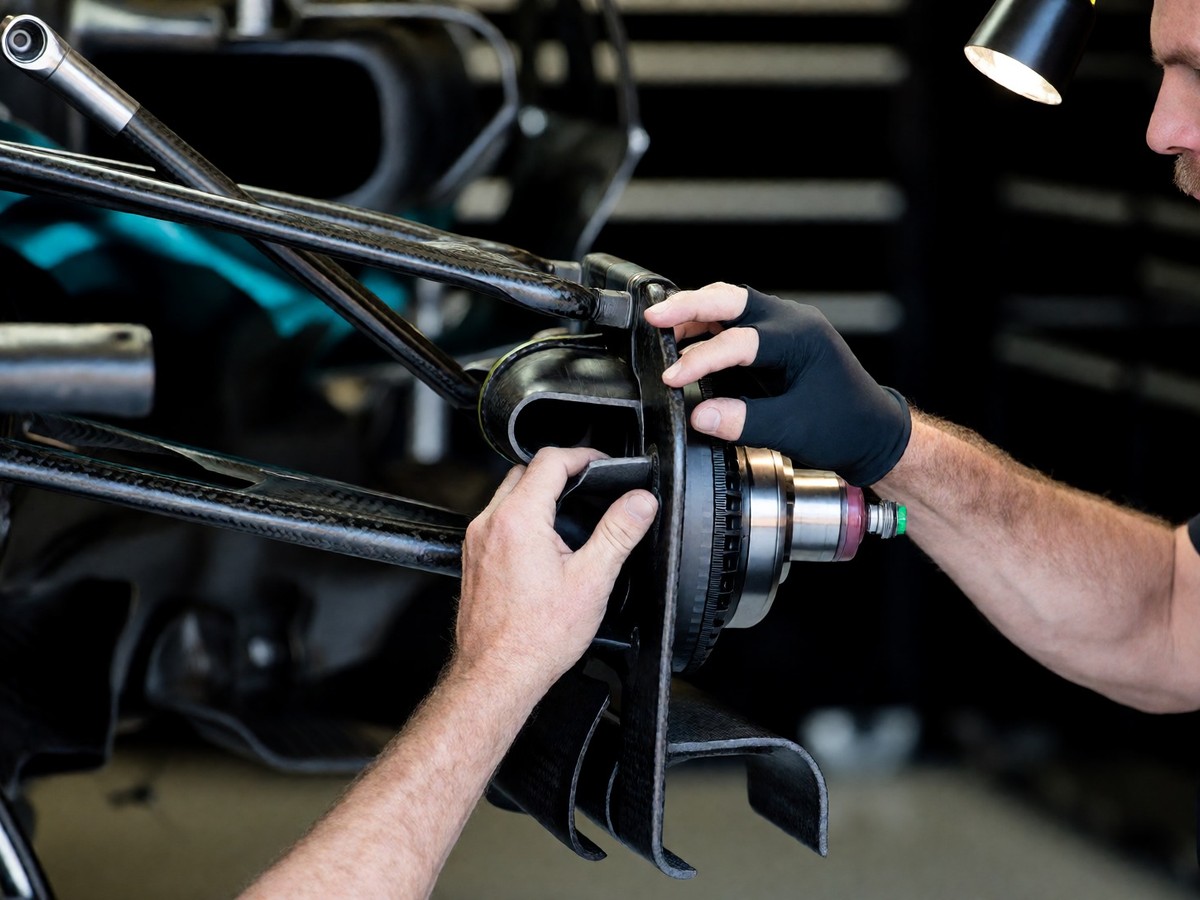
McLaren switched to a push-rod front suspension for the MCL40, reversing the pull-rod configuration used on the MCL39. This mechanical shift occurred because the 2026 regulations changed how the front wing interacts with the car. Rob Marshall, the chief designer, explains that the choice between push-rod and pull-rod depends on the aerodynamic package. The new regulations provide more real estate on the front wing. This allows the wishbones to manage airflow without the pull-rod needing to pick up flow in the central section of the nose. You likely know the MCL39 was the championship winner, but the MCL40 is a clean sheet design. The team has not used a push-rod front suspension since 2021. This change aims to control the platform while the team pursues local aerodynamic gains.
Detailed mechanical geometry
The front suspension geometry uses a tightly packaged arrangement to manage the car. The upper and lower wishbone pick-up points sit close together to control platform behaviour. The steering arm runs independently and ahead of the first lower suspension member. This lower member does not form part of a conventional wishbone. Instead, the rear leg of the upper wishbone mounts higher on the front wheel upright. This proximity between the upper rear leg and the lower mounting point helps the team control the platform. The steering arm runs in parallel to the first lower suspension member. These lower members sit back along the lower edge of the chassis bulkhead. This complex arrangement of linkages creates a sharply angled appearance at the front corner.
Aerodynamic drivers of the design
The aerodynamic requirements of the 2026 regulations drove the decision to change the suspension. Because the 2026 regulations removed the ground-effect tunnels and replaced them with a flatter floor and a larger diffuser, the engineering team had to redesign every single component to maintain downforce. The nose of the MCL40 droops noticeably lower than previous models. This design manages airflow into the front wing and the underbody. The front wing features a curvaceous shape that lifts at the outboard sections. This shape helps trim the front wheel wake. The endplates on the wing include a small cut-out on the top edge. This cut-out manages both in-wash and out-wash to contain the wake from the tyres. This prevents turbulence from the tyres from entering the underbody area. The footplate features a standard vortex tunnel. This tunnel squashes at the trailing edge to fire airflow outboard. This action enhances the out-wash wake management.
Sidepod and cooling packaging
The MCL40 uses a heavy sidepod undercut to manage airflow. This undercut shortens the path of the airflow toward the upper surface of the diffuser. The top side of the sidepods has a ramp. This ramp tucks in at the rear to allow two streams of airflow to merge. These streams feed the Coke bottle area of the car. This process pressurises the top surface of the diffuser. This increases the pressure differential between the diffuser and the underside to create downforce. The team also shrank the sidepod inlets to extreme proportions. This was possible because the engineers spread the cooling loads across the airbox and the engine cover. This packaging depends on the Mercedes-AMG F1 M17 E Performance power unit architecture.
Technical specifications of the MCL40
| Component or Specification | Data and Details |
|---|---|
| Minimum Car Weight | 768kg |
| Weight Reduction vs MCL39 | 30kg |
| Width Reduction vs MCL39 | 100mm |
| Power Unit | Mercedes-AMG F1 M17 E Performance |
| MGU-K Output | 350kW |
| Fuel Type | 100% sustainable |
| Gearbox Type | Eight-speed seamless-shift |
| Front Suspension | Push-rod |
The 2026 regulatory reset
The 2026 regulations forced a complete redesign of the McLaren challenger. Every nut and bolt on the MCL40 differs from the MCL39. The car is approximately 100mm narrower and 30kg lighter than its predecessor. The new regulations also deleted the MGU-H from the power unit. The power split between combustion and electric components is roughly 50/50. McLaren engineers had to work within fixed engine and gearbox dimensions. This left only 150mm to 300mm of car length for free design. Andrea Stella, the team principal, called this the biggest new-car project he has ever been part of. The team had to manage a massive redesign of the chassis, power unit, and tyres simultaneously.
Aero balance and mid-season evolution
The MCL40 struggled with aerodynamic consistency during the early part of the 2026 season. Oscar Piastri described the MCL40 as having no real strengths. He noted that the car ran at a deficit to Ferrari and Mercedes in all facets. The team introduced a new front wing in Canada to improve outwash and floor loading. The drivers reverted to the old wing during a sprint weekend because of the implementation process. After the team refined the endplates, they reintroduced the new wing in Barcelona. This version helped the team unlock floor downforce and improved the aero balance. Lando Norris took a podium in Barcelona using this revised package. The bargeboards also use a two-piece solution. A vertical leading edge piece feeds into a triangular second board. This second board angles inward to capture out-wash flow and direct it around the sidepods. A horizontal stay holds this assembly to the chassis.
Performance results and testing
McLaren tested the MCL40 in a black and silver livery at the Circuit de Barcelona-Catalunya. The team did not run on the first day of the Barcelona test. They chose to complete the shakedown later to follow an ambitious development schedule. The MCL40 uses some degree of rake to increase diffuser space. This means the rear ride height is higher than the front. This can provide more suspension travel and other benefits. The team wants to spend time understanding the car before they change the specification. This follows the prudent approach of Andrea Stella. Will the new front wing package finally provide the consistency the team needs to defend the constructors’ title?