Red Bull RB22 suspension struggles in Mexico
Max Verstappen describes the RB22 as a disaster due to mechanical disconnects between the chassis and tyres. Aggressive anti-dive geometry at high-altitude circuits like Mexico City causes unsprung mass oscillations that reduce tyre contact patch pressure and grip.

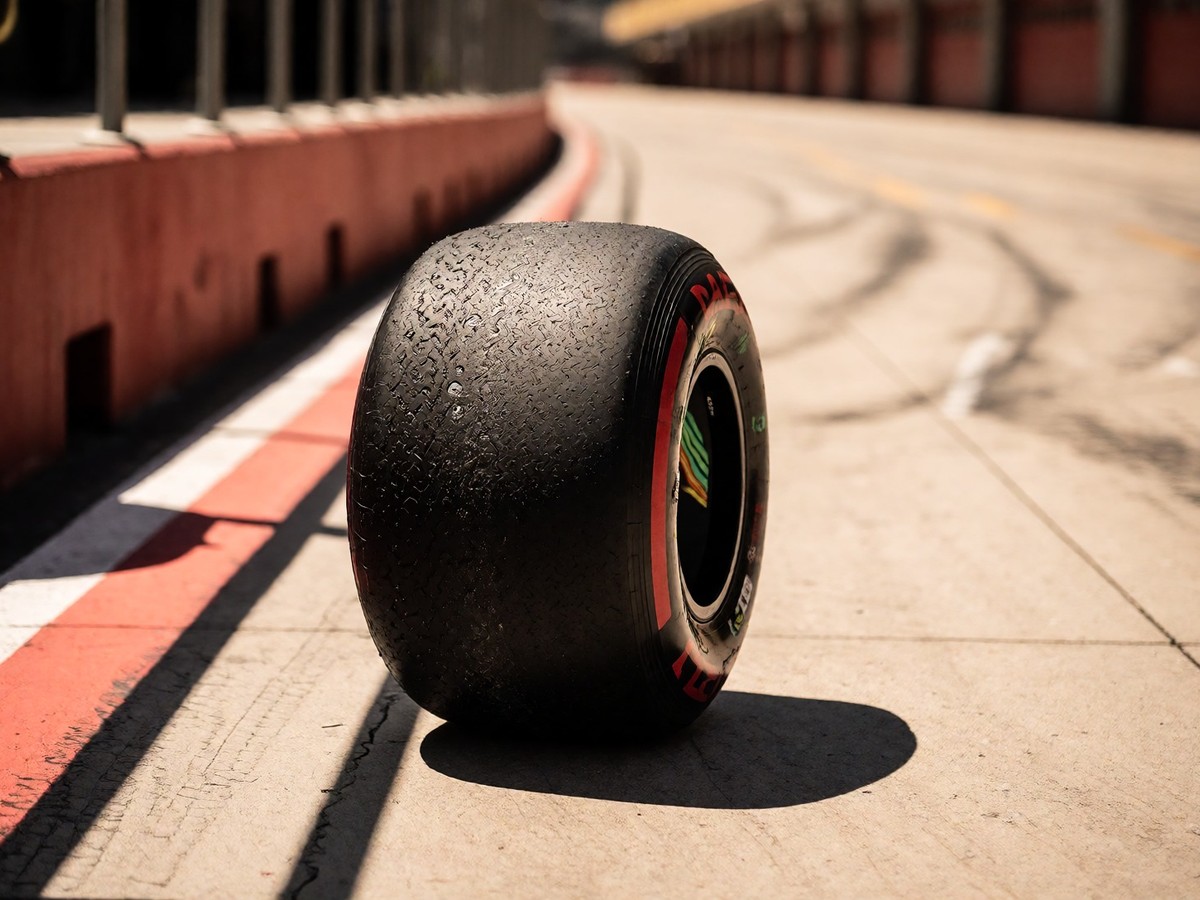
Max Verstappen describes the RB22 as a disaster during the recent 2026 campaigns. The Red Bull driver struggles with a car that fails to provide consistent grip and suffers from massive tyre degradation. While the team works to correct a basic problem with the RB22, the mechanical relationship between the chassis and the tyres remains broken. The suspension system does not interact with the tyres correctly, which causes significant balance issues during all cornering phases. These problems become even more obvious when the car encounters the unique demands of high-altitude circuits.
The physics of anti-dive geometry
Anti-dive geometry involves the inclination of control arms in the side view to minimize the pitching motions of the sprung mass during acceleration and braking. This design focuses the inclination of the control arms towards a common instantaneous centre, which defines a pitch centre for each axle. During deceleration under braking, inertial forces generate a pitching moment around the Centre of Mass. This displacement changes the ride height at each end of the vehicle. As the vehicle pitches, the sensitivities of underbody air flow cause the aerodynamic loadings at each axle to change.
Engineers use anti-geometry to produce a moment in opposition to the fundamental pitching moment generated through longitudinal acceleration. The pitch centres act as the virtual points of application of force generated at the contact patch onto the sprung mass. The magnitude of anti-pitching effects is measured as a percentage of the total pitching moment. A 100% anti-dive value means the braking force works directly against the centre of gravity, theoretically preventing all displacement of the sprung mass.
The location of the pitch centre defines the radius of the pitch centre from the Centre of Mass. This location also defines the direction of velocity and force vectors. A larger angle of the normal line relative to the ground plane increases the magnitude of the vertical force component. This vertical force also lifts the chassis. In sharp braking applications, this sudden loading can introduce an oscillation in the unsprung mass. This oscillation reduces the average contact patch pressures and creates a peaky feeling in the tyre.
Red Bull’s multi-link suspension design
The Red Bull RB22 employs a multi-link arrangement at the front. The design includes an upper forward link mounted high and an upper rearwards link positioned lower. This specific configuration resists the dive of the car under braking. By resisting dive, the suspension limits the rear ride height increase and the resulting downforce loss. This design aims to provide a more stable aerodynamic platform.
The multi-link arrangement uses separate attachment points for the various suspension links. While this increases weight, it allows the links to work more independently. This setup should improve ride quality and provide a more stable aerodynamic platform. The RB22 also relies on these mechanical links to manage the aerodynamic loads induced by the powerful floor. However, the team encounters a different problem every time they put the car on the ground. Technical director Pierre Wache admits the team has no confidence in the RB22 so far this season.
Altitude challenges at the Autodromo Hermanos Rodriguez
The Mexico City Grand Prix takes place at approximately 2,200 metres above sea level. This altitude reduces the air density by roughly 22% to 25% compared to sea level. Lower air density means less oxygen and less air resistance. These conditions impact the aerodynamics, cooling, and the Power Unit. The reduced air density also dramatically reduces downforce levels. Teams must run maximum-downforce configurations to compensate for the thin air.
The lack of air density forces teams to focus heavily on cooling. Red Bull enlarged the exit louvres for the cooling inlets on the right side of the car to achieve sufficient cooling in the lower atmospheric pressure of Mexico City. Other teams also brought cooling upgrades to the circuit. Ferrari added additional cockpit louvres and cooling exit gurneys to extend the top end of the engine cooling capacity. Alpine used deeper louvres and a larger engine cover exit. McLaren modified its coke/engine cover with revised geometry to increase massflow through the radiators.
The mechanical disconnect and tyre graining
The RB22 suffers from serious balance issues that stem from the mechanical side of the car. The chassis and the suspension system do not interact with the tyres correctly. This failure causes significant tyre degradation and balance issues in all cornering phases. Max Verstappen reported that the car suffers an aerodynamic degradation of performance after a certain number of laps. In China, the car showed a high level of understeer through long corners like Turn 1 and the final sector.
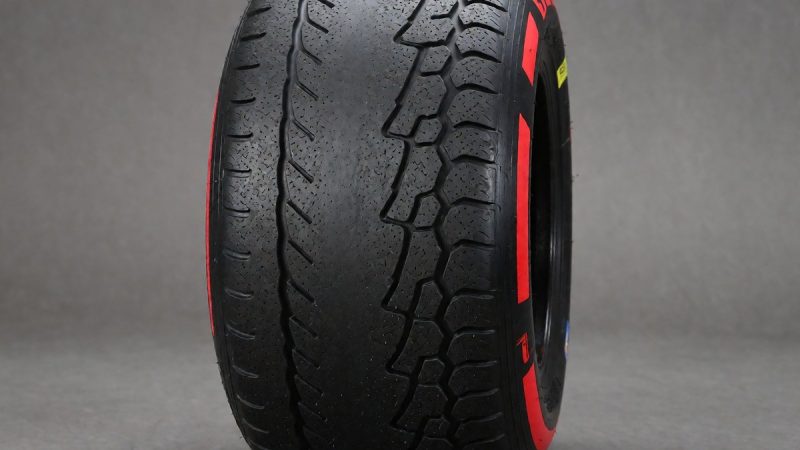
The understeer in slow and medium-speed corners forces the driver to use larger steering angles to get the nose to turn in. These larger steering angles increase the stress and the rise in temperatures on the upper surface of the front tyres. This heat induces the graining phenomenon. During race pace simulations in China, the front-left tyre showed significant graining after only a few laps on medium tyres. This mechanical struggle makes competing over a race distance a nightmare for the team.
| Team | Cooling Upgrade Detail |
|---|---|
| Red Bull | Enlarged exit louvres for cooling inlets on the right side |
| Ferrari | Additional cockpit louvres and cooling exit gurneys |
| Alpine | Deeper louvres and larger rear engine cover exit |
| McLaren | Modified coke/engine cover with revised geometry |
| Haas | Modified front brake duct scoop and additional engine cover louvres |
| Williams | Larger engine cover and additional louvres (if required) |
Linking anti-dive to tyre oscillation
The interaction between the multi-link suspension and the tyre contact patch remains problematic. The anti-dive geometry attempts to stabilize the aero platform by limiting pitch, but this creates secondary effects. If the anti-dive geometry is too aggressive, the sudden loading of the tyre in the braking zone introduces oscillations in the unsprung mass. These oscillations reduce the contact patch pressure. This reduction in pressure makes it harder for the tyre to maintain consistent grip.
When the RB22 enters a heavy braking zone at the high-altitude Autodromo Hermanos Rodriguez, the anti-dive geometry’s attempt to stabilize the chassis can inadvertently cause an oscillation in the unsprung mass that reduces the average contact patch pressure on the front tyres. This effect exacerbates the existing balance issues. The car lacks downforce on both axles due to the altitude. This lack of downforce means the suspension must work harder to maintain the aero platform. If the anti-dive geometry causes the tyre to lose consistent pressure, the car becomes unpredictable. This unpredictability explains why Verstappen finds the car undriveable during high-load sessions.
Managing the power unit and component limits
The difficulty of the 2026 season extends beyond the chassis to the power units. Ferrari manages a careful strategy to reduce grid penalty risks as Lewis Hamilton and Charles Leclerc approach their component limits. Both drivers use their third engine unit, the third turbocharger, third MGU-K, third control electronics unit, and third energy store. Ferrari plans to use older power units during Friday practice to preserve fresher components for qualifying and the race.
Reliability becomes a major factor in the championship fight. An engine-related retirement proves more damaging than a strategically accepted grid penalty. Ferrari considers Austin and Mexico City as potential locations to accept a penalty because overtaking is realistic at these circuits. However, the altitude of Mexico City complicates things for the SF-26 because of the specific thermal demands on the power unit. Red Bull faces similar pressure as they struggle to maintain efficiency as the battery drains.
The aerodynamic struggle for stability
The 2026 regulations prioritize an inwash aerodynamic philosophy. The FIA aims to reduce the wake from the front tyres and front wing to allow cars to race closer together. This requires teams to manage the airflow structure around the front suspension and the floor. Red Bull uses its multi-link suspension to try and keep the aero platform stable. The team attempts to match the volume of the underfloor tunnels to provide consistent airflow.
The reduction in ground effect suction means teams focus more on optimizing rake to get work from the diffuser. The RB22’s ability to maintain downforce depends on how well the suspension manages the ride height. If the anti-dive geometry causes the car to oscillate, the airflow to the floor becomes unstable. This instability directly impacts the downforce levels. The team must find a way to balance the mechanical stiffness of the suspension with the aerodynamic requirement for a stable platform.
Do the current anti-dive settings on the RB22 fundamentally prevent the team from ever solving the front-tyre graining issue?
The RB22 remains a car with deep-seated mechanical flaws. The attempt to use anti-dive geometry to stabilize the aero platform in low-density air creates an oscillation that ruins the front tyre contact patch. This mechanical disconnect between the suspension and the tyres makes the car unpredictable and difficult to drive. Until the team fixes the core interaction between the chassis and the tyres, updates to the cooling or the floor will fail to provide a lasting solution.