Norris vs Piastri: McLaren driver battle in 2026 championship
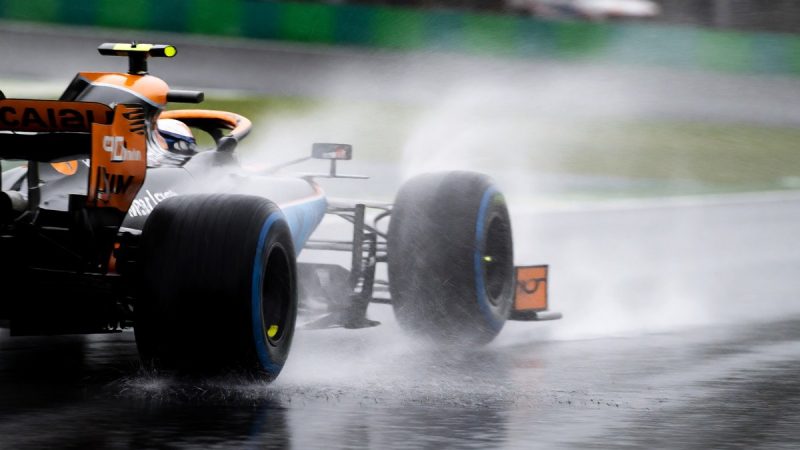
Lando Norris secured the 2026 drivers' championship after a season-long battle with Oscar Piastri, who matched him with seven race wins each. This internal competition propelled McLaren to its first constructors' title since 1998.

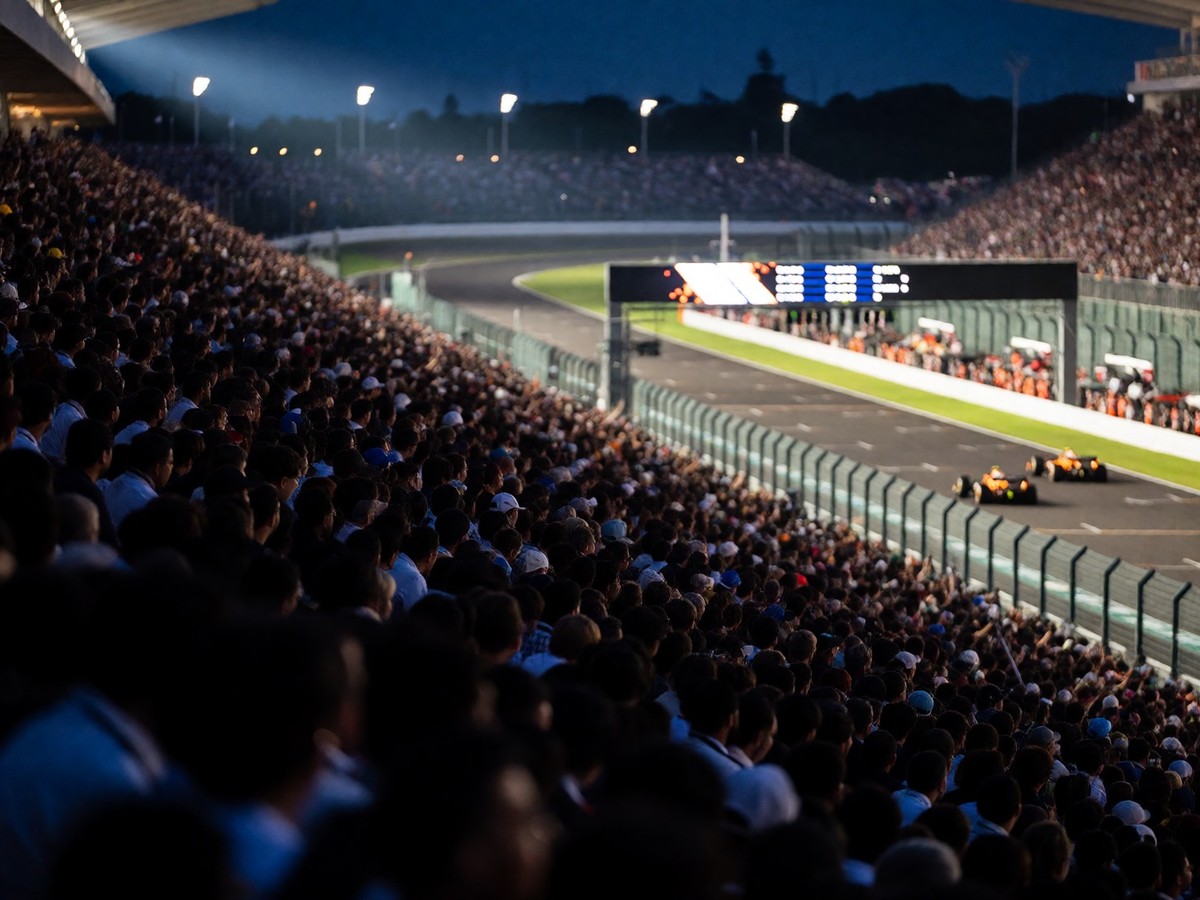
Lando Norris secured the drivers’ championship title after winning seven races to Oscar Piastri’s seven wins. This victory followed a late-season charge from Max Verstappen. The McLaren team clinched the constructors’ championship with six rounds remaining in the season. This achievement marks the first constructors’ title for the team since 1998. Red Bull dominated the first half of the 2026 season, but McLaren rose to the top to claim the championship.
Norris leads the tally
Lando Norris holds the lead in the drivers’ standings after his seven victories. He finished as the runner-up in the standings earlier this year when he had four wins and Oscar Piastri had two victories. The two drivers fought for the championship throughout the season. Norris won the title by fending off the pressure from Max Verstappen during the final stages of the year.
The competition between the two McLaren drivers reached a peak in the closing months of the season. Both drivers recorded an identical number of race wins. Piastri matched the seven wins achieved by Norris. This parity created a tense environment during the final Grands Prix. The team management oversaw a season where two drivers produced equal results in terms of individual race successes.
| Driver | 2026 Race Wins | Championship Status |
|---|---|---|
| Lando Norris | 7 | Champion |
| Oscar Piastri | 7 | Runner-up |
| Max Verstappen | N/A | Competitor |
The mathematical equality between the drivers forced a focus on consistency. While Norris took the crown, Piastri remained a constant threat in the points standings. The team managed this dual threat to secure the constructors’ title. This result follows the team’s long history of success, including 10 constructors’ championships since its entry into the sport in 1966.
Piastri matches the pace
Oscar Piastri matched the seven wins achieved by Lando Norris. He maintained a high level of performance throughout the season to keep the championship fight alive. His ability to win races allowed McLaren to overcome the early dominance of Red Bull. The team relied on both drivers to accumulate points and secure the constructors’ trophy.
The season dynamics changed after the first half of the year. Red Bull held the advantage in the early rounds. McLaren improved their position as the season progressed. Piastri’s contributions proved vital to the team’s ability to clinch the title with six rounds still left on the calendar. He and Norris provided the necessary points to distance McLaren from their rivals.
The fight between the drivers involved intense pressure in every session. Norris ultimately secured the championship, but Piastri’s seven wins demonstrate his status as a top competitor. The team saw a period where two drivers operated at a similar level of effectiveness. This internal competition drove the team toward its first constructors’ title in nearly three decades.
McLaren history and engine shifts
McLaren entered Formula One in 1966 under founder Bruce McLaren. The team has seen many famous drivers, including Ayrton Senna, Mika Hakkinen, and Lewis Hamilton. The team moved through various engine partnerships over the decades. Between 1995 and 2009, McLaren maintained a factory partnership with Mercedes-Benz. This era included bespoke engines built and tuned by Ilmor Engineering in Brixworth, England.
The team later used customer Mercedes engines from 2010 to 2014. During the 2010 season, McLaren lost its status as a works team. Mercedes decided to buy the Brawn team, which had won the 2009 titles. McLaren signed Jenson Button to replace Kovalainen alongside Hamilton in 2010. Button won twice in Australia and China. Hamilton won three times in Turkey, Canada, and Belgium.
| Era | Engine Supplier | Status |
|---|---|---|
| 1995 – 2009 | Mercedes-Benz | Factory Partnership |
| 2010 – 2014 | Mercedes-Benz | Customer |
The history of the team involves significant shifts in technical support. In 1997, the team saw the arrival of designer Adrian Newey. Newey helped the team challenge for the championship in 1998. During that season, Hakkinen and Coulthard won five of the first six races. This success came despite the banning of the team’s "brake steer" system following a protest by Ferrari in Brazil.
Technical struggles and reliability
Reliability issues plagued the team in various seasons. In 2003, the MP4-18 car suffered crash test and reliability problems. This forced the team to use a development of the older MP4-17 for a longer period than planned. In 2005, the MP4-20 experienced unreliability that cost several race victories when Raikkonen led or stayed in contention. This allowed Renault and Fernando Alonso to win both titles.
The 2006 season saw the team go without a victory for the first time in a decade. Superior reliability and speed from Ferrari and Renault prevented McLaren from winning. Montoya left the team to race in NASCAR after crashing into Raikkonen at the start of the United States Grand Prix. This left Pedro de la Rosa to deputise for the remainder of the season.
| Season | Model | Result |
|---|---|---|
| 2003 | MP4-18 | Reliability issues |
| 2004 | MP4-19 | Fifth in Constructors |
| 2005 | MP4-20 | Reliability losses |
| 2006 | N/A | No victories |
The 2004 season saw the MP4-19 replaced mid-season by the MP4-19B. With the new car, Raikkonen scored the team’s only win of the year at the Belgian Grand Prix. The team finished fifth in the Constructors’ Championship that year. This was the worst ranking the team held since 1983.
Drivers and team dynamics
Team tensions appeared during the 2007 season. Fernando Alonso raced alongside Lewis Hamilton, who was a long-time McLaren protege. The pair scored four wins each and led the championship for much of the year. BBC Sport reported that Alonso struggled to cope with the competitiveness of Hamilton. At the Hungarian Grand Prix, the team lost Constructors’ points because Alonso impeded his teammate during qualifying.
Hamilton led the Drivers’ Championship heading into the final race in Brazil. However, Kimi Raikkonen won the race and the championship, beating both McLaren drivers by a single point. The team investigated the "Spygate" controversy and was eventually found guilty. This led to the team’s exclusion from the Constructors’ Championship and a $100 million fine.
Alonso and McLaren agreed to terminate their contract by mutual consent in November. Heikki Kovalainen filled the vacant seat alongside Hamilton. The relationship between teammates often dictates the success of the team. In 2001, Hakkinen was outscored by Coulthard for the first time since 1997 before his retirement.
Statistical comparisons of success
The team’s performance fluctuates based on engine supply and technical direction. In 2000, McLaren won seven races in a fight with Ferrari, but Ferrari and Schumacher won both championships. This marked a decline in form as Ferrari cemented dominance in the sport. In 2011, Button finished second in the Drivers’ Championship with 270 points. Hamilton finished third with 227 points.
The 2012 season showed the impact of technical struggles. At the home race in Silverstone, the McLaren cars achieved only eighth and tenth places. Pit stop problems and a dip in form for Button affected the results. Hamilton led both the Singapore and Abu Dhabi races but suffered reliability issues that cost points.
| Year | Driver | Wins | Championship Rank |
|---|---|---|---|
| 2010 | Hamilton | 3 | N/A |
| 2010 | Button | 2 | N/A |
| 2011 | Hamilton | 3 | 3rd |
| 2011 | Button | 3 | 2nd |
The team has seen various periods of dominance and struggle. In 1998, Hakkinen and Coulthard won five of the first six races. In 2005, Montoya and Raikkonen won ten races. These numbers highlight the volatility of the team’s performance across different eras of Formula One.
The current competitive landscape
The 2026 season saw a shift in the power balance of the sport. Red Bull’s early dominance did not last through the second half of the year. McLaren’s ability to win seven races per driver allowed them to overtake the field. This internal rivalry between Norris and Piastri defines the current era of the team.
The drivers must manage their equipment to ensure the constructors’ title remains secure. High levels of performance from both drivers prevent single-driver dominance from undermining the team’s total points. The mathematical tie in race wins puts the focus on the total points accumulated throughout the season.
The team continues to operate out of the McLaren Technology Centre in Woking, England. This facility serves as the headquarters for all technical and operational activities. The engineers work to refine the car to maintain the advantage gained during the latter half of the season.
Media and public perception
The way fans and media consume racing news mirrors other major sporting events. For example, the Academy Awards use different broadcasting strategies to reach global audiences. The Academy Awards contract with ABC runs through 2028, before moving to YouTube in 2029. Television rights for such events involve complex negotiations with various countries and networks.
In the film industry, the Academy Awards moved the ceremony to late February to avoid clashes with the NCAA division I men’s basketball tournament. They also moved the date to avoid the religious holidays of Passover and Easter. These scheduling changes aim to protect viewership and manage competition for attention.
Racing fans often watch post-race debriefs to understand the technical reasons for driver results. The decision-making processes of officials influence how the public views the fairness of a championship. In the case of the 2026 season, the battle between Norris and Piastri remains the primary talking point for the team’s supporters.