Mercedes suspension and the 2026 aerodynamic load
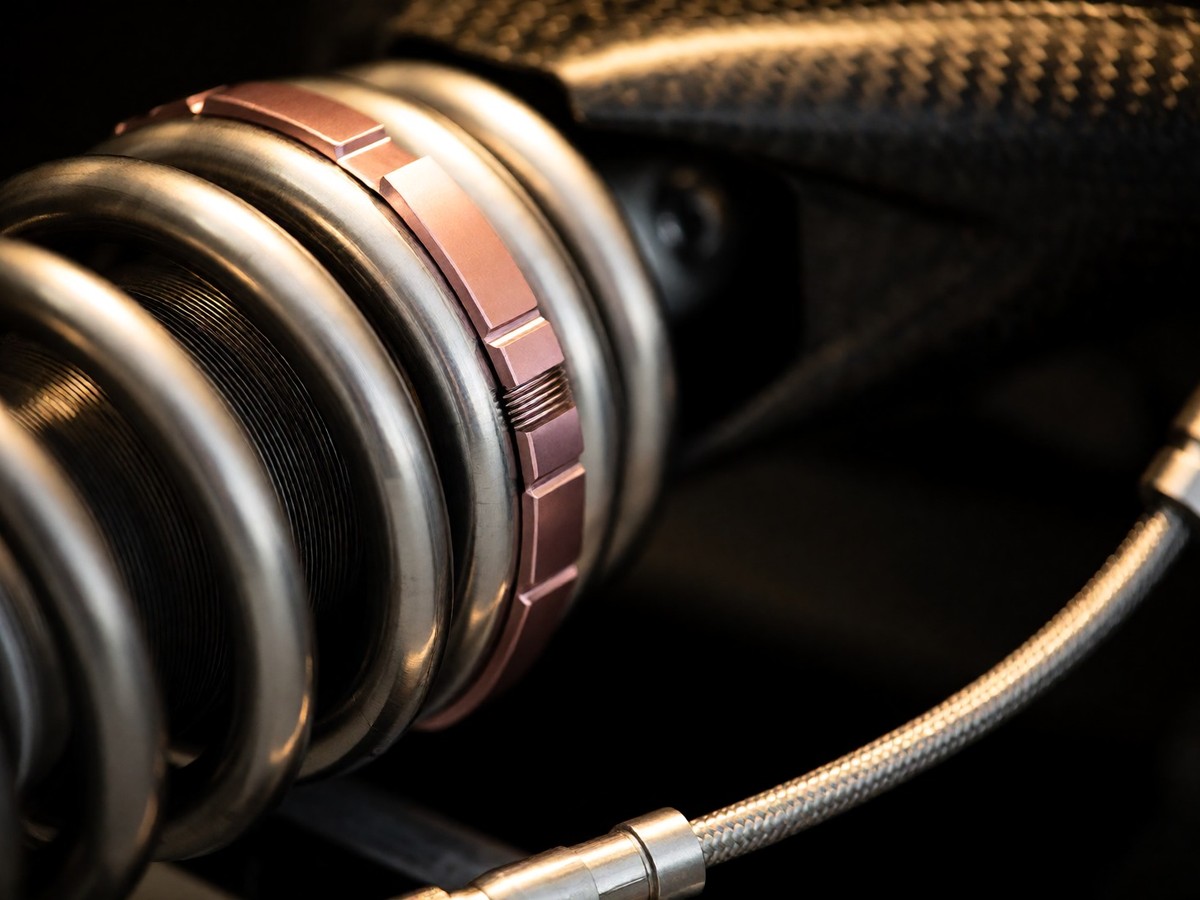
Formula One cars generate aerodynamic downforce up to five times the vehicle weight, requiring extremely stiff suspension springs to maintain ride height. This mechanical stiffness forces drivers to rely on tyres to manage road irregularities and maintain aerodynamic stability.

Mercedes performance and the 2026 season
Mercedes leads the championship with 556 points, while Ferrari holds 405 points and McLaren holds 316 points. George Russell holds 236 points, which trails K. Antonelli’s 320 points and Lewis Hamilton’s 214 points. The 2026 season operates with a cost cap of US$215 million. This financial limit restricts the total amount a team spends on car development to support equal competition. Mercedes entered the series as a manufacturer in 2010 after it purchased Brawn GP. This move followed the departure of manufacturers like Honda, BMW, and Toyota in 2008 and 2009. You know the basics of Formula One, so I will focus on the mechanical pressures facing the Mercedes team.
Aerodynamic downforce and vehicle load
Formula One cars achieve high cornering speeds because front and rear wings and underbody tunnels generate large amounts of aerodynamic downforce. These aerodynamic forces press the cars to the track at levels up to five times the car’s weight. The cars depend on aerodynamics, suspension, electronics, and tyres to function at these speeds. High downforce requires the suspension to manage immense vertical loads. Engineers must design the suspension to react to these pressures to keep the car stable.
Ground effect and ride height management
Ground-effect aerodynamics, which Jim Hall used on the Chaparral 2J in 1970, provide enormous downforce. The FIA introduced a major rule and car design change in 2022 to promote closer racing through the use of ground effects. These aerodynamic forces create a massive suction effect that pulls the car toward the ground. To keep this suction consistent, the car must maintain a specific distance from the asphalt. If the car moves too much, the aerodynamic balance shifts. Because aerodynamic forces press the cars to the track at levels up to five times the car’s weight, engineers must use extremely stiff springs to maintain a constant ride height and prevent the car from bottoming out.
Suspension stiffness and tyre reliance
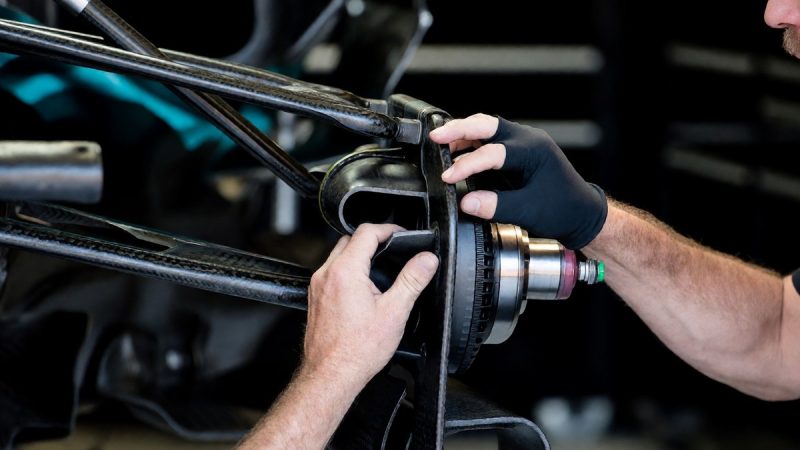
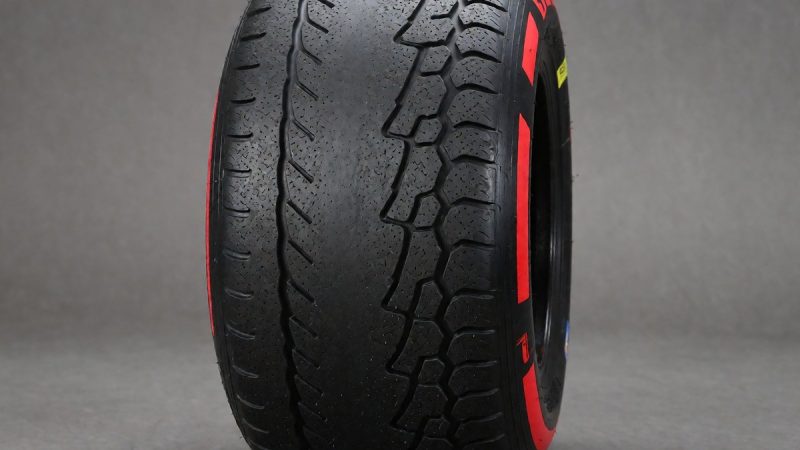
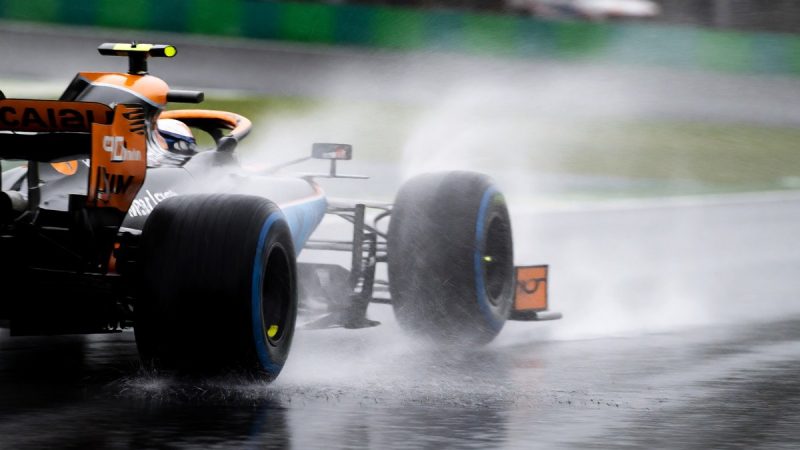
Extremely stiff springs maintain a constant ride height when ground-effect aerodynamics produce massive downforce. These stiff springs leave the suspension virtually solid. Drivers depend entirely on the tyres for any small amount of cushioning from irregularities in the road surface. When the springs are this stiff, they do not absorb much of the bump from the track. The tyre becomes the primary component for managing small variations in the road. This makes the relationship between the suspension stiffness and the tyre performance very tight. How do teams balance this stiffness with the need for mechanical grip on street circuits?
| Driver | Points |
|---|---|
| K. Antonelli | 320 |
| G. Russell | 236 |
| L. Hamilton | 214 |
Electronic aids and historical stability
The development of electronic driver aids began in the 1980s. Lotus developed a system of active suspension that first appeared on the Lotus 92 in 1983. The FIA banned many electronic driver aids like traction control and automatic shifting for the 1994 season. These cars became very twitchy and difficult to drive after the ban on electronic aids. Before the 1994 ban, electronics helped manage car stability. The FIA decided that technology determined race outcomes more than driver skill.
The 2026 regulatory landscape
Technical regulations change frequently to improve on-track action and cut costs. In 2014, a major rule change replaced 2.4-litre naturally aspirated V8 engines with 1.6-litre turbocharged hybrid power units. This change prompted Honda to return to the series in 2015. Earlier, the FIA limited fuel tank capacity in 1984 and boost pressures in 1988 to reduce engine power and speeds. The current 2026 season follows a history of managing high-power machines through strict technical rules. The cost cap of US$215 million remains a central part of these regulations.
Driver standings and points
The championship battle remains intense between the top teams. Mercedes holds a significant lead with 556 points over Ferrari’s 405 points. K. Antonelli leads the driver standings with 320 points, followed by George Russell with 236 points. Lewis Hamilton holds 214 points. These points totals reflect the performance of the cars over the season. The hierarchy in the standings shows the impact of both driver skill and technical development.
Reliability issues in Bahrain
Toto Wolff expressed frustration after George Russell suffered a late power unit failure at the Bahrain Grand Prix in Malaysia. This failure ended the race for Russell and left the team in a bad position. Reliability remains a major factor in the championship standings. Power unit failures can negate the advantages of a well-designed suspension or aerodynamic package. Mercedes must address these mechanical weaknesses to maintain its lead in the championship.