Lewis Hamilton: five myths about his 2026 Ferrari adaptation struggles
Lewis Hamilton has secured 96 points in the 2026 season by prioritizing mechanical data over simulator work. His success follows a strategic decision to focus on through-corner balance and brake optimization after finding simulator correlation inconsistent.

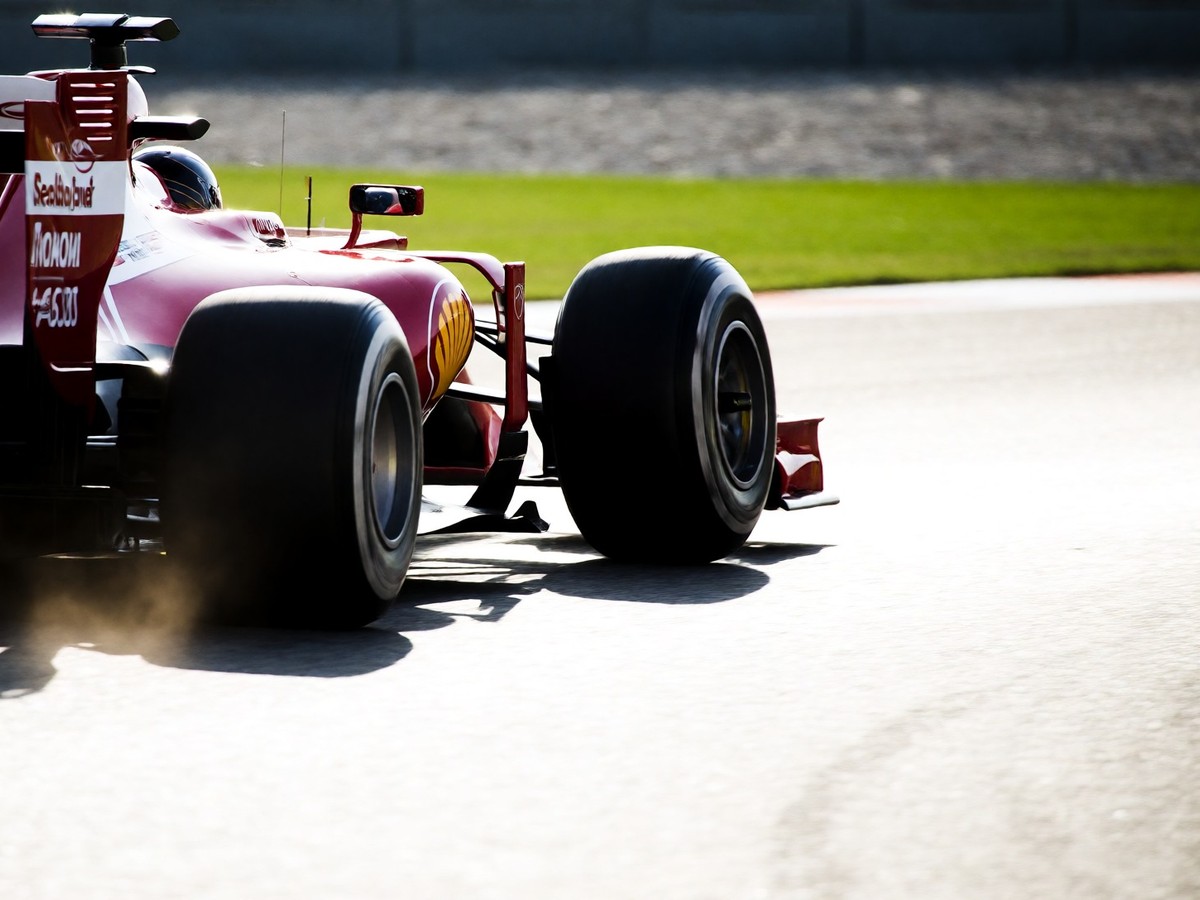
Hamilton’s 96 points in the 2026 season demonstrate that his decision to prioritize mechanical data over simulator work produces results. He currently leads Kimi Antonelli, who has 79 points, and George Russell, who has 74 points. Even his teammate Charles Leclerc trails with 49 points. The separation between Hamilton and the rest of the field follows his move away from the Maranello simulator. He found that the simulator work often failed to correlate with real-world track performance.
The driving style myth
The idea that Hamilton cannot adapt to the Ferrari car ignores the technical reality of the SF-25. The 2025 car had significant rear instability that punished drivers who used high-energy inputs. Hamilton’s driving style requires constant adjustment to the car’s behavior. He maintains braking stability by hitting the pedal very late. This technique holds the car on the edge of under-rotation at the corner entry. He also puts significant energy through the front tyres with many tiny movements. This combination leaves the rear end of the car moving considerably.
Charles Leclerc uses a different method with a "little turn, big turn" approach. This style helps Leclerc reduce understeer. Because the SF-25 design favored a front-end loaded balance, it suited Leclerc better than Hamilton. In Miami, the team introduced upgrades to close the gap to Mercedes, but Hamilton lacked pace and Leclerc suffered a spin and a penalty. By the season finale in Abu Dhabi, the car remained difficult to push in qualifying. The rear took too long to stabilize when the weight and aero center of pressure shifted.
The simulator correlation myth
Some observers claim the Ferrari simulator is inadequate, but Hamilton calls it "amazing." He says the simulator is a powerful tool that the team continues to evolve. He also says he has had input in its evolution. However, he finds the correlation "hit and miss" sometimes. He stopped using the simulator before the Canadian Grand Prix because he felt the goalposts were always moving. He found that a setup that felt good on the sim did not always work on the track.
| Feature | T818 Specification |
|---|---|
| Torque | 10 Nm |
| Scale | 1:1 replica |
| LED Count | 21 |
| Display Size | 4.3 inches (109 mm) |
| Button Count | 25 (7 encoders) |
The T818 Ferrari SF1000 simulator uses Direct Drive Force Feedback technology to deliver 10 Nm of torque. This motor accommodates the weight of Thrustmaster wheel rims to provide angular acceleration. The wheel is a 1:1 scale replica with 21 LEDs and a 4.3-inch display. It includes 25 buttons and 7 encoders to control vehicle settings. The system uses aluminum and high-strength plastic to maintain inertia.
The performance drop myth
The claim that avoiding the simulator hurt Hamilton’s performance contradicts his recent points tally. Since he moved away from simulator work in Canada, he has outscored everyone on the grid. He focused instead on deep diving into through-corner balance, mechanical balance, corner approaches, and brake balance. In China, he achieved his best weekend without simulator work. He spent his time optimizing the brakes, which had been a problem for him for some time. He also worked on better integration with his engineers.
You know how many tenths of a second separate the leaders in a modern Formula 1 race, so look at the data behind Hamilton’s 2026 campaign. In the 2025 Australian Grand Prix, Hamilton adjusted his driving style to the SF-25 requirements. Charles Leclerc finished the opening day in Melbourne at the head of the times. Hamilton was 0.6s behind Leclerc in FP1 and 0.42s behind him in FP2. The Briton noted the car felt very different from his previous Mercedes experience.
The development stagnation myth
The myth that Ferrari stopped development due to a lack of interest is false. The team finished fourth in the 2025 constructors’ standings, which meant they failed all their initial goals. They abandoned the SF-25 project because they wanted to prioritize wind-tunnel space for the 2026 678 project. Loic Serra and Fred Vasseur decided to focus on the 2026 project because they could not get the SF-25 back to the front. The decision to prioritize the 2026 678 project meant the technical department halted all SF-25 development after the mid-season suspension update failed to provide any meaningful aerodynamic gains for the team.
The team also canceled the new floor package that was supposed to arrive around the September Azerbaijan Grand Prix. The mid-season suspension change in Belgium helped braking stability, but it did not provide extra downforce. This decision allowed the team to dedicate more resources to the 2026 car. The 2026 car has already had its bodywork approved after the team defined the cooling volume and the gearbox.
The resource allocation myth
Ferrari holds a significant technical advantage in the 2026 development cycle. They will start with 15% more wind-tunnel hours and CFD sessions than McLaren. This advantage stems from their fourth-place finish in 2025. The FIA uses a coefficient system based on the previous year’s standings. Ferrari uses an 85% coefficient of the base allocation values.
| Resource Type | Ferrari 2026 Allocation |
|---|---|
| Total Wind Tunnel Hours | 340 |
| Usable Wind Tunnel Hours | 68 |
| Total Wind Tunnel Runs | 272 |
| CFD Geometries | 1,700 |
The base allocation values include 320 wind-tunnel tests and 2000 CFD runs. Ferrari has 68 fully usable hours for wind tunnel testing. This allows for 272 individual aerodynamic runs. The team can also explore up to 1,700 new geometrical configurations for components like the front wing, rear wing, and floor.
The adaptation struggle myth
The suggestion that Hamilton’s adaptation is failing overlooks the complexity of the 2026 regulations. The 2026 car requires a hybrid driving style. This style blends characteristics from the 2021 non-ground-effect cars and the 2022 ground-effect cars. The engineers at Maranello work to refine the correlation between simulated models and track performance. This is essential because the 2026 cars have a large aerodynamic development curve.
The technical leadership manages a controlled performance window in the opening races. They aim to optimize future upgrades rather than maximizing early-season results. This strategy uses aerodynamic testing periods to schedule structured evaluation. Each period lasts approximately eight weeks. Will the 2026 car’s hybrid driving style provide the stability Hamilton needs to win?
The technical data reality
Hamilton finds success by focusing on specific mechanical data points. He spent his preparation time on through-corner balance, mechanical balance, corner approaches, and brake balance. This deep diving led to better integration with his engineers. He avoids the simulator because he feels the setup that works in simulation does not always work on the track. He prefers to learn the limits of the vehicle through direct data.
The team uses data collected during testing to contribute to performance optimization. This is especially true for components that require system calibration in circuits with heavy braking demands. Engineers prioritize the development of the front wing to manage car balance and tire wear. They also study components like bargeboards, turning vanes, and rear bodywork. The team relies on a structured, data-driven approach to improve the car throughout the season.
The testing progress reality
The data from recent testing sessions shows that Ferrari is making progress. During the Barcelona shakedown in January, Hamilton completed 85 laps in the morning. Leclerc completed 89 laps in the afternoon. These sessions follow the Tuesday outing that faced wet conditions. This training helps the team gather knowledge on the new engine and aero package.
In Bahrain, Leclerc set a fast lap of 1m 31.992s on Friday afternoon. The team completed 324 laps during the second week of testing. Hamilton expressed gratitude to the factory team for the hard work. He noted that the car remains reliable. He also said the team has good data so far to help make clear decisions before the next stages of testing.