How Ferrari’s new Maranello simulator wing reshapes 2027 driver prep
Ferrari plans to invest in a multimillion-dollar simulator before the 175 million dollar budget cap takes effect. This new technology aims to improve correlation between virtual testing and the track for drivers like Lewis Hamilton and Ollie Bearman.

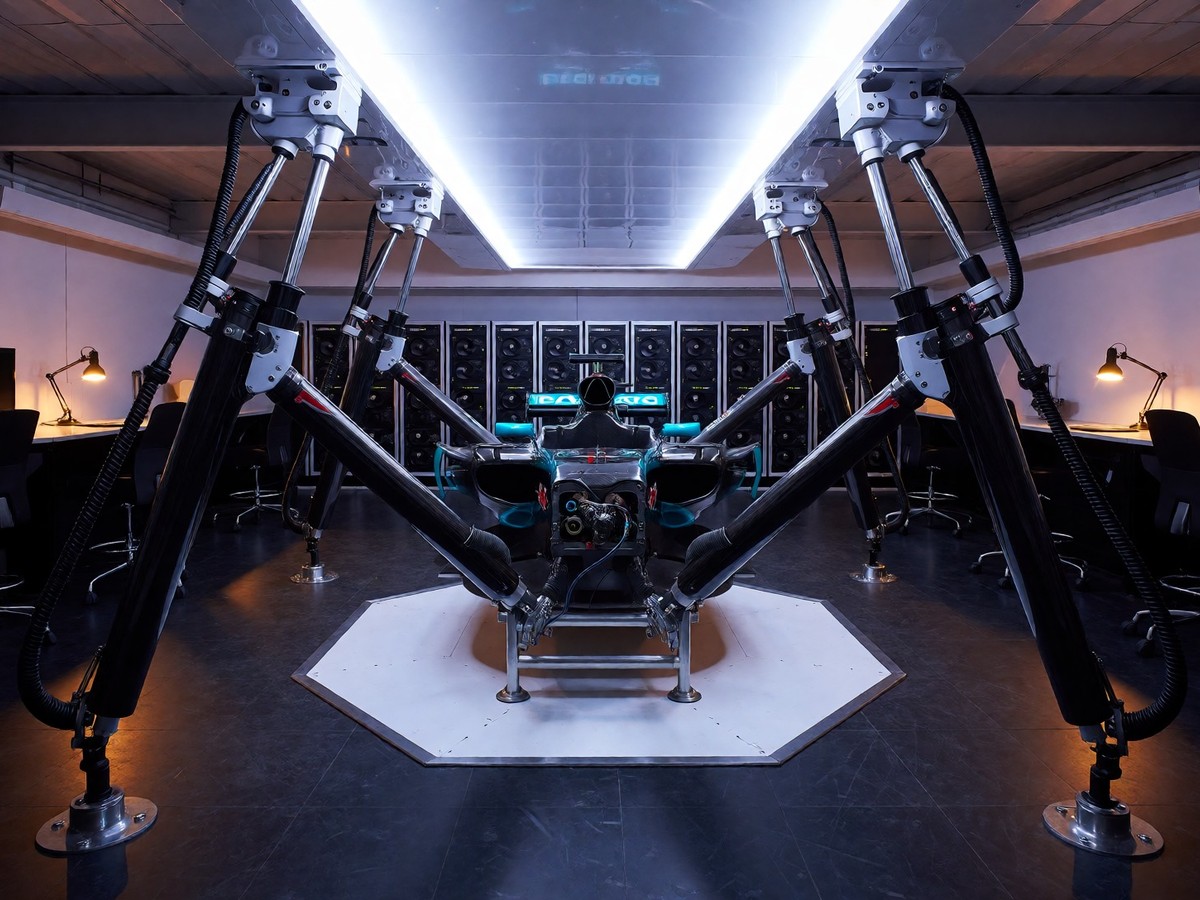
Fred Vasseur states that 80 per cent of the work done on the SF-26 today will carry over into the 2027 challenger. Ferrari refuses to switch its development focus to the 2027 car despite the current championship standings. The team trails Mercedes by 145 points in the Constructors’ Championship. In the drivers’ standings, Kimi Antonelli holds 302 points, while Lewis Hamilton has 199 points. Hamilton trails Antonelli by 101 points following his retirement from the Spanish Grand Prix.
Aerodynamic changes and the Macarena wing
Ferrari introduced a Macarena rear wing that underwent private testing at Jerez. The team also implemented a new version of the front wing, along with tweaks to the halo aero, side edge, and underbody. These modifications aim to improve airflow and pressures beneath the car surface. The new nose and cape design improves flow through inlets beside the thumb-style tip. This modification alters how airflow and pressures build beneath the surface. The turning-vane structure mounts to the rear end of the nose and the underside of the chassis. Three rows of crooked finger vanes, which each arch over the top to form an L-shaped surface, sit on the footplate of the chassis portion. The endplate’s upper rear cutout now features serrated edges, while the thickness of the endplate beneath the cutout is reduced to give upwash strikes a more commanding role. The straked section over the regulatory bounding box now contains two fully enclosed holes instead of the six slots that previously perforated that section.
The Spider and the multimillion-dollar replacement
The current Ferrari simulator costs 5 million euros and uses ten interlinked computers. Staff members call the machine ‘The Spider’ because it resembles an eight-legged arachnid. Ferrari plans to build a new multimillion-dollar simulator before the 175 million dollar annual budget caps begin. The team wants to complete this investment before the expenditure counts towards the capped budget. Hamilton noted that the simulator provides an amazing space to work in, though he found it hit and miss in previous years. He felt that the setup which worked on the simulator was often the opposite of the setup needed at the track.
| Specification | Detail |
|---|---|
| Current Simulator Nickname | The Spider |
| Current Simulator Cost | 5 million euros |
| Simulator Computer Count | 10 |
| Annual Budget Cap | 175 million dollars |
| Development Carryover | 80 per cent |
Virtual training for the rookie pool
Rookies use the simulator to learn unfamiliar tracks and corner sequences. Ollie Bearman uses the virtual environment to hit every wall possible to find the limits of the car. This method helps him learn where to rein things in without the risk of physical damage. Antonio Giovinazzi, the 22-year-old GP2 contender, spent a day in the Maranello simulator to experience Formula 1. Giovinazzi currently trails Pierre Gasly by 10 points in the GP2 standings. Oscar Piastri noted that the simulator makes it fun to drive, but the rhythm in real life might differ.
Data over simulation for Hamilton
Hamilton prefers to work with engineers on data analysis rather than using the simulator for every session. He avoided the simulator ahead of the Montreal weekend to focus on deep diving into mechanical balance, corner approaches, brake balance, and corner balance. He specifically worked to optimize the brakes, which have been a problem for him for some time. Hamilton noted that using the simulator every week in the previous year led to issues when he reached the track. He found that the setup which felt good in the simulator was sometimes the opposite of the setup needed in person. This forced him to undo the work he learned during the simulation. He will continue to use the simulator for power deployment.
Budget caps and the timing of investment
The financial planning for the simulator involves the 175 million dollar budget cap. Ferrari intends to build a new multimillion-dollar simulator before the 175 million dollar annual budget cap begins to affect their ability to spend on development. The current simulator is ten years old. You likely know that budget caps change how teams manage their assets. Ferrari wants to complete the purchase before the expenditure counts against its capped budget.
Driver longevity and contract structures
Hamilton is currently in a multi-year contract that includes the 2027 season. This three-year agreement will leave him 42 years old by its conclusion. While his seat has been linked to the Ferrari academy product Oliver Bearman, Bearman appears to wait at least another year before entering the frame for a Ferrari drive. Vasseur has confirmed that the 2027 project will utilize 80 per cent of the current development. This continuity allows the team to focus on different aspects of the car while maintaining a massive foundation.
Competitive aero and power unit parity
Mercedes team principal Toto Wolff stated that Ferrari has an absolutely competitive power unit. He noted that the Ferrari car uses winglets that cover half the exhaust. He also said that Ferrari is on the exact same level as Mercedes. In the past, Mercedes enjoyed dominance because its power unit was dominant for a long time. Regarding the Red Bull power unit, the FIA determined it was the strongest on the grid based on specific measurements. There were rumors that Ferrari found a way to bypass the fuel flow sensor by delivering fuel in short, rapid bursts. This method could effectively allow a team to burn more fuel for more power without exceeding the limits when the sensor samples the flow.
How will the new simulator impact the correlation between virtual testing and the physical track?