How Ferrari uses lateral vanes to manage floor edge airflow
Ferrari utilizes a leading edge tower and three lateral vanes on the SF-26 to mitigate in-wash from floor boards. This aerodynamic setup manages boundary layer separation and protects underfloor efficiency to maintain downforce under 2026 regulations.

Boundary layer control and vortex generation
The air above a moving car travels quickly, while friction slows the thin layer next to the paint. This boundary layer loses momentum as it moves rearward. Once the layer lacks enough energy to follow the surface, it separates and forms a low-pressure wake. This wake influences pressure drag, rear lift, wind noise, and the quality of the air reaching a spoiler or wing. An automotive vortex generator creates a small streamwise vortex to address this. This rotating flow draws faster air toward the surface, adds momentum to the boundary layer, and can shift the separation point rearward.
A vortex generator works when its size, angle, and position match a known separation area. The small vortex feeds faster air into the boundary layer, which helps the flow stay attached as it crosses a curved surface. On a developed setup, this can reduce the rear wake or change drag and lift. Useful results depend on the vehicle shape and local airflow. You already understand that boundary layer separation hurts aerodynamic efficiency. A functional setup requires evidence of the separation point and the airflow reaching the rear aero. Engineers use Computational Fluid Dynamics (CFD) to identify these areas.
Ferrari uses lateral vanes to manage floor edge airflow
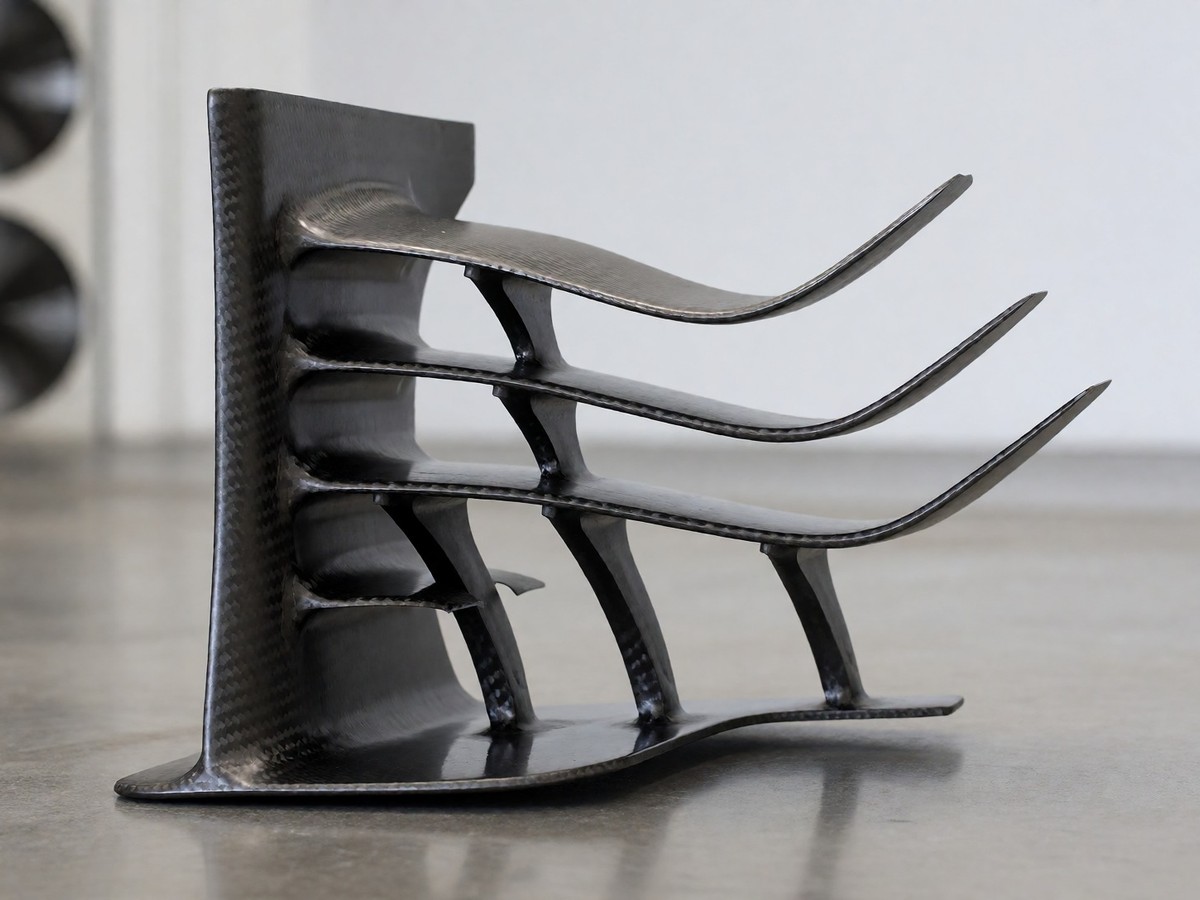
Ferrari uses a leading edge tower and three lateral vanes on the SF-26 to comply with the inward inclination regulation for floor boards. These three lateral vanes represent the maximum permitted number for this component. Ferrari mounts this whole structure rigidly with supporting struts. This mounting ensures that the flow patterns do not experience excessive movement at the loads seen at high speeds. The vanes work to minimize the in-wash from the floor boards. The 2026 regulations mandate that the main outline of the floor board must point inward, which aims to narrow the aerodynamic wake of the car to aid overtaking by reducing the disturbed air from the wheels.
The lateral vanes act as vortex generators to manage the air reaching the floor. By creating controlled vortices, the vanes help direct some of the airflow outwards. This prevents the floor from receiving too much air that has already been disturbed by the tires and suspension. The placement of these vanes remains sensitive to the ride height and the proximity of the diffuser. Ferrari must balance the use of these vanes against the need to maintain a clean airflow to the underfloor.
The problem of in-wash and floor boards
The 2026 regulations mandate in-washing floor boards just ahead of the sidepods. These floor boards must be aligned inwards to narrow the aerodynamic wake of the car. This design helps cars follow more closely during a race. However, introducing air that the wheels and suspension have already disturbed into the floor slows the underfloor airflow. This disturbed air reduces downforce. Ferrari uses its three lateral vanes to mitigate this effect.
The lateral vanes attempt to send at least some of the air outwards. This helps protect the underfloor efficiency. If the in-wash is too high, the underfloor airflow loses the energy it needs to produce ground effect. The in-washing boards create a high pressure field above the front floor corner. This complicates the management of the tire wake. Ferrari’s design relies on the rigidity of the vane structure to keep the flow stable. Without this rigidity, the in-wash would become unpredictable at high speeds.
The diffuser mouse hole and airflow attachment
The Ferrari SF-26 also includes a hole in the lower bodywork around the diffuser. This opening allows airflow from the external surfaces to switch to the diffuser’s inner wall. This device mimics the mouse hole slot seen in some pre-2022 cars. In the 2022-25 ground effect cars, the diffuser worked best when it remained sealed from the external airflow. In the 2026 era, the airflow accelerated by the diffuser ramp needs to be prevented from detaching. This hole acts as the diffuser equivalent of a wing’s slot gap.
The hole helps energize the airflow in the diffuser. Faster flow through the diffuser produces greater downforce. This component works in tandem with the floor edge vanes. The vanes manage the air entering the floor, while the hole manages the air exiting the floor through the diffuser. Both elements aim to keep the airflow attached to the bodywork. If the flow separates from the diffuser ramp, the car loses downforce. Ferrari’s engineers must coordinate these two areas to ensure the car remains stable.
Ferrari design versus Mercedes approach
Mercedes uses larger elements on its floor boards but does not use a leading edge tower. Ferrari uses its tower and three vanes to control the in-wash. The Ferrari nose appears significantly lower than the Mercedes nose. The Ferrari underside also has much less of an undercut. The height of a car’s nose depends on the position of the cockpit and the front axle line. A closer proximity between the cockpit and front axle allows for a greater nose height.
The different approaches to the floor edge result in different aerodynamic behaviors. Mercedes uses bigger elements to manage the flow. Ferrari relies on the rigid tower and the lateral vanes. These design choices affect how each car handles the in-wash from the front tires. The effectiveness of the Ferrari vanes depends on how they interact with the specific nose height and undercut profile.
| 2026 Specification | Value |
|---|---|
| Minimum Car Weight | 770 kg |
| Wheelbase | 3400 mm |
| Total Width | 1900 mm |
| Downforce Reduction | 30% |
| Drag Reduction | 55% |
| Battery Power Increase | 300% |
| MGU-K Output | 350 kW |
Ground effect and the Venturi effect
Ground effect works by pinching the air to speed it up. When a fluid speeds up, its pressure drops. This is the Venturi effect. The car’s floor acts as a vacuum pump. The diffuser, which is the tunnel that widens towards the back of the car, helps drag the air through from underneath. This amplifies the suction without throwing up a wall of drag at the rear.
The floor edge vanes play a role in this process. By managing the vortices at the floor edge, the vanes help maintain the pressure differential between the top and bottom of the car. If the vortices fail to seal or manage the edges, the low pressure under the car escapes. This leads to a loss of downforce. The 2026 regulations attempt to reduce the efficacy of floor-edge furniture by narrowing the floor. Ferrari uses its three vanes to reclaim some of that lost control.
The 2026 regulatory environment
The 2026 season introduces a new era of active aerodynamics. The cars are 30kg lighter and 100mm narrower than previous models. The wheelbase has shrunk to 3400mm. The FIA has replaced the Drag Reduction System (DRS) with two active aero modes. These are the Straight Mode and the Corner Mode. In Straight Mode, both wing flaps open to reduce drag. In Corner Mode, both the front and rear wings stay in the high-downforce position.
The 2026 power units also change. The battery power increases by 300%. The MGU-K provides 350kW of power. Overtaking is aided by Overtake Mode. This mode gives drivers an extra 0.5MJ of electrical energy when they are within one second of the car ahead. The aero changes and the power changes must work together. The reduction in downforce and drag helps the cars follow more closely. Will the increased complexity of the active aero modes eventually offset the drag reduction provided by the new floor edge vanes?
Ferrari’s use of three lateral vanes and a leading edge tower provides a specialized way to manage the 2026 in-washing floor boards. This setup attempts to minimize the loss of downforce caused by the new inward-pointing floor boards. The vanes work to keep the boundary layer energized and the underfloor flow stable. Ferrari’s design must also account for the hole in the diffuser that prevents flow detachment.