How Aston Martin’s wind tunnel delay impacts Newey’s 2026 car
Adrian Newey faces a compressed design cycle for the AMR26 after a wind tunnel delay at the Silverstone campus caused a four-month development deficit. The team is working to fix simulation correlation issues and prepare for significant 2027 regulation changes.

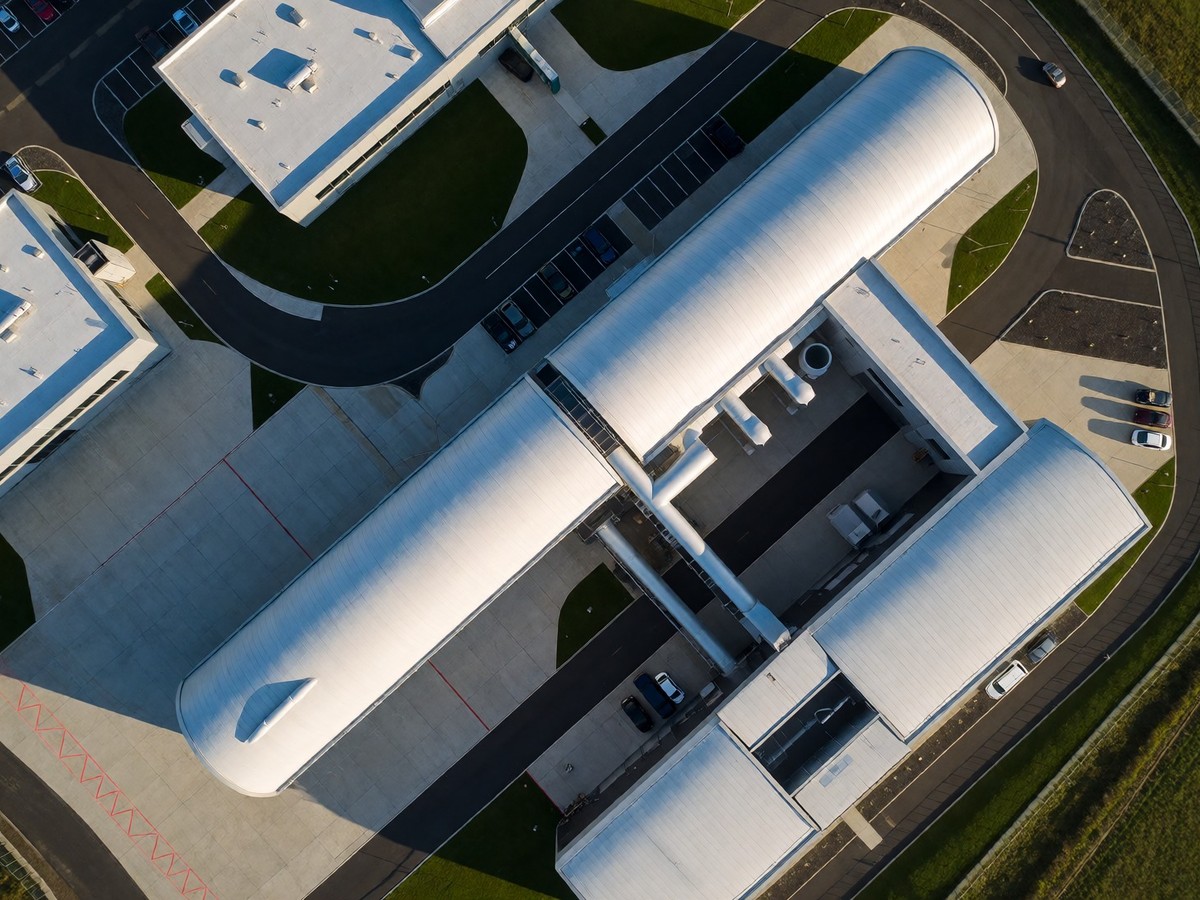
The CoreWeave wind tunnel at the Silverstone AMR Technology Campus did not function correctly until April 2025. This timing meant that Newey did not put a 2026 car model in the tunnel until mid-April 2025. Most competitors had models in the tunnel from January 2025 when the aero testing ban ended. The decision to wait for the CoreWeave wind tunnel to become fully operational in April 2025 meant that Aston Martin missed four months of development compared to rivals who started in January at the start of the aero testing ban. Newey joined the team in March 2025. He faced an extremely busy ten months and a very compressed research and design cycle. The team fought to reach the Barcelona shakedown.
Newey pursues a holistic design approach for the AMR26. He focuses on the overall packaging, mass positioning, and the manipulation of the flow field through the suspension. The AMR26 has much tighter packaging than any previous Aston Martin car. This requirement forced mechanical designers to work harder to achieve the aerodynamic shapes the team wanted. Newey avoids making a car that is too optimized for a narrow window of performance. He wants a car with significant development potential. You likely know the reputation of the Red Bull design era. Newey focuses on fundamentals to ensure the car can evolve throughout the season.
The struggle with simulation and correlation
Newey identified the simulation tools at Aston Martin as weak during the Monaco Grand Prix weekend. He specifically called the simulator not adequate and noted that the correlation was way off. To address this, Newey requested the return of Giles Wood to lead the simulation and vehicle modelling department. Wood previously worked with Newey at Red Bull between 2007 and 2014 to develop simulation tools that aided four championship victories. Wood worked at Apple in Silicon Valley before returning to the team.
The team also faces a gap between simulation data and real-world performance. Newey stated in Monaco that it would take two years to correct the correlation between simulation data and the real world. Fernando Alonso disagrees with this timeline, stating that the team will take less than two years to fix the simulator. Andy Cowell also downplayed the two-year claim, noting that all simulators have correlation issues because the car on a real track remains dynamic. Newey believes that without a working simulator, the team faces a significant limitation.
The team relies on high-performance IT infrastructure to manage this data. Neil Bailey, the Head of IT Infrastructure, moved the team to HPE SimpliVity to avoid reaching technical limits. This switch provided a 79% performance boost for trackside data processing. The time required to process data dropped from over 15 minutes to less than 5 minutes. This speed helps engineers act on insights from the 100 sensors fitted to each car.
Shifting regulations and the 2027 floor
The 2026 regulations changed both the power unit and the chassis. The 2027 regulations will introduce further modifications to the chassis and the power unit. The leading edge of the floor, often called the bib or tea tray, will move by about 300 millimetres. This change allows teams to run the front of the car lower, which brings different aerodynamic characteristics. The bear claws on the front of the floor will also reduce from five to three. The rear wing will become shallower to reduce downforce.
Newey identifies the front-of-floor change as the most significant challenge for 2027. He also expects the power unit side to change with a 5% increase in fuel and adjustments to energy storage and deployment. Enrico Cardile, the Chief Technical Officer, says the AMR27 will be a completely new car. He notes that the team is not tied to the current development path. Every single part on the 2027 chassis will be new and improved. The team intends to use all the information gathered from the 2026 season to guide the 2027 project.
Power unit and energy management
The 2026 power unit is a 1.6 litre V6 turbo. It uses the Honda RA626H engine. The regulations remove the MGU-H, which increases the importance of the MGU-K. The MGU-K now delivers 350kW of power and recovers more energy under braking. This change results in a power split where 50% of the power comes from the internal combustion engine and 50% comes from the battery.
Aston Martin works with Aramco and Valvoline to support the Honda power unit. Aramco develops advanced sustainable fuel to meet the 100% sustainable fuel requirement. Valvoline provides the engine oil, transmission fluid, brake fluid, and coolant. These lubricants assist with the performance and reliability of the power unit and the gearbox. The gearbox is an eight-speed, semi-automatic system developed in-house at the AMR Technology Campus. It must handle large torque loads in both directions because of the increased MGU-K power.
The Bahrain testing failure
The Bahrain testing sessions showed the difficulties the team faces. Ralf Schumacher called the start of the 2026 season a massive disaster and a total surprise. Lance Stroll reported that the car was four seconds off the pace during pre-season testing. The engine also struggled during these sessions. Newey admitted that the team started from behind because of the wind tunnel delay.
The Bahrain testing results show that Aston Martin’s 2026 campaign began with a failure. The team struggled to maintain performance while rivals moved forward. Newey had to manage a very compressed research and design cycle to get the car ready for the shakedown. Can the team recover the four-month development deficit before the 2027 season begins?
AMR26 Technical Specifications
| Specification | Detail |
|---|---|
| Engine | Honda RA626H 1.6L Turbo |
| Power Split | 50% ICE / 50% Battery |
| Transmission | 8-speed semi-automatic |
| Weight | 770 kg |
| Fuel | Aramco ProForce+ |
| Lubricants | Valvoline SynPower |
| Drivers | Fernando Alonso, Lance Stroll |
| Aero Mode | X-mode (straight) / Z-mode (corner) |
Driving performance and points
The 2026 season has been difficult for the team in the Constructors’ standings. Aston Martin sits in 10th place with only three points. Fernando Alonso recorded the team’s best result of the season with a ninth place finish at the Dutch Grand Prix in July. The team introduced a B-spec car at the Hungarian Grand Prix to help improve performance.
The points distribution for the season shows the competitive gap. George Russell leads the standings with 51 points, while Andrea Kimi Antonelli has 47 points. Fernando Alonso has 14 points, and Lance Stroll has 17 points. The team continues to work on finding more downforce and reducing weight. The 2026 car relies on the driver’s ability to extract performance from a package that focuses on fundamentals.
Newey continues to work on the aero concept for the remainder of the year. He believes the team is in a better place to capitalise on regulation changes than they were a year ago. The team stays focused on the 2027 project as the 2026 season concludes.