George Russell debunks five Mercedes 2026 floor flex myths
George Russell addresses technical rumors regarding Mercedes performance and the 2026 regulations. The analysis covers FIA floor stiffness rules, diffuser extensions, and how Mercedes managed a 72 point Constructors' Championship lead through strategic development.

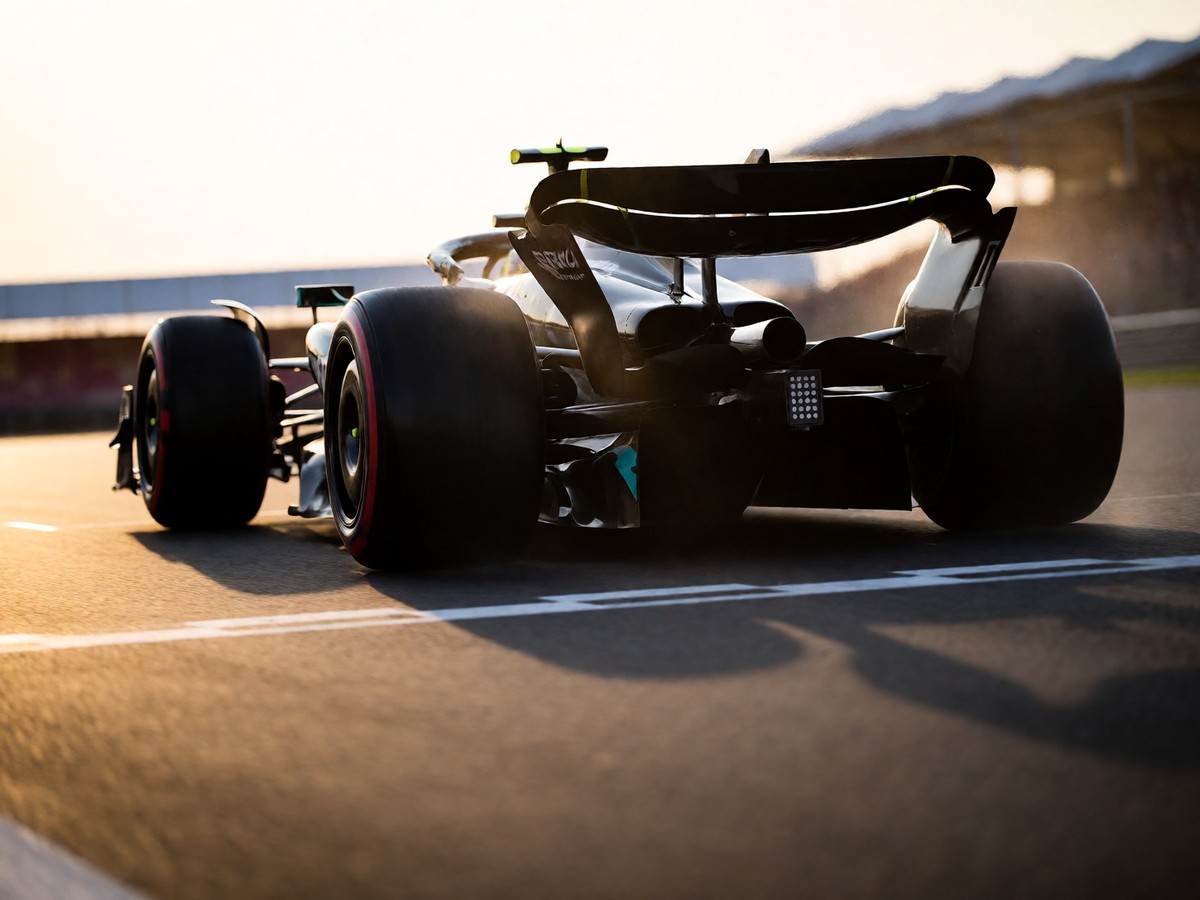
George Russell won the 2026 Australian Grand Prix after taking pole position and leading from the first lap. He finished nearly a second ahead of Isack Hadjar to secure his first win of the season. This victory helped him reach fourth in the Drivers’ Standings, even though he remains 99 points behind the championship leader. His teammate, Andrea Kimi Antonelli, has won five times this season and holds a significant points lead.
The floor is perfectly rigid
The FIA claims some teams flex floors by as much as 6mm to gain an aerodynamic advantage. This exceeds the 2mm maximum deflection allowed at the middle plank holes and the rearmost hole. Nikolas Tombazis says the FIA wants to ensure a fair and equitable relevance amongst all cars. The FIA’s new rules require uniform stiffness around the floor hole for a 15mm radial distance. This tightening targets teams that seek lower ride heights through excessive deformation.
The 2mm tolerance is now rigorously enforced to prevent cars from running too close to the ground. Some teams previously achieved higher performance by pushing the boundaries of floor stiffness. This practice allowed for higher rake and closer proximity to the track without ground strikes. The FIA introduced a draft technical directive at the British Grand Prix to address these concerns. Teams must now demonstrate compliance through detailed inspection of CAD and physical installations.
The diffuser extensions only improve airflow
Mercedes used serrated wedges along the trailing edge of the diffuser to extend its length. They combined floor stays with Article C3.2.6 to fit small closed fairings within an acute circular cone. This design provided more downforce and helped feed airflow to the rear wing. Ferrari protested this design because they proposed a similar idea four months ago that the FIA rejected. The FIA eventually issued a technical directive to stop the floor stay and edge radius trick.
The use of floor stays opened a loophole for teams to fit extra aerodynamic appendages. These appendages must blend tangentially with the filleted surfaces. There are strict dimensions on how big the cone can be to prevent designs from becoming too large. Mercedes and Racing Bulls both adjusted their designs after the FIA issued its clarification. Haas did not need to make modifications because its design was not as extreme as the Mercedes version.
Rear wings remain immobile at high speed
Lewis Hamilton suggested the Red Bull rear wing design could be bendy to increase top speed on straights. The FIA responded with a note to all teams regarding designs that exhibit excessive deflections while the cars are in motion. The FIA note details a series of new tests which focus on the behaviour of wings as they rotate backwards when specific two rearward and horizontal 750N loads are applied at a set location. New limits allow just one degree of rotation under 1000N vertical and downforce loads.
Christian Horner said the cars pass all current stringent pullback tests. He noted that the FIA is happy with the cars because they pass all required tests. However, the FIA believes these deformations significantly influence aerodynamic performance. The new tests target wings that rotate backwards at speed to gain top speed. This change aims to stop teams from pushing the boundaries with clever designs that move only when the car is on track.
Mercedes performance depends only on the chassis
Monza relies on power unit performance and energy management rather than just chassis performance. Russell says the recent races in Hungary and Zandvoort placed more emphasis on the chassis. Red Bull has a very strong power unit. Ferrari also brought a power unit upgrade to its home race. The margins between teams are small enough that a tenth of a second in qualifying changes the podium.
The 2026 regulations place more emphasis on electrical power. Drivers must judge when and how to deploy this power as a key skill. This energy management forms a massive part of the driving task. Russell noted that the long straights at Monza suit certain power units more than others. Red Bull and Ferrari remain major threats due to their engine performance.
Development speed is consistent across the grid
James Allison says Mercedes left the aerodynamic design freeze later than usual to maximize wind tunnel time. This decision left the team with no contingency and a development program running a race or two behind rivals. Other teams like McLaren and Red Bull update their cars more frequently. Every two months, teams find about 0.5 seconds of performance.
Mercedes has a 72 point lead in the Constructors’ Championship at the mid-season break. This advantage came from a high-stress engineering gamble. By delaying the design freeze, Mercedes arrived at the Melbourne season opener with a car that was miles ahead. This allowed the team to get a steep development slope in the first car. However, this strategy exhausted the immediate upgrade pipeline.
| Team | Upgrade Component | Purpose |
|---|---|---|
| Mercedes | Front drum | Improve flow attachment and rear flow |
| Mercedes | Rear wing | Circuit-specific aero |
| Mercedes | Exhaust tailpipe | Circuit-specific aero |
| Red Bull | Rear wheel bodywork | Restore load |
| Red Bull | Floor bib | Improve reliability |
| Cadillac | Rear wing flag | Increase rear aero load |
| Cadillac | Diffuser vane | Improve floor channel performance |
| Alpine | Forward floor board | Improve pressure distribution |
Mercedes arrived at the Spanish Grand Prix with three specific upgrades for the W17. These include a new rear wing, a new exhaust tailpipe, and a front drum change. The front drum change improves flow attachment through all steer conditions and helps flow to the rear. Red Bull brought an updated rear wheel bodywork assembly and a floor bib. They want to restore the load of earlier races. Cadillac added a rear wing flag and a diffuser vane.
Does the FIA’s tightening of the rules actually level the playing field?