FIA 2026 technical regulations and visibility safety standards
Technical directors and FIA officials are reviewing 2026 regulations following Oliver Bearman's 50G impact at the Japanese Grand Prix. The discussions focus on safety modifications, including car dimensions, power unit electrification, and mandatory visibility equipment.

The 2026 technical regulations face intense scrutiny this month following a heavy crash at the Aramco Japanese Grand Prix. Oliver Bearman experienced a 50G impact at the Spoon Curve, an event that drove the FIA and Formula 1 to convene a virtual regulation summit. This gathering of technical directors, engine manufacturer representatives and heads of both the FIA and F1 specifically prepares the parties for the technical modifications that officials might apply as early as the Crypto.com Miami Grand Prix on May 3. While the summit aims to assess first-phase options, a second meeting on April 20 will involve team principals to vote on proposed modifications. The commercial community views these technical discussions through a different lens, as sponsors prioritize visibility, emotion, and story over technical compliance documents.
The visibility layer and mandatory equipment
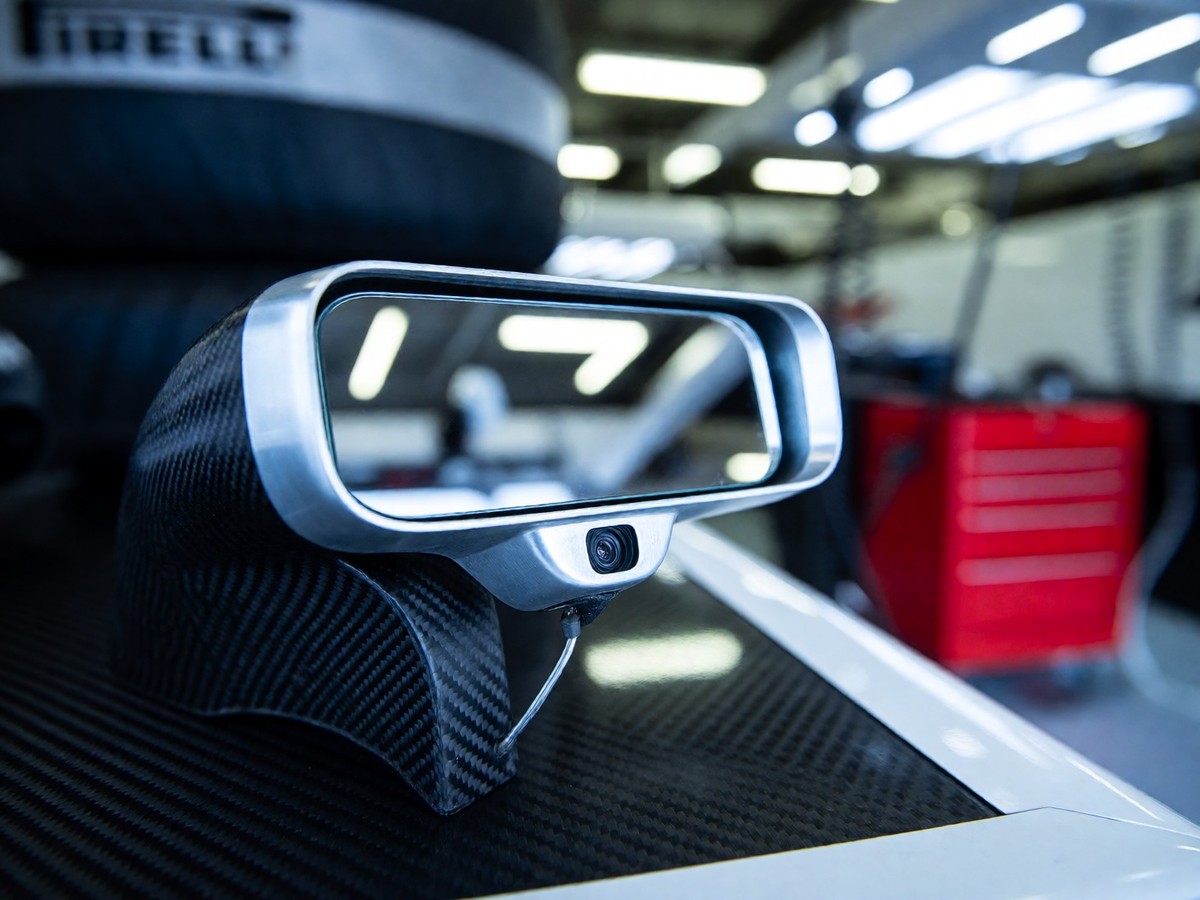
Visibility equipment forms a mandated layer of safety that exists alongside structural systems. Mirrors, rear lights, and cameras provide the essential visual data for drivers and officials. The 2026 cars require cameras as standard units to feed both broadcast coverage and the footage that stewards and the FIA use to review incidents. Rear lights include a central rain light and additional lights to increase visibility beyond the central light alone. The FIA previously increased the width of the rear-view mirror to 200mm during the 2023 season to improve driver visibility. You already know the basics of the 2026 technical overhaul, so I will focus on the specific visibility and safety standards currently under scrutiny.
Aerodynamic changes and car dimensions
The 2026 regulations aim to reduce wake turbulence to allow closer racing. The cars use simplified front wings with fewer elements and in-washing bargeboards behind the front wheel to prevent turbulent air from being cast wide. A flatter floor replaces the ground-effect generating tunnels used previously. The cars also utilize active aerodynamics, where the front and rear wings rotate between two positions. In corner mode, the flaps stay in a closed position to maintain downforce. In straight mode, the flaps move to an open position to reduce drag and increase top speed. The maximum wheelbase is 340cm, and the floor width is 190cm. The 2026 cars are smaller than the 2025 models, with the maximum wheelbase shortening by 200mm.
| Specification | 2026 Regulation Value |
|---|---|
| Minimum Car Weight | 768 kg |
| Minimum Driver, Seat, and Kit Weight | 80 kg |
| Maximum Wheelbase | 340 cm |
| Maximum Floor Width | 190 cm |
| Electrical Power Output | 470 bhp |
| Roll-Hoop Vertical Impact | 20g |
| Rear-view Mirror Width | 200 mm |
| Front Wing Width | 2000 mm |
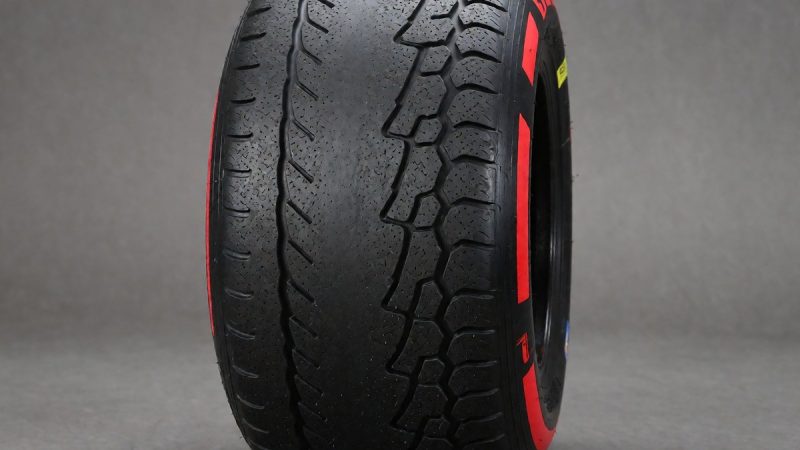
The reduction in car size also includes narrower Pirelli tyres, which decreased by 25mm at the front and 30mm at the rear. The minimum weight for a 2026 car is 768kg, which is lower than the 800kg limit from previous years. At least 80kg of the car weight must include the driver, his seat, and his kit.
Power unit and electrical deployment
The 2026 power units prioritize electrification with a 50-50 power split between the internal combustion engine and electrical components. The electrical system provides about 470bhp. Drivers use a Recharge mode to harvest energy while braking, on part throttle, or when lifting off the throttle. This lift-off regeneration disables the Active Aero devices. Super clipping allows for energy harvesting at the end of a straight while the Active Aero remains open. A Boost button allows manual control of energy deployment to attack or defend. Overtake Mode is a new 2026 addition that provides extra electrical power if a car reaches within one second of the car it chases.
The power unit consists of six components: the internal combustion engine, the turbocharger, the Motor Generator Unit-Kinetic, the Energy Store, the Control Electronics, and the exhaust. The 2026 regulations removed the MGU-H component used between 2014 and 2025. Each driver may use up to four internal combustion engines, four turbochargers, and four exhaust sets, alongside three MGU-Ks, three Energy Stores, and three Control Electronics throughout the season. The idea of lift-and-coast, in which cars visibly lose speed on straights as battery power depletes, attracted widespread criticism from drivers, fans and observers.
Structural safety and the survival cell
The survival cell is a carbon fibre monocoque that encloses the driver. This structure must remain intact even when everything attached to it has been destroyed. Every car design passes a homologation programme of impact and load tests. These tests cover front, side, and rear structures, the roll structure, and the Halo. Any change to a homologated design triggers a requirement to test again. The Halo is a curved titanium bar above the driver’s head that must withstand loads of roughly 12 tonnes.
The 2026 cars also feature a two-stage nose cone. This design allows the nose to shear off in a heavy impact and provides protection if a secondary impact occurs after the car hits a wall and spins. The roll-hoop must withstand a vertical impact test of 20g, an increase from the 16g requirement. The chassis must also survive a 30mph head-on impact into a steel barrier with a maximum deceleration of 60g for 3 milliseconds.
Cockpit protection and driver restraints
Inside the cockpit, the Halo, a custom-fitted headrest, energy-absorbing padding, and a multi-point harness work together to manage the driver’s body. The headrest uses material soft enough to deform and absorb energy on impact. Cockpit padding manages the loads a driver experiences during a crash. The multi-point safety harness works with a head and neck restraint device to control body movement during sudden deceleration.
Wheel tethers connect each wheel assembly to the survival cell to prevent wheels from becoming projectiles. A fire suppression system extinguishes fires around the cockpit and power unit. This system can trigger automatically or via the driver. The accident data recorder acts as a black box, capturing acceleration across multiple axes and the dynamic state of the car. This device recorded a 67G impact during Romain Grosjean’s 2020 Bahrain crash.
Crash testing and impact limits
The FIA mandates strict physical testing for all chassis designs. The nosebox must withstand 40kN for 30 seconds without failure. Side impacts by a 780kg object at 10m/s must decelerate at less than 20g and absorb between 15% and 35% of the total energy, with 80kN not exceeded for more than 3 milliseconds. The cockpit must survive a 25kN force with no failure, while the fuel tank must withstand 12.5kN. The cockpit rim must survive 10kN and 20mm of deformation.
The steering wheel must survive an 8kg object at 7m/s with no deformation or damage to the quick-release mechanism. If a car exceeds its engine allocation, the driver receives a grid place penalty at the first event where the replacement component is used. The minimum weight of the car and driver together is 724kg. Will the FIA’s review process effectively prevent another high-G impact like the one at Spoon Curve?
Racing protocols and scoring systems
Formula 1 uses specific scoring for races that are interrupted. If a race is suspended and more than 75% of the distance is completed, full points are awarded. If the race completes between 50% and 75% of the distance, points go to the top 10 drivers. Between 25% and 50% of the distance, points go to the top 9. If the race completes less than 25% of the distance, points go to the top 5. No points are awarded unless the cars complete at least two laps under green flag conditions.
The current points for a standard race are 25, 18, 15, 12, 10, 8, 6, 4, 2, and 1. For the 2026 season, the grid includes 11 teams and 22 cars after the arrival of Cadillac. The arrival of new teams impacts the format of Qualifying and Sprint Qualifying sessions. In these sessions, the number of cars eliminated in Q1 and Q2 rises from five to six. I find the constant technical shifts across the 2026 regulations to be a heavy burden for teams trying to maintain stability.