FIA 2026 environmental strategy leadership
Felipe Calderón leads the FIA environmental commission as the organization targets a 50% reduction in operational emissions by 2030. The strategy includes transitioning Formula 1 to second-generation waste fuels and partnering with the Ellen MacArthur Foundation for battery circularity.

The FIA aims to reduce emissions from its own operations by 20% in 2025 and 50% in 2030 when compared with the 2019 baseline. This trajectory follows the Science-based Target Setting Tool and accounts for a climate scenario aligned with a 1.5 degree increase in temperature. The organization calculates its carbon footprint using the GHG Protocol and relies on independent verification from Global Climate Initiatives. In 2022, the organization saw a rise in activities and staff numbers compared to the previous three years. Total GHG emissions for the organization are nearly at 2019 levels, which is a 0.7% increase. However, the average footprint per employee fell 16% relative to the 2019 baseline despite a 20% increase in staff.
Felipe Calderon leads FIA environmental commission
Felipe Calderon is the President of the Environment and Sustainability Commission of the FIA. He previously chaired the UN COP 16 Climate Change Conference. This conference was a significant event that established the Green Fund for climate action. Calderon is also the Honorary Chairman of the Global Commission on the Economy and Climate. He is a member of the Board of Directors of the World Resources Institute. He previously served as the President of Mexico from 2006 to 2012. During that time, he oversaw economic growth and increased infrastructure investment. He also chaired the G20 Leaders Summit. His leadership in environmental issues includes receiving the Champion of the Earth award from the United Nations.
Formula 1 shifts to second-generation waste fuels
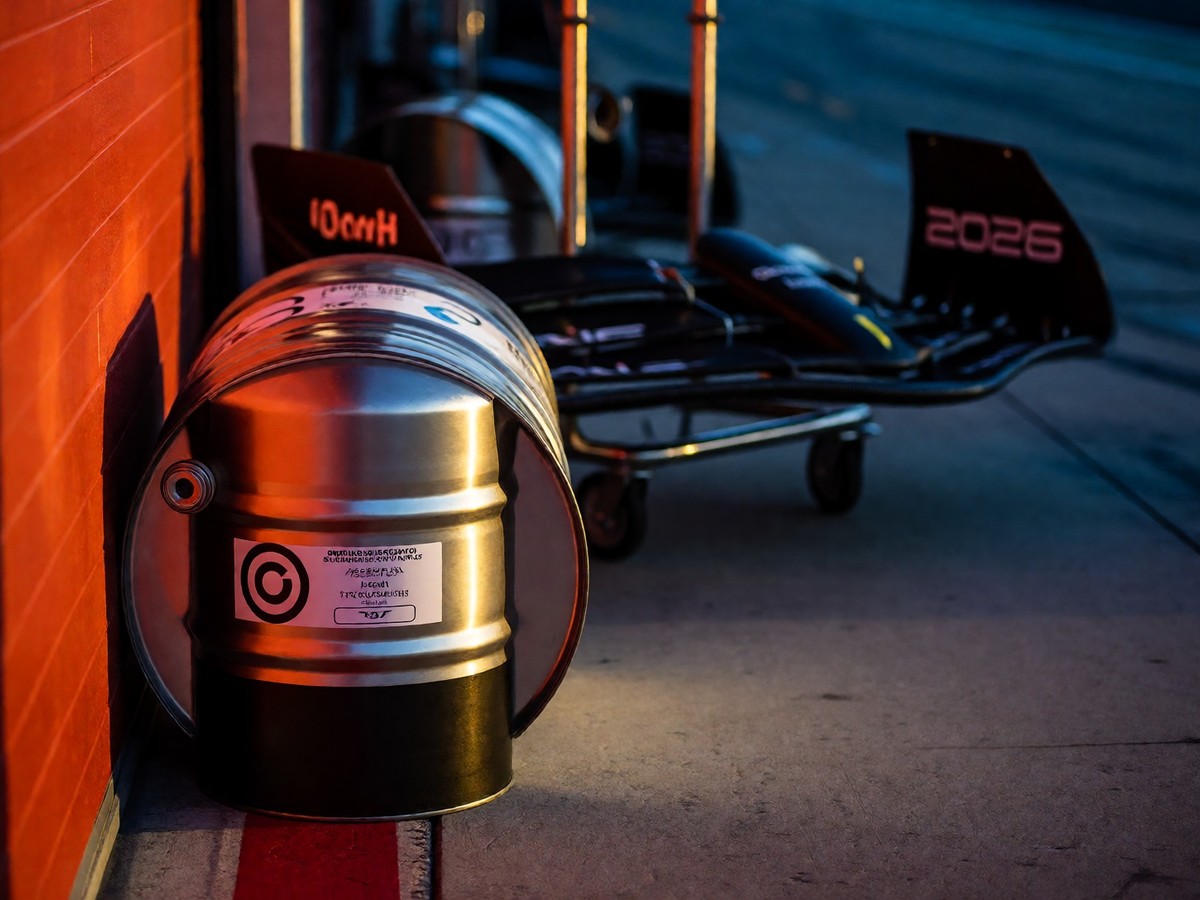
The FIA mandate for 2026 specifies that cars must use fuels derived from advanced sustainable sources. These sources are second-generation waste. This means the fuel comes from residues or microalgae rather than food crops. The goal is to ensure the fuel does not compete with human food sources. If a material is edible, the regulations do not allow its use for fuel. For example, the peel of a fruit is an acceptable source, but the part people eat is not. The supply chain for these fuels must achieve a greater than 65% greenhouse gas emission reduction. You already know that F1 undergoes regulation changes, but the 2026 fuel mandates are a deeper shift in chemical engineering.
ExxonMobil spent three years and used 75 people to develop these fuels for teams like Red Bull. The team’s scientists went through 100 plus formulations to meet the FIA requirements. One tank of this fuel can power an average detached home for three to four weeks. The fuel is ready and certified for the season as of the fourth quarter of 2025. The FIA uses the Sustainable Racing Fuel Assurance Scheme to trace the origin of every component. This scheme involves the Zemo Partnership and uses third-party verification to analyze the blended racing fuel. Will these advanced fuels eventually reach the mass market of road vehicles?
Battery circularity and the Ellen MacArthur Foundation
The Ellen MacArthur Foundation works with industry leaders to build a circular economy. CATL is a Strategic Partner in this network to develop a circular battery industry. The industry faces complexity when translating commitment into reality. In 2024, CATL recycled 130,000 tons of used batteries to produce 17,000 tons of lithium salt. Joe Murphy, the Executive Lead for the Network at the Ellen MacArthur Foundation, states that businesses can recover valuable resources from electric vehicles rather than discarding them. By combining knowledge and innovation capabilities in the battery industry with the leadership of the Foundation, CATL is positioned to create a truly circular battery ecosystem that benefits industries and communities worldwide.
The Foundation also works with other companies to decouple economic activity from the consumption of finite resources. Bridgestone is a member of the Ellen MacArthur Foundation’s Circular Economy 100 programme. As the first Japanese member, Bridgestone works to integrate circular economy concepts into its tire lifecycle. This includes recycling and the smarter use of materials. Cemex is also a Network Partner with the Ellen MacArthur Foundation. Cemex uses its Regenera business to integrate circular economy principles into the cement supply chain. In 2023, Regenera recovered over 9 million tons of construction and demolition waste. This waste is used as raw materials for aggregates in concrete production.
Technical specifications for 2026 racing cars
The 2026 Formula 1 regulations introduce the Nimble Car Concept. These cars use a 50-50 power split between internal combustion and electrical systems. The cars are smaller and lighter than previous models. The minimum weight is 768kg. The maximum wheelbase is 3.4m. The floor width is 1.9m. The cars use active aerodynamics to adjust the angle of the front and rear wings. In Straight Mode, the flaps move to an open position to reduce drag. In Corner Mode, the flaps stay in a closed position to maintain downforce.
| Specification | 2026 Value |
|---|---|
| Minimum Weight | 768kg |
| Maximum Wheelbase | 3.4m |
| Floor Width | 1.9m |
| Power Split | 50% electrical / 50% combustion |
| GHG Fuel Reduction | >65% |
| Driver Recharge Mode | Manual lift-off regeneration |
Drivers can use a Boost button to take manual control of energy deployment. This tool allows them to return to maximum power or a pre-configured profile. The Overtake Mode provides extra electrical power if a car stays within one second of the car in front. This mode provides an additional 0.5MJ of energy. The cars also use a two-stage nose cone. This design provides protection in the event of a secondary impact after an initial hit. The vertical impact test for the roll-hoop is 20g.
Formula E and sustainable supply chain targets
Formula E uses a single-supplier model for chassis, battery, and tires. The FIA chooses these suppliers through competitive tenders. Sustainability is 20% of the scoring in these tenders. Every Formula E car requires 20% recycled content in its bodywork. Tires for these cars contain 65% renewable and recyclable materials. The series is entering its fourth generation of cars this year. These Gen 4 cars produce more than 800 horsepower. They run with full-time four-wheel drive.
The energy used in Formula E races is changing. In Gen 1, regenerative braking provided 15% of the race energy. In Gen 4, this number is 50%. This means half of the energy used during a race comes from regeneration. The technology used in these cars is transferred to the automotive industry.
| Era | Power (hp) | Regeneration Energy |
|---|---|---|
| Gen 1 | 200 | 15% |
| Gen 4 | 800+ | 50% |
FIA administrative emission reduction targets
The FIA has specific goals for its own operations. The organization aims for a 20% reduction in emissions by 2025. It also seeks a 50% reduction by 2030. These targets use the 2019 baseline. To achieve this, the FIA implemented a new business travel policy. It also uses measures to reduce energy consumption and sources renewable electricity. The organization is reducing freight for FIA events. An extended homeworking policy is also part of the plan to reduce staff commuting footprints. The FIA administration carbon footprint in 2022 showed that overall emissions are nearly at 2019 levels. This is a 0.7% increase in total emissions, but the footprint per employee is lower.
Expanding circular economy partnerships
The FIA Foundation works to support the FIA’s environment strategy. The Foundation targets the transition to low and zero carbon mobility. It works through the Global Fuel Economy Initiative to assist with fuel efficiency and electrification. This initiative works with more than 100 countries. The Foundation also works in the built environment. The building and construction sector accounts for 37% of global CO2 emissions as of 2021. Incorporating circular economy principles in this sector can reduce global CO2 emissions from building materials by 38% by 2050. The FIA Foundation works with the UN Environment Programme to build urban emission initiatives. This includes the TRUE initiative, which focuses on measuring real world vehicle emissions in megacities.