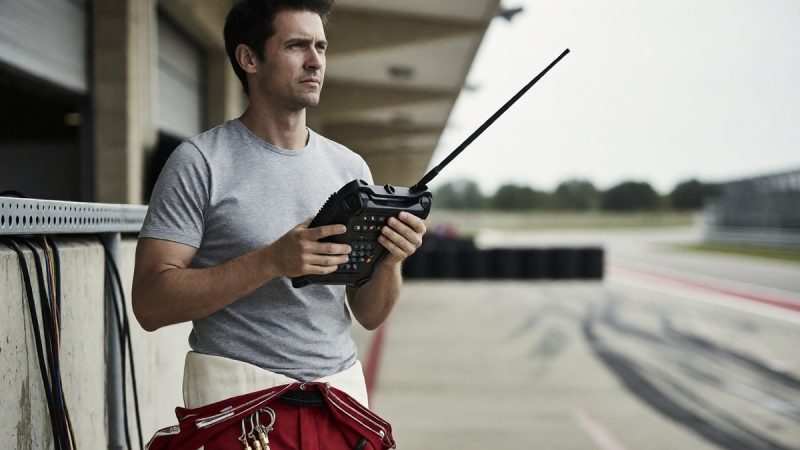
Encrypted messaging and radio protocols in Formula 1
Formula 1 teams utilize encrypted radio channels and complex frequency management to protect strategic data from rivals. Engineers must navigate significant signal interference at Monaco while adhering to FIA Article 20.1 regulations regarding driver coaching.

Why teams encrypt radio channels
Teams encrypt radio channels to prevent rival teams from accessing strategic information. If a team discusses a pit stop or a specific engine mode, an opponent can use that information to plan a counter-strategy. Telemetry details about car conditions also travel through these channels. Encryption prevents other teams from devising strategies to exploit a car’s weakness. This security is a necessity because conversations on TV allow other teams to listen in. Teams use coded language like "Plan B" to ensure the true meaning stays inside the garage. A single radio channel connects a driver to a race engineer. This engineer acts as the funnel for all information from strategists, analysts, and crew. He turns all data into a few calm sentences that a driver can act on mid-corner.
Environmental interference at Monaco
Monaco presents unique radio difficulties because of the urban environment. Taxis and the proximity of city centers cause signal interference. Engineers deal with electrical noise from the generator and the voltage regulator. Mechanical noise from vibrations also interferes with the connection. The intermodulation effect occurs when a security guard or broadcaster passes through a garage, even if they use different frequencies. Because the radio frequency spectrum remains completely full on a race Sunday, engineers must manage dozens of channels to avoid interference from security personnel, broadcasters, and the high number of other radios in use. Engineers also face scratches in the signal when they pass big transformers. Some circuits are harder than others because trees absorb radio waves.
Hardware inside the driver helmet
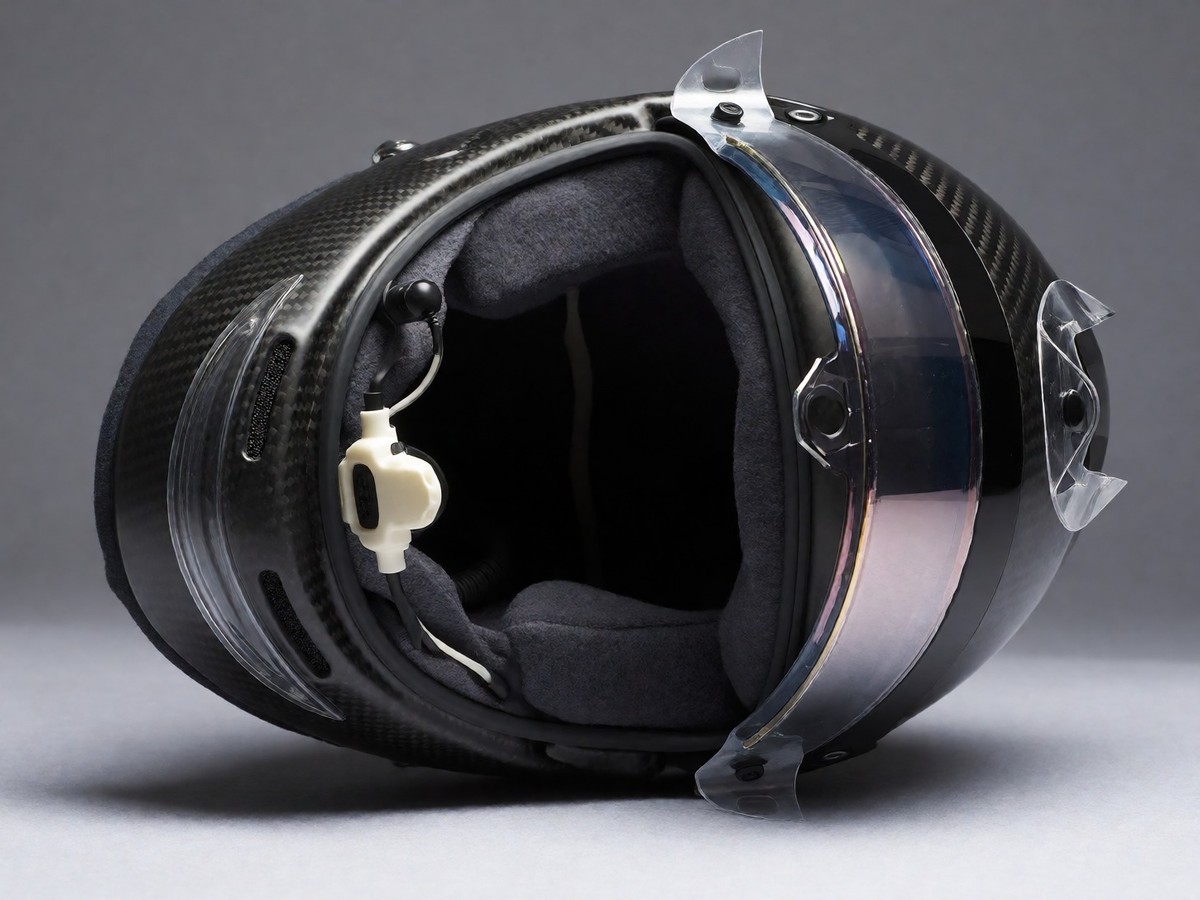
The radio equipment in the car weighs roughly 200 grams. Drivers use microphones that measure 5mm in diameter and 2mm in thickness. You should know that the equipment is incredibly light to meet weight requirements. Noise-cancelling technology uses a double-face microphone. One side of the microphone finds the noise while the other side captures the voice. This system achieves 80% noise suppression in laboratory settings. The driver receives replies through an earpiece built into the helmet. Drivers also use earplugs to manage the heavy noise pressure in the cockpit.
The FIA rules on driver coaching
The FIA enforces Article 20.1 of the sporting regulations. This rule states the driver must drive the car alone and unaided. This prevents engineers from providing instructions on racing lines, braking points, or gear selection. Mercedes boss Toto Wolff expressed concern regarding how these restrictions affect on-track procedures. He noted that the directive requires further clarification. Drivers receive warnings about traffic, but they cannot receive instructions on how to drive the car. This rule exists to keep the driver in control of the vehicle.
Telemetry systems and data processing
Telemetry streams thousands of data points every second from the car to the engineers. This data includes tire pressure, engine performance, and fuel usage. Teams use these streams to adjust strategies mid-race or detect mechanical issues. Secure radio frequency systems protect this data. Machine learning algorithms identify patterns in the data. These systems recognize normal conditions and flag unusual deviations. Data visualization tools transform the raw numbers into actionable insights.
For hybrid cars, telemetry provides updates on battery charge levels, energy recovery rates, and the best zones to deploy stored electrical energy. Drivers use this information to decide when to push for overtakes. As the race progresses, telemetry monitors brake temperatures, pressure distribution, and stopping distances. This information allows drivers to make adjustments to brake balance.
| Sensor Type | Metric Monitored |
|---|---|
| Engine Sensor | Oil and coolant temperatures |
| Tire Sensor | Pressure and surface temperature |
| Aerodynamic Sensor | Airflow and downforce |
| Fuel Flow Meter | Mass flow rate (kg/h) |
The Allengra fuel flow meter security
The Allengra fuel flow meter uses three levels of security to prevent manipulation. The first level uses pipes with different geometries to prevent mechanical synchronization. The second level uses distinct measurement frequencies for each pipe. This prevents teams from replicating the frequency of the encrypted FIA unit. The third level relies on the fact that the FIA meter operates at a frequency that remains inaccessible in real-time. The meter samples fuel flow 6,000 times per second. It uses an ultrasonic reference sensor that operates at 20kHz to validate measurements. The measurement happens in a U-shaped chamber where ultrasonic transducers exchange signals across the fuel. This method calculates fluid velocity by measuring the differential transit times of the signal. The system converts this to mass flow rate by accounting for fuel density and temperature. The 2026 regulations set the mass flow limit at just over 70 kg/h. There is also an absolute energy flow ceiling of 3,000 MJ/h. The formula for energy flow below 10,500 rpm is EF (MJ/h) = 0.27 x N (engine speed in rpm) + 165.
Frequency management in the paddock
Each team handles between 20 and 40 frequencies. These channels cover the driver, mechanics, and telemetry for the chassis and engine. On a Sunday, 600 to 700 radios operate at the same time. This includes security, catering, broadcasters, and the VIP village. Government agencies wander the paddock with machines to look for unauthorized signals. Managing these signals is a complex task. How will teams manage the increasing number of electronic devices in the future?
Approved and prohibited radio messages
The FIA allows certain messages but bans others to ensure the driver remains the sole decision maker.
Allowed messages include:
- Acknowledgement that a driver message has been heard
- Lap or sector time details
- Lap time details of a competitor
- Gaps to a competitor during a practice session or race
- Commands like "push hard" or "push now"
- Warnings regarding traffic during a practice session or race
- Gaps between cars in qualifying
- Puncture warnings
- Tire choice at the next pit stop
- Number of laps a competitor has done on a set of tires
- Tire specification of a competitor
- Indications of a potential problem with a competitor’s car
- Information on a competitor’s likely race strategy
- Flags, such as yellow or blue flags, and Safety Car deployment
Banned messages include:
- Sector time details of a competitor and where a competitor is faster or slower
- Adjustments to power unit settings
- Adjustments to power unit settings to de-rate the systems
- Adjustments to gearbox settings
- Information regarding the gears of the gearbox
- Balancing the state of charge of batteries or adjusting for performance
- Information on fuel flow settings
- Information on the level of fuel saving needed
- Information on tire pressures or temperatures
- Information on differential settings
- Start maps related to clutch position for race starts and pit stops
- Information on clutch maps or settings
- Burn-outs prior to race starts
- Information on brake balance or brake-by-wire settings
- Warning on brake wear or temperatures
- Selection of driver default settings
- Answering a direct question from a driver
- Any message that appears to be coded