The Mercedes split turbo innovation and F1 engine packaging
Mercedes engineers revolutionized Formula 1 power units by separating the compressor and turbine with a long shaft and MGU-H. This layout provided thermal and aerodynamic advantages that helped the team win 16 out of 19 races in 2014.

The 2014 Formula 1 season introduced a massive shift in power unit regulations. The new rules mandated 1.6-liter V6 engines with turbochargers and advanced energy recovery systems. These units use a 90 degree V configuration and include two specific electric motors. The MGU-K connects to the crankshaft to harvest energy during braking and provide power during acceleration. The MGU-H connects to the turbocharger shaft to turn waste exhaust energy into electricity or to spin the turbo to reduce lag. Each engine has an 80mm cylinder bore and a 53mm piston stroke. The fuel system uses 50 MPa gasoline direct injection. To ensure efficiency, the regulations limit total race fuel consumption to 100kg. The total power unit weight must be at least 145kg. These technical requirements forced manufacturers to rethink the entire layout of the engine.
The unconventional split turbo geometry
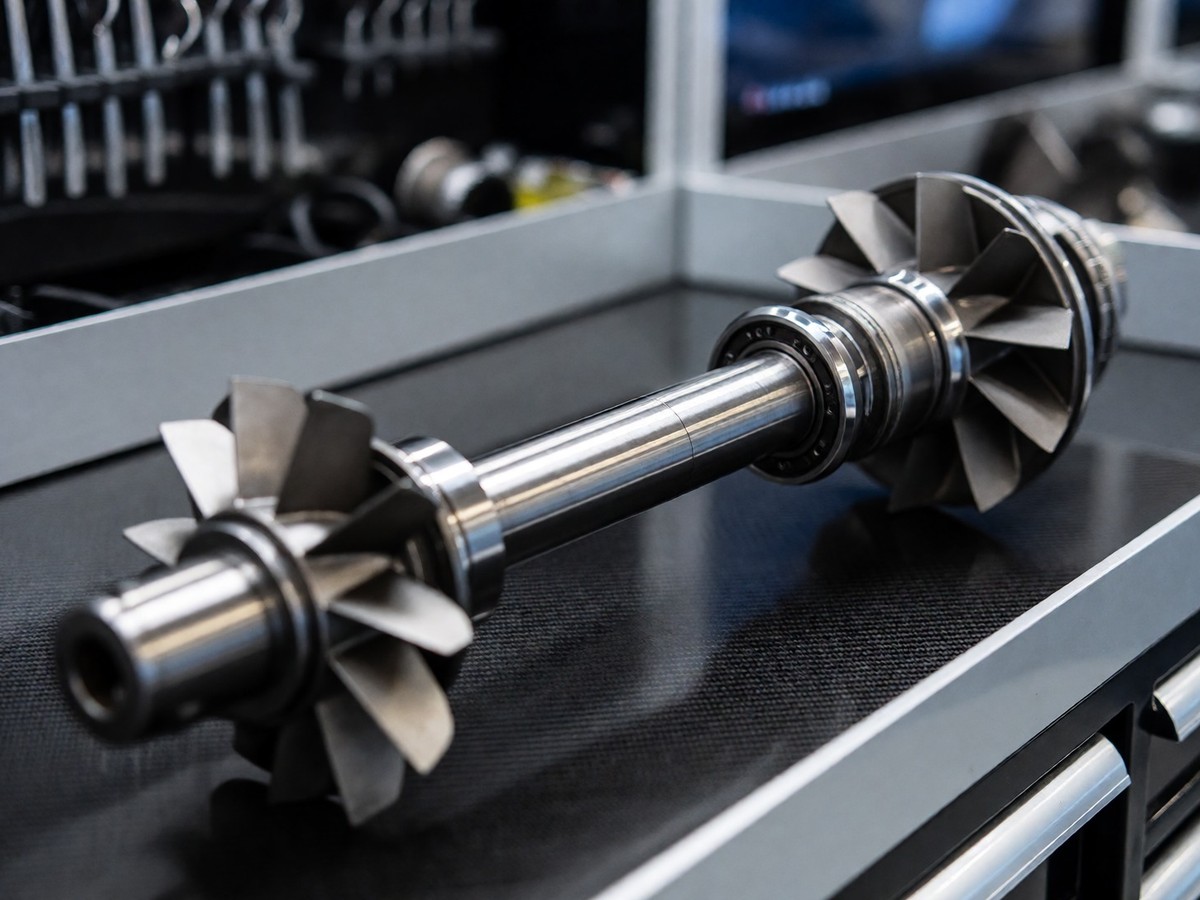
The Mercedes design is unconventional compared to other manufacturers. Most teams used a traditional turbocharger where the compressor and turbine sit back to back on a short shaft. The Mercedes design separates these two components. The compressor is at the front of the engine. The turbine is at the rear. A long shaft connects them and passes through the V of the engine. The MGU-H sits in the center of the V between the compressor and the turbine. You already know the basics of how a turbocharger works, so let’s examine the specific packaging advantages Mercedes achieved. This layout allows for better management of the internal components. The separation of the two halves is the core of the Mercedes strategy.
Thermal and aerodynamic packaging gains
Separating the turbine from the compressor provides significant thermal benefits. Heat from the exhaust gases does not bleed into the compressor as much as it does in traditional designs. This separation reduces intake temperatures. A smaller intercooler is sufficient because of these lower temperatures. The packaging also gives chassis designers more freedom. They can use the space for aerodynamic optimizations. The layout allows for cleaner exhaust piping and shorter intake piping. Shorter intake piping reduces turbo lag and improves driveability. The Mercedes split-turbo layout is the definitive technical advantage of the early hybrid era.
Technical specifications of the Mercedes power unit
| Specification | Mercedes V6 Turbo-Hybrid |
|---|---|
| Configuration | V-6, 90 degree |
| Displacement | 1.6 L (98 cu in) |
| Cylinder Bore | 80 mm (3.15 in) |
| Piston Stroke | 53 mm (2.09 in) |
| Valves | 24-valve (4 per cylinder) |
| Max Engine Speed | 15,000 rpm |
| Fuel System | 50 MPa gasoline direct injection |
| Power Output (2014) | 630 kW (840 hp) |
| Power Output (2022) | 800 kW (1,070 hp) |
| Dry Weight | 145 – 150 kg |
Engineering challenges of high speed rotation
High speed rotation creates massive physical stress on the components. Turbochargers in a Formula 1 car spin at over 100,000 RPM. Because the turbochargers in a Formula 1 car spin at over 100,000 RPM, making the shaft an order of magnitude longer creates a greater moment arm that exacerbates even the smallest vibrations significantly. Even a tiny imbalance can destroy a turbo in seconds. Mercedes engineers used institutional experience from the Daimler truck division to manage these vibrations. They began work on this engine in 2011 to prepare for the 2014 season. The team used advanced materials and machining to keep the long shaft stable. This engineering feat allowed Mercedes to maintain reliability while other teams struggled with their new power units.
Dominance and the strategy of stealth
Mercedes dominated the early turbo-hybrid years. In 2014, the team won 16 out of 19 races and took 19 pole positions. In 2015, they won 16 races and took 18 pole positions. In 2016, they won 19 races and took 20 pole positions. Paddy Lowe, the former executive technical director, said the team ran in an idle mode during qualifying to hide their dominance. This was a deliberate choice to avoid rule changes from the FIA. If Mercedes looked too powerful, officials might change the regulations to slow them down. Toto Wolff and the Daimler board expressed concern about the negative politics of looking too good. In 2014, the team’s advantage in Australia was only 0.85 percent. In 2015, the advantage in Canada was 0.83 percent.
Road car application and limitations
The technology from the track reaches the road through the Mercedes-AMG ONE. This hypercar uses a modified version of the PU106B engine. The internal combustion engine produces 422 kW. The engine has a 1,280 rpm idle and an 11,000 rpm redline. The car reaches a top speed of 219 mph and accelerates from 0 to 100 km/h in 2.9 seconds. The MGU-K and MGU-H in the car are similar to the F1 versions. They help recover energy and improve efficiency. However, the tight machining tolerances required for such a long, high-speed shaft would make such turbos prohibitively expensive for any road car. Maintenance intervals for such a system are also unsuitable for daily driving.
Competitor responses to the Mercedes layout
Other manufacturers eventually tried to replicate the Mercedes success. Honda adopted the idea for their 2017 engine. Renault and Ferrari have also been linked to the split-turbo concept. Mercedes held a significant power advantage for years. In 2014, rumors suggested the Mercedes engine had 100 horsepower more than the Renault or Ferrari units. Mercedes won 7 Drivers’ Championships and 8 Constructors’ Championships during this era. Will other manufacturers eventually master this specific split-turbo configuration to match Mercedes’ past dominance?