FIA proposes floor support changes to close Red Bull design loophole
FIA technical delegates plan to reduce floor support dimensions from 20mm to 5mm to prevent teams from using structural cables to create sharper sidepod edges. This regulation change targets a design used by Red Bull and Audi to bypass standard radius requirements.

The technical clampdown
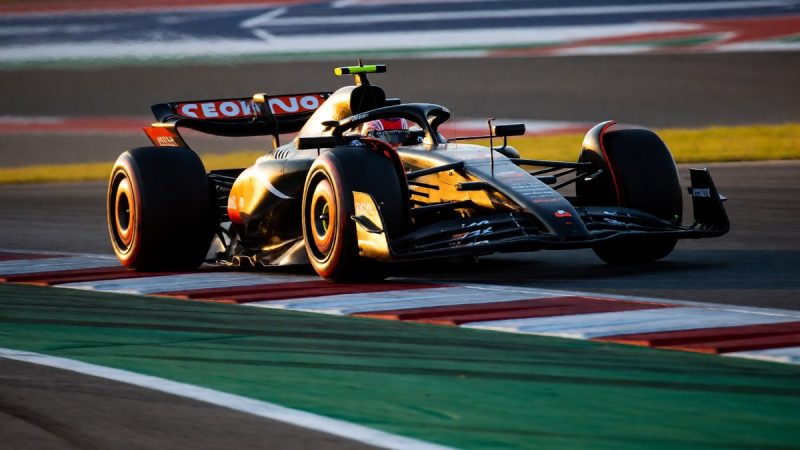
The FIA technical delegates intend to reduce the floor support dimension from 20mm to 5mm to prevent teams from using the structural cable to permit the sharper sidepod edges seen on the RB22. This decision targets the floor body stay Red Bull introduced at the June Austrian Grand Prix. Technical expert Craig Scarborough pointed out that while regulations enforce a large minimum radius for sidepod edges, the presence of this cable allows bodywork near the support to have a 20mm radius. Red Bull used this to mould a sharper, more aggressive undercut than rivals, a design Audi copied in Baku a few rounds after the debut. This loophole allows the Milton Keynes team to bypass the standard radius requirements by placing bodywork near the cable.
| Component | Current Regulation (2026) | Proposed Regulation (2027) |
|---|---|---|
| Floor support radius | 20mm | 5mm |
Red Bull’s momentum and redesign
I find the FIA’s decision to close this loophole at the most effective time for Red Bull quite awkward. Max Verstappen won consecutive races in Malaysia and Singapore, and he now seeks a hat trick in Austin. The proposed 5mm limit will force both Red Bull and Audi to redesign their sidepod areas for the 2027 season. Verstappen, who aims for a hat trick in Austin on October 25, noted that the car became "more balanced" and he is happy he can compete further up front without issues. He wants to add more podiums and hopefully a few wins since he is not in a championship fight.
The team must now prepare for a complete redesign. While the current design conforms to the current regulations, the FIA will amend the rulebook to remove the possibility of carrying this solution into 2027.
Engine calibration and leadership
Red Bull Power Trains also gains performance through calibration work with fuel supplier Exxon Mobil, as technical director Ben Hodgkinson said that creating the most powerful engine possible made the combustion system challenging to manage for maximum performance. This task puts "an awful lot of pressure" on the calibration team to ensure the engine works at the right level. He noted the team had a "nice step of learning" between the Baku weekend and the win at Sepang. The team works on how to balance energy and where to harvest it to help drivers. Hodgkinson said the team started with "quite immature calibrations" but improved through every single race. He also mentioned that the decision to keep developing the engine longer than planned left the team with less time for durability runs. He said that there is still improvement to be had from the calibration side and that hardware changes could make the engine less of a "diva."
The team also secured stability by extending Laurent Mekies’ contract until the end of 2031. Mekies, who replaced Christian Horner in July 2025, helped to reignite Max Verstappen’s faltering title defence that season. Mark Mateschitz announced the extension during a team debrief in Milton Keynes following wins in Bahrain and Singapore. Oliver Mintzlaff, the CEO of Corporate Projects and Investments at Red Bull GmbH, said Mekies demonstrated "outstanding leadership" since returning to the team. Mekies previously served as the team principal and CEO of Racing Bulls and held senior roles at the FIA and Ferrari. He started his career at Arrows in 2001 and then moved to Minardi in 2002.