The 2026 aerodynamic overhaul and tightening of FIA tolerances
The FIA is tightening rear wing deflection tests to prevent aeroelasticity exploitation. Following analysis from the Shanghai Grand Prix, the effective slot gap limit has been set at 0.75mm to maintain aerodynamic consistency.

The 2026 regulations target a 30kg reduction in car mass. This brings the minimum weight to 724kg including the tyres. The wheelbase decreases by 200mm to 3400mm. The car width is 1900mm. The floor width is 150mm narrower. These dimensions support the Nimble Car Concept. Downforce will drop by 30% and drag will fall by 55%. I see this mass reduction as the primary driver for the new chassis design.
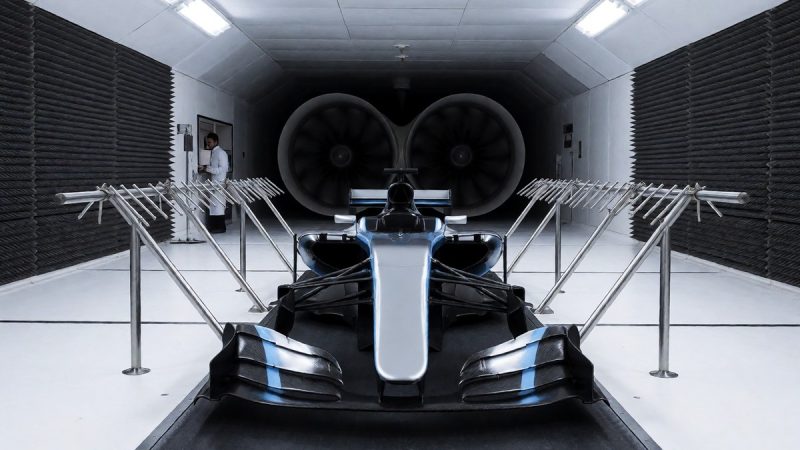
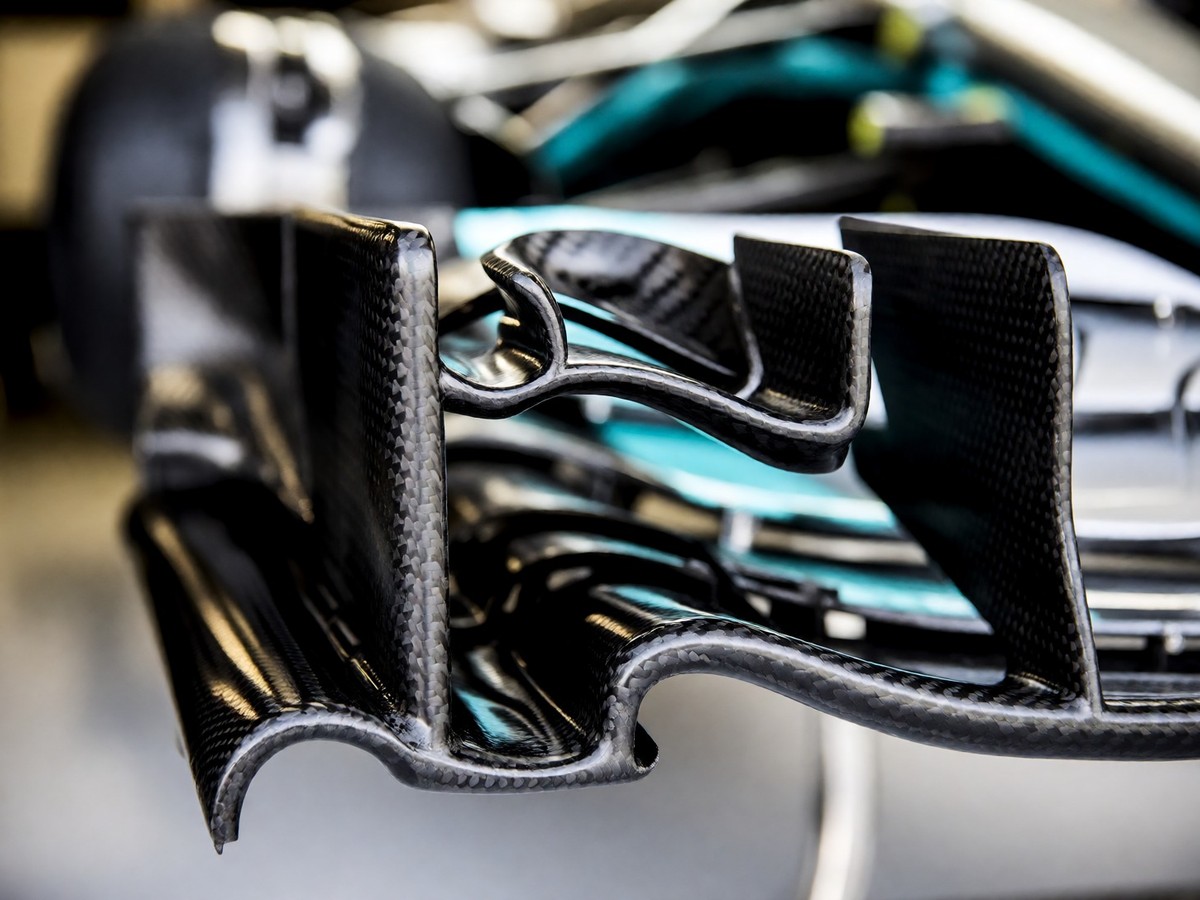
The front wing design changes significantly for the new era. It is 100mm narrower than previous models. It uses a two-element active flap. The front wing produces 25% of the total downforce. It also produces 30% of the total drag. The endplate footplate is now roughly the width of the tyre. The main endplate body moves further inboard. This moves the endplate to manage the flow to the tyre. The endplate shapes previously morphed into forms that permitted a lot of outwash. The FIA aims to maintain good characteristics for a longer period in 2026.
The front wing must also manage the flow to the rest of the car. It does not simply make downforce like a rear wing. The front wing must be efficient with a high L/D ratio. The endplate footplate is responsible for a vortex. This vortex wraps around the tyre from the inboard side. This vortex pushes the low-energy tyre wake away. This effect is known as outwash.
Front wing geometry and suspension constraints
The front suspension consists of two pairs of wishbones. Each pair has two connecting members. The fairing for each member must be symmetrical. Each fairing is no longer than 100mm. The length to height ratio for a fairing is less than 3.5:1. High aspect ratios cause flow separation. Low aspect ratios reduce drag. The angle of attack for front suspension fairings must be between 10deg and 0deg. This influences upwash and downwash.
The rear suspension fairings have an angle of attack between 10deg and -10deg. Both front and rear suspensions must have six members. The suspension affects the aerodynamics of the car. The aero department is responsible for the outboard suspension. The shape and placement of the fairings have a significant aerodynamic impact.
The front wing elements are shorter laterally. They no longer sit directly in front of the wheels. This design choice means teams may forgo Gurney flaps. Generating too much front downforce can limit the rear ability to produce its share of downforce.
The floor is a flat floor defined as a simply connected volume. This reduces the ground effect. The floor width is 150mm narrower. The floor has a lower-powered diffuser. The plank has three 34mm diameter holes at Y = 0. The XF plane passes through the revolution axis of the front wheels. The XC plane passes through the rear of the cockpit. The XPU plane passes through the mounting face of the connections between the Power Unit and the Survival Cell. The position of the holes is constrained. XF is 500. The XC plane is between -800 and -600. The XPU plane is between 470 and 630. The center of the rearmost hole lies on or ahead of XR = -500.
Active aerodynamics and mode transitions
Active aerodynamics is a major change for 2026. Drivers switch between Corner Mode and Straight Mode. This system replaces the old DRS. The front and rear wings have movable elements. In Corner Mode, the flaps stay in the normal high downforce position. This improves cornering speed. In Straight Mode, the flaps open to reduce drag. This increases top speed.
The front wing produces 25% of total downforce and 30% of total drag. The rear wing produces 25% of downforce and 20% of drag. The active wings allow drivers to alter about half of the car’s aero balance. The transition between modes must be stable. A mismatch in movement between the front and rear wings can create a sharp balance shift. This shift happens in the middle of a corner.
You already know that aerodynamic consistency matters for race pace. If the wings do not transition in sync, the car may feel nervous. The car’s aerodynamic center shifts during the transition. This is a significant challenge for engineers.
The aero trim ties into the power unit. More drag in Z-mode pulls more energy from the battery. This makes energy management a part of the aero package.
| Aerodynamic Specification | Value |
|---|---|
| Front Wing Downforce | 25% |
| Front Wing Drag | 30% |
| Rear Wing Downforce | 25% |
| Rear Wing Drag | 20% |
| Total Downforce Reduction | 30% |
| Total Drag Reduction | 55% |
Rear wing slot gap and deflection limits
The FIA tightened the rear wing deflection tests. This decision follows the analysis of on-track deformations from the Australian Grand Prix. The FIA used extra high-definition cameras to monitor deformations in Free Practice. The FIA also used reference dot stickers on the cars. The analysis of footage and static deflections showed sufficient grounds for a tougher test. This test focuses on the upper rear wing.
The 2025 regulations limited the slot gap variation to 2mm. The slot gap is the distance between the mainplane and the flap. This limit applies when 75kg of vertical load is applied to the mainplane. From the Shanghai Grand Prix, this limit is 0.5mm. The FIA added a 0.25mm tolerance because of the short notice. This makes the effective limit 0.75mm for the event in China.
The FIA exercised its authority under Article 3.15.1 of the Technical Regulations. This allows for new or more challenging load-deflection tests. The FIA also introduced tougher stress tests on front wings from the Spanish Grand Prix.
The reduction in slot gap tolerance targets aeroelasticity. Some teams tried to exploit the slot gap to increase straight-line speed. This was once called mini-DRS. The FIA wants to prevent this manipulation. Will teams find a way to bypass these new deflection limits through aeroelasticity?
Power unit evolution and energy management
The power units use a 1.6-litre V6 turbo hybrid engine. The internal combustion engine produces 400kW. The battery element produces 350kW. This creates a 50/50 split between the thermal and electrical power. The MGU-H is removed from the 2026 regulations. The energy recovery system can generate 8.5MJ of energy per lap.
Drivers use Overtake Mode to assist passing. This mode is for drivers within one second of the car ahead. It provides an extra 0.5MJ of electrical energy. The leading car’s energy deployment tapers off after 290km/h. The car behind can use the override for a full 350kW up to 337km/h. This speed differential helps passing moves.
Energy management is a primary responsibility for drivers. The battery energy is limited. A car with too much wing adds drag. This drag drains the battery before the end of a straight. This phenomenon is called superclipping. Superclipping leaves only 540hp from the combustion engine.
| Power Unit Specification | Value |
|---|---|
| ICE Power Output | 400kW |
| Battery Power Output | 350kW |
| Energy Recovery per Lap | 8.5MJ |
| Overtake Mode Energy | 0.5MJ |
| Power Split Ratio | 50/50 |
Safety improvements and impact protection
The FIA prioritizes safety in the 2026 regulations. The front impact structure has a two-stage design. This design mitigates the risk of detachment in initial impacts. Side intrusion protection is more stringent. The protection around the driver and fuel cell area is better. The fuel cell area has more than double the current protection.
The roll hoop loads have increased from 16G to 20G. Test loads have increased from 141kN to 167kN. The car must be safer and more secure. The FIA also standardizes rear wing endplate lights. It also introduces lateral safety lights. These lights indicate the Energy Recovery System status when a car is stationary.
Tyre profiles and wheel specifications
Pirelli supplies 18-inch wheels for the 2026 season. The 18-inch format remains the same as in 2022. The width of the front tyres is 25mm narrower. The rear tyre width is 30mm narrower. These changes help achieve better drag numbers and trim mass.
The narrower tyres have a secondary effect. The car is more sensitive to tyre deformation when following closely. This is especially true if a driver moves off the racing line. This happens while the car is in a low-drag configuration.
The front brake disc diameter is 345mm. The rear brake disc diameter is 280mm. Both discs have a thickness of 34mm. The diameters of the discs are regulated between 325mm and 345mm for the front and between 260mm and 280mm for the rear.
Development paths for racing teams
Teams follow two distinct development paths for 2026. Some teams prioritize aero efficiency to fight superclipping. McLaren and Williams focus on this approach. They want to reduce drag to preserve battery energy. These teams want to avoid the power drop at the end of straights.
Other teams focus on engine-aero integration. Mercedes and Red Bull-Ford focus on higher-compression engine development. This development could gain 0.4 seconds per lap. These teams try to match aero trim with energy deployment plans.
The best 2026 car may not have the most grip. It may be the car that loses the least time from drag and balance shifts. Teams must balance load, drag, and energy use on every lap. Success depends on how well they manage the trade-offs between these factors.