Hamilton shows strong race pace recovery at Spa with Ferrari
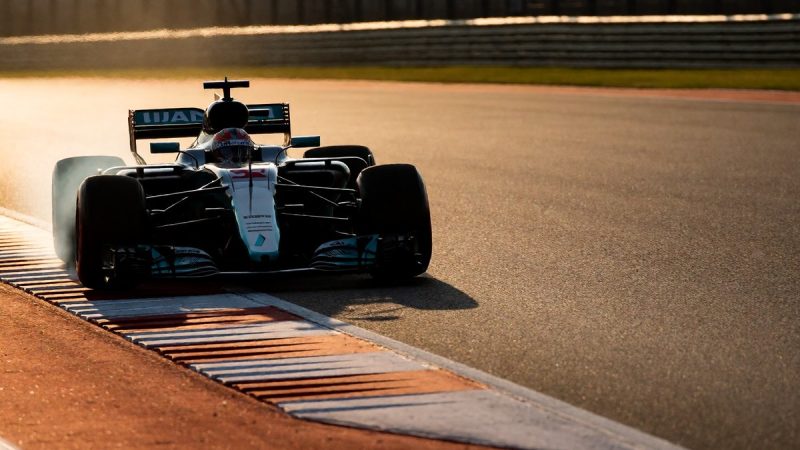
Lewis Hamilton demonstrated significant pace during the 2026 Belgian Grand Prix practice sessions, recording the fastest average long-run pace in FP1. Despite a five-second penalty for contact with George Russell, Hamilton finished the race in fourth place.

Max Verstappen set the pace in the opening practice session of the 2026 Belgian Grand Prix with a time of 1:47.070. Lewis Hamilton finished only 0.145 seconds behind the Red Bull driver. Charles Leclerc completed the top three just 0.207 seconds off the benchmark. The air temperature measured 24°C and the track temperature was 41°C. Humidity was 43% with a wind of 1.0 m/s from the north-west. Isack Hadjar alone used the soft compound to move to the top of the timesheets during the opening phase. The circuit surface was extremely dirty during the first few minutes. Dust was thrown into the air at Eau Rouge every time a car passed through the uphill section. Ferrari brought both cars back into the garage for setup adjustments after Lewis Hamilton and Charles Leclerc completed nine-lap stints on the medium compound.
Hamilton shows early pace in FP1
The Ferrari SF-26 cars appeared on the C4 soft compound with 27 minutes remaining. Lewis Hamilton initially recorded the fourth-fastest time, which was approximately six and a half tenths away from Max Verstappen. Charles Leclerc performed better on his first attempt and moved into third place while remaining 0.420 seconds behind the Red Bull driver. Mercedes was more interested in gathering race-pace data. Kimi Antonelli and George Russell were the first drivers to begin higher-fuel simulations using the medium compound. Lewis Hamilton and Charles Leclerc both improved on their second flying laps with the same set of soft tyres. Lewis Hamilton climbed to second place, 0.145 seconds behind Max Verstappen, while Charles Leclerc secured third position at a deficit of 0.207 seconds to the Red Bull.
Ferrari only began its high-fuel evaluation during the final nine minutes of the session. Both Lewis Hamilton and Charles Leclerc ran on soft tyres and the initial indications were positive. The exact fuel loads used by the Scuderia were unknown. The results require caution because Ferrari was evaluating an SF-26 package whose performance may be affected by the changeable conditions. Max Verstappen completed his long run after 10 laps, but his performance dropped considerably following a strong start. Kimi Antonelli experienced a similar pattern, as did Lewis Hamilton and Charles Leclerc. The tyres did not appear capable of maintaining performance for long stints. Oscar Piastri was the fastest driver during the race simulation, lapping approximately one second quicker than the others.
Long-run data and tyre degradation
The long-run analysis in the second practice session provided different figures. Kimi Antonelli finished 0.190 seconds ahead of Lando Norris with a lap of 1:45.944. Max Verstappen was 0.472 seconds adrift in third. After correcting the data for different tyre compounds and stint lengths, Antonelli averaged 0.21 seconds per lap faster than Charles Leclerc. A more meaningful comparison exists against George Russell and the two Red Bull drivers. Max Verstappen averaged 0.29 seconds per lap slower than the Mercedes, while Russell was almost half a second behind.
Tyre degradation is a major factor at Spa-Francorchamps. Over the course of an eight-lap long-run stint, Max Verstappen recorded an average tyre degradation of 0.227 seconds per lap. Antonelli managed just 0.078 seconds per lap over the same distance. Red Bull could initially match Mercedes’ pace, but it steadily lost ground as the stint progressed. Lando Norris was around three tenths quicker than Verstappen in the second practice session. Ferrari should not be ruled out in terms of race pace. Lewis Hamilton posted the fastest average long-run pace during the first session, finishing 0.29 seconds per lap quicker than Antonelli.
Qualifying hierarchy and grid positions
The qualifying session confirmed the order established during practice. Kimi Antonelli took pole position with a 1:46.304. Lando Norris took second with a 1:46.129. Max Verstappen took third with a 1:46.138. George Russell took fourth with a 1:46.357. Lewis Hamilton took fifth with a 1:46.382. Charles Leclerc took sixth with a 1:46.750. Oscar Piastri took seventh with a 1:46.785. Arvid Lindblad took eighth with a 1:46.869. Gabriel Bortoleto took ninth with a 1:45.628. Isack Hadjar took tenth with a 1:47.096. Lando Norris faces a 10-place grid penalty.
| Rank | Driver | Number | Fastest Lap | Laps |
|---|---|---|---|---|
| 1 | Kimi Antonelli | 12 | 1:45.990 | 13 |
| 2 | Lando Norris | 1 | 1:46.129 | 21 |
| 3 | Max Verstappen | 3 | 1:46.138 | 14 |
| 4 | George Russell | 63 | 1:46.357 | 12 |
| 5 | Lewis Hamilton | 44 | 1:46.382 | 17 |
| 6 | Charles Leclerc | 16 | 1:46.750 | 17 |
| 7 | Oscar Piastri | 81 | 1:46.785 | 20 |
| 8 | Arvid Lindblad | 41 | 1:47.176 | 23 |
| 9 | Gabriel Bortoleto | 5 | 1:47.049 | 18 |
| 10 | Isack Hadjar | 6 | 1:47.096 | 19 |
Race day contact and the Hamilton penalty
The race began in cool, overcast, but dry conditions. Kimi Antonelli took the lead through La Source, but Max Verstappen obtained a better run on the descent towards Eau Rouge and briefly moved ahead. Antonelli used the slipstream and the straight-line speed of his Mercedes to regain first place along the Kemmel Straight. Charles Leclerc also passed Verstappen to take second. George Russell lost electrical deployment after La Source and was passed by both Ferrari drivers. Russell attempted to recover a position from Lewis Hamilton around the outside at the first part of Les Combes. Hamilton understeered into the Mercedes, and his left-front wheel made contact with the right-rear of the Russell car. Russell spun into the gravel and the incident brought out the safety car at the beginning of lap two.
The stewards determined that Russell had established sufficient overlap and had remained within the available racing room. Hamilton attempted to avoid the contact, but the stewards considered him wholly responsible because he was unable to maintain sufficient separation. The loss of front-end grip, the attempt to take avoiding action, and the compressed conditions of the opening lap were mitigating factors. The stewards handed Hamilton a five-second time penalty instead of the standard ten-second sanction. You know the feeling of a chaotic Spa weekend when a single contact reshuffles the entire field.
Strategic battles and the Virtual Safety Car
The race required careful management of tyre degradation. Most of the field started on medium tyres, but Lando Norris, Sergio Perez, Lance Stroll, Isack Hadjar, and Fernando Alonso selected the hard compound. Valtteri Bottas and Carlos Sainz Jr. were the only drivers to begin on soft tyres. A second Virtual Safety Car occurred around lap 20. Ferrari took advantage by pitting both drivers. Leclerc’s reduced-loss pit stop enabled him to emerge ahead of Antonelli. Hamilton served his five-second penalty before leaving the pit box. A mechanic was positioned beside the right-front corner of the car, and Hamilton’s front-right wheel made low-speed contact with the mechanic. The premature release prevented Ferrari from completing the front-wing adjustment Hamilton requested.
Lando Norris led at the halfway point from Leclerc, Antonelli, Verstappen, Piastri, and Hamilton. Leclerc passed Norris along the Kemmel Straight on lap 23. Antonelli passed Norris three laps later. Verstappen passed Norris for third on lap 29. Piastri challenged Leclerc around the outside at Les Combes on lap eight, but the two made side-to-side contact. The stewards took no action and ruled that Piastri’s front axle had not drawn ahead of Leclerc’s. Hamilton passed the damaged McLaren shortly after and moved into fourth. Hamilton repeatedly informed Ferrari that he had more pace than Leclerc, but the team did not exchange their positions.
Ferrari pace and power unit sensitivity
The performance of the Ferrari SF-26 at Spa-Francorchamps remains a subject of analysis. Ferrari faces a 0.54% pace deficit to Mercedes at this circuit. This deficit is influenced by power unit sensitivity. The circuits with higher power unit sensitivity, like Spa and Monza, do not rank as high in the data for Ferrari. Mercedes remains the favourite because of Kimi Antonelli’s consistency. Ferrari attracts attention because of Lewis Hamilton’s soft-tyre run in FP1. Hamilton maintained a consistent rhythm while using the soft tyre.
Tyre management remains a priority. The rear has become more limiting than the front. This change happens because teams protect the front tyres from graining. High-speed corners like Pouhon are excellent sources of energy recovery. Drivers can manage the tyres more in those areas, which allows them to exploit the rear tyres more aggressively. This year, the rear axle is subjected to greater thermal stress because of the delivery of electrical power when exiting the corners. Will the current power unit deficit change before the summer break?
Historical win probability and statistical data
The statistical likelihood of a Hamilton victory at Spa-Francorchamps is low. The metric ranks the possibility of Hamilton triumphing at each track on a scale of 10. Spa-Francorchamps ranks at the bottom with a score of 1.8. This metric combines Hamilton’s win history with the pace deficit of Ferrari. Hamilton scored his most recent victory at this circuit in 2024. Ferrari has not stood on the top step in Belgium since Charles Leclerc won in 2019.
In terms of historical success, Hamilton has achieved his highest victory rate at Silverstone, where he won 45% of his visits. Canada and Hungary also rank highly. In contrast, Hamilton has never stood on the top step in Miami, the Netherlands, or Las Vegas. The performance of the Ferrari engine is a decisive factor at tracks with long straights.
| Rank | Driver | Fastest Lap |
|---|---|---|
| 1 | Kimi Antonelli | 1:45.944 |
| 2 | Charles Leclerc | 1:47.277 |
| 3 | Max Verstappen | 1:46.138 |
| 4 | Lewis Hamilton | 1:46.382 |
| 5 | Oscar Piastri | 1:46.785 |
Final results and championship impact
Antonelli won the race for his sixth victory of the 2026 season. He increased his championship total to 204 points. He left Belgium 45 points ahead of Hamilton. Hamilton moved into second place on 159 points. Russell dropped to third with 154 points. Leclerc remains fourth with 126 points. Norris remains fifth with 103 points. Mercedes retains the lead of the Constructors’ Championship with 358 points, 73 ahead of Ferrari.
| Rank | Driver | Number | Fastest Lap | Laps |
|---|---|---|---|---|
| 1 | Kimi Antonelli | 12 | 1:45.944 | 18 |
| 2 | Charles Leclerc | 16 | 1:47.277 | 17 |
| 3 | Max Verstappen | 3 | 1:46.138 | 14 |
| 4 | Lewis Hamilton | 44 | 1:46.382 | 17 |
| 5 | Oscar Piastri | 81 | 1:46.785 | 20 |
| 6 | Isack Hadjar | 6 | 1:47.096 | 19 |
| 7 | Lando Norris | 1 | 1:46.129 | 21 |
| 8 | Nico Hulkenberg | 27 | 1:46.924 | 20 |
| 9 | Gabriel Bortoleto | 5 | 1:47.049 | 18 |
| 10 | Liam Lawson | 30 | 1:47.690 | 23 |