Lewis Hamilton pressures FIA to revise 2027 speed limit rules
Lewis Hamilton urged the FIA to change top-speed regulations after the Mexican Grand Prix saw minimal overtaking. The current energy deployment taper prevents drivers from gaining enough power to challenge leaders, prompting the FIA to consult advisory committees.

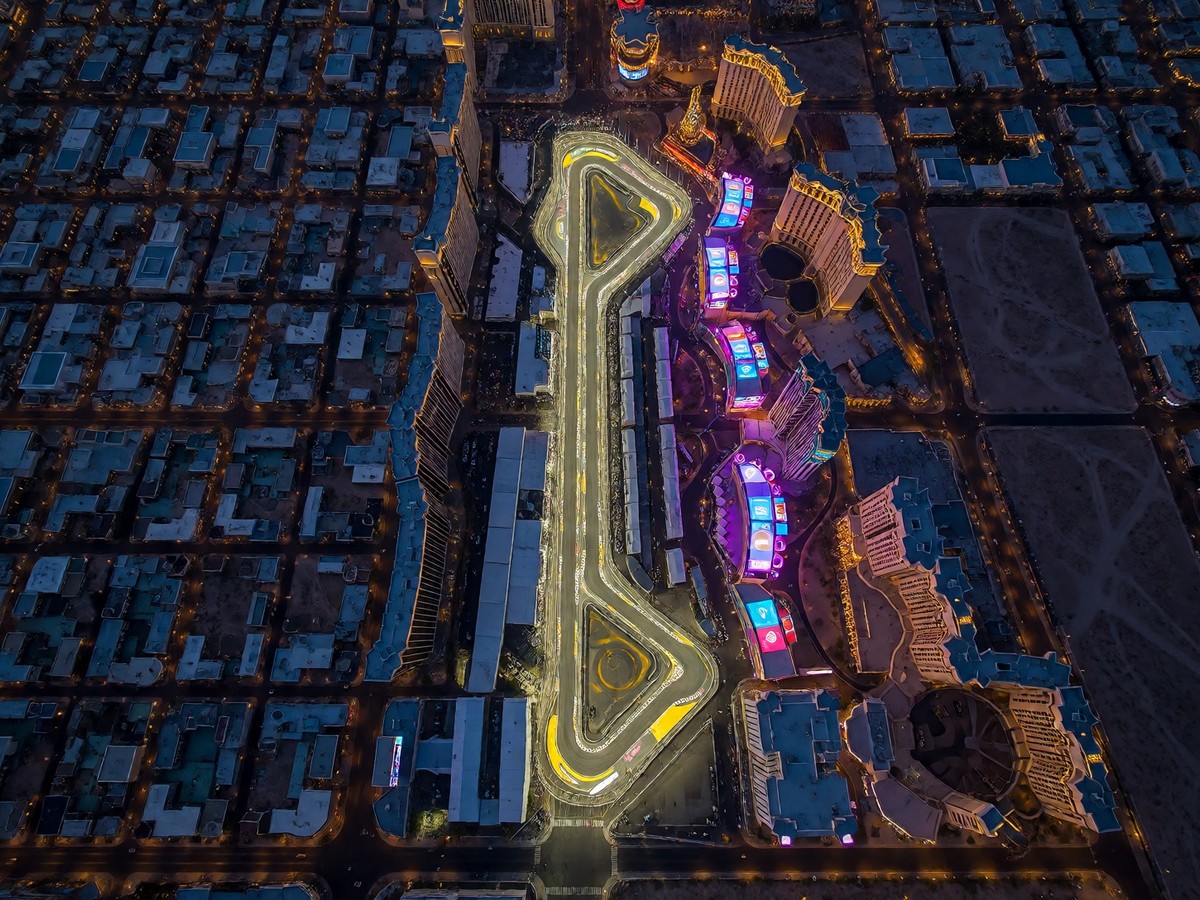
Lewis Hamilton pressured the FIA to revise speed limit rules for 2027 following the Mexican Grand Prix. This 2026 race recorded the fewest overtakes of the season outside of Monaco. Hamilton criticized the power reduction in the slipstream as "stupid" and the "silliest thing" during the Friday night drivers’ briefing at the Brazilian Grand Prix. He argued that the current ceiling prevents drivers from gaining enough power to challenge leaders like Max Verstappen. This top-speed issue will likely reappear during the Las Vegas Grand Prix this weekend, as the long blast down the Strip puts cars into the 350km/h area where they hit the limit. While the 2026 season began with "yo-yo racing" caused by energy offsets, this behavior faded as drivers improved battery management. Now, drivers rely on overtake mode, which provides only 0.1-0.2 seconds of benefit for following cars in some instances. The FIA will now consult technical and sporting advisory committees to evaluate how to prevent processional racing caused by the current top-speed ceiling. Although the speed limit tapering rules are removed from the published 2027 technical regulations, the FIA keeps them in an off-book area accessible only to teams.
Technical constraints and energy management
Energy deployment tapers from 350kW once a car reaches 290km/h, hitting zero at 345km/h. For drivers using overtake mode, the 350kW deployment begins ramping down at 337.5km/h and reaches zero at 355km/h. A driver needs a speed difference between 25km/h and 35km/h to facilitate a pass on a kilometer-long straight. At 320km/h, the theoretical speed difference requires 28.4km/h, while at 350km/h, the required offset is 34km/h. DRS used to provide 30km/h of advantage. In Mexico, Hamilton saw his advantage drop to just 8km/h because the extra battery power fell away. The 2026 overtake mode provides 0.5MJ of extra energy, which only sustains the 350kW power for 1.43 seconds beyond the standard 10 seconds allowed by the 3.5MJ limit.
| Specification | Value/Limit |
|---|---|
| Standard deployment taper start | 290km/h |
| Overtake mode deployment taper start | 337.5km/h |
| Standard zero energy deployment | 345km/h |
| Overtake mode zero energy deployment | 355km/h |
| Overtake mode energy allowance | 0.5MJ |
| Standard energy allowance | 3.5MJ |
| Total battery state of charge | 4MJ |
The 2026 cars struggle to maintain power because they are energy-starved. Although some manufacturers wanted to increase the 0.5MJ overtake mode allowance this year, they met resistance from those who wanted to keep the overall state of charge limit at 4MJ. The difficulty of overtaking on straights stems from the fact that cars do not hit the 350km/h area at all tracks, yet the energy-starved 2026 power units cannot sustain peak power long enough to create a meaningful gap.
Safety concerns and 2027 engine updates
Lifting the top-speed restriction is difficult because most tracks are homologated for safety up to 350km/h. Drivers previously requested a speed cap to avoid the risks of wheel-to-wheel combat at speeds approaching 400km/h. Mercedes team principal Toto Wolff noted in August last year that cars could reach 400km/h if they deployed all energy on a single straight. If the FIA removes the cap, cars might reach higher peak speeds earlier coming out of corners but run out of energy too quickly. This would cause cars to cruise along straights at a reduced speed without the necessary energy offset. The 2027 engine rules will increase internal combustion engine power through higher fuel-flow rates and turbo boost pressure. The rules currently dictate that cars have 300kW of maximum power available during normal racing, but those using overtake mode have up to 350kW on tap, meaning the energy difference must be managed carefully. While the battery state of charge limit increases from 4MJ to 4.5MJ, the 0.5MJ boost for overtake mode remains the same. The FIA must evaluate how the 2027 cars will behave under simulation, particularly because they will have higher top speeds and will reach the 350km/h ceiling more often.