Fernando Alonso debunks Aston Martin 2026 Honda ERS myths
Fernando Alonso attributes Aston Martin's AMR26 handling issues to Honda power unit driveability rather than Adrian Newey's aerodynamic design. The team faces significant challenges including a 4 to 4.5 second performance gap and combustion instability in the new spec 2 engine.

Alonso challenges misconceptions about AMR26 stability
Fernando Alonso qualified 22nd at Zandvoort after engine vibrations caused him to go off track at Turn 1. The Honda V6 power unit delivered unexpected driveability issues during sprint qualifying this year. Alonso reported that the engine over-delivered while braking, which made the car difficult to stop. The SLM mode failed to function for him, so he could not open the rear wing. This combination of engine and aerodynamic issues made his laps very tricky. Lance Stroll also struggled with the new power unit and finished 19th. While some observers claim the tight packaging of the AMR26 chassis causes cooling problems, Fernando Alonso suggests the primary difficulty stems from the Honda power unit’s inability to maintain consistent driveability under braking.
The team faces a reality that contradicts early rumors regarding the stability of the chassis. Some critics suggest the aggressive aerodynamic philosophy of the Adrian Newey-designed car creates handling issues. They also point to reports that the car is overweight and underdeveloped. Alonso disagrees with these assessments. He says there is no doubt about the abilities of Adrian Newey and believes the team will find the best car eventually. He maintains that the chassis remains the strongest part of the package. The instability drivers feel comes from the engine behavior rather than a flaw in the aerodynamic design.
Reliability issues mask chassis potential
The team experienced significant disruptions during pre-season testing in Barcelona. The squad completed only 394 laps across the private shakedown, the Bahrain test, and the final test. This total puts Aston Martin at the bottom of the lap count standings. On the second day of the final test, Alonso completed only 68 laps before a power unit issue ended his session. This incident initially led to theories that the team faced transmission problems with its new in-house gearbox. Alonso set the record straight by stating the issue related to the power unit.
Lance Stroll also faced difficult sessions in Bahrain. He completed only 26 and 28 laps on the first day due to gearbox issues. He also triggered a red flag after a spin under braking at Turn 11. These reliability struggles prevented the team from refining its setup or completing its run plan. Mike Krack, the chief trackside officer, noted that the team remains on the back foot because they could not complete typical winter testing tasks. The team must solve these reliability problems to move forward.
Combustion stability remains the priority
Many people suggest that the performance gap results from the fuel used in the 2026 cars. You should understand that the technical complexities of a Formula 1 power unit involve far more than simple fuel blends. While fuel plays a part in the equation, Honda engineers focus on combustion event stability and repeatability. Shintaro Orihara, the Honda F1 project leader, explained that the introduction of the spec 2 engine changes combustion characteristics. This change creates a significant difference in how the engine behaves.
The engine behavior also changes during the cornering phase. Honda had to develop new tools to optimize driveability because of these changes. The team worked to improve subpar driveability at the start of the season, but the new specification requires a lot of that work to be redone. Honda and Aramco work to optimize combustion efficiency, but the manufacturer must still control the fuel within the engine. The instability in the combustion event remains a primary hurdle for the Japanese manufacturer.
Packaging concerns and power deficits
The AMR26 carries a tightly-packaged bodywork design intended to improve aerodynamics. Some believe this packaging creates cooling issues for the new Honda power unit. While cooling is a concern, the engine also suffers from a lack of power. Honda’s development of the 2026 power unit focuses on a 50:50 output split between the internal combustion engine and the electric motor. The electric motor provides 355-kW of output.
Reliability issues with the battery also hampered testing in Bahrain. Honda released a statement confirming that a battery-related issue impacted the testing plan for Fernando Alonso. This issue forced the team to adapt its run plan to include only short stints. The team also faces a shortage of power unit parts, which limited the mileage they could achieve. The development of the lightweight battery remains a difficult task for the engineers in Sakura and Silverstone.
The widening gap to the leaders
Lance Stroll estimated that the AMR26 is four to four-and-a-half seconds slower than the leading car. This massive gap contradicts the idea that the team is close to the front of the midfield. The team completed only 334 laps collectively in Bahrain. This figure is 250 laps fewer than the mileage achieved by Cadillac. The lack of running prevented the team from focusing on the car’s performance.
The performance deficit remains a major concern for the team. Stroll described the last few weeks as challenging and noted that the car is not where the team wants it to be. The team must work through the season to unlock more performance. The gap to the leaders is large, and the team faces a long road to catch up.
Honda 2026 Power Unit Specifications
| Component | Specification / Detail |
|---|---|
| Engine Type | V6 |
| Electric Motor Output | 355-kW |
| Power Split | 50:50 ICE and electric |
| Battery Status | Under development |
| Driveability Status | Spec 2 optimization in progress |
| Performance Gap | 4 to 4.5 seconds behind leaders |
Mercedes and the compression ratio debate
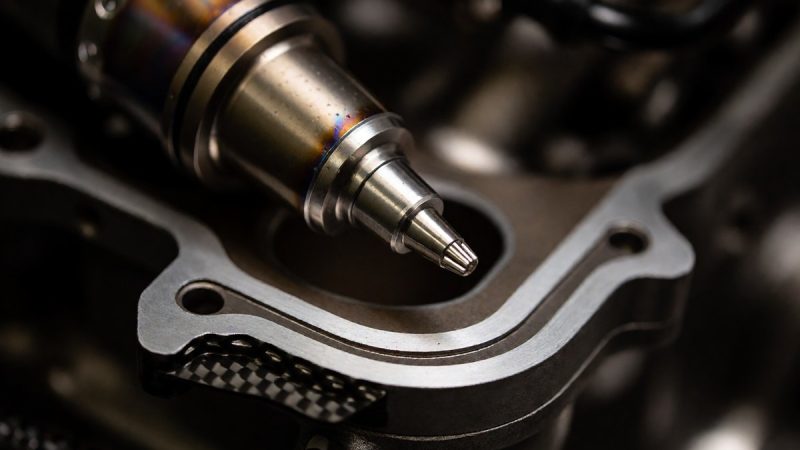
The competition for the best 2026 power unit involves different technical approaches. Mercedes uses 3D-printed pistons to boost the engine’s compression ratio. Some engineers believe this setup reaches a ratio of 17:1. There are rumors that Mercedes uses a small pocket inside the combustion chamber to increase the ratio during race conditions. This theory suggests a thin channel closes when pressure builds, though the FIA stated this method would not be allowed if proven true.
Honda is not one of the two manufacturers that found the compression ratio trick. This puts Honda at a potential disadvantage compared to Mercedes. Ferrari is also working to close the gap to Mercedes’ engine development. Honda must rely on its experience as a powertrain-led company to overcome its current struggles. The team aims to use its resources to resolve the reliability and power issues.
Will Honda’s technical improvements arrive in time to prevent Aston Martin from falling further behind the front-runners?