Risks in Williams’s 2026 Mercedes gearbox integration
James Vowles faces technical challenges integrating the Mercedes gearbox into the Williams FW48 chassis. This shift from in-house manufacturing creates a dependency on Mercedes development cycles and complicates packaging for the new 2026 regulations.

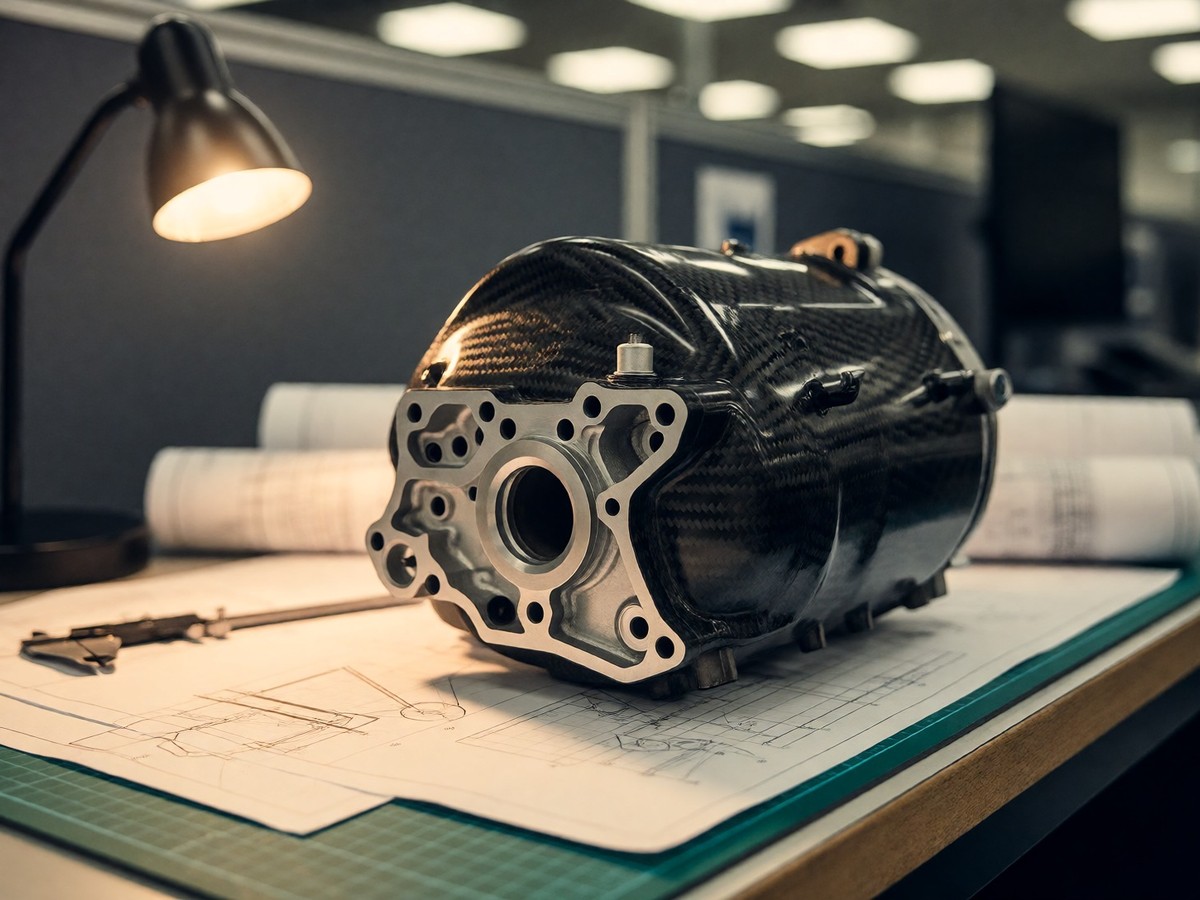
I view the Mercedes gearbox integration for the Williams FW48 as a high-stakes gamble that threatens the team’s ability to maintain its independent constructor identity. While the partnership provides a way to acquire an integrated powertrain, it forces Williams to abandon decades of in-house gearbox manufacturing at Grove. This shift creates a technical dependency on Mercedes development cycles and complicates the physical packaging of the 2026 chassis. James Vowles aims to use this cooperation to improve performance, but the move leaves the team vulnerable to the development pace of their supplier. The team currently sits at the bottom of the constructors’ championship after scoring only four points in 12 Grands Prix this year. This move towards Mercedes-sourced components must bridge the gap between their traditional manufacturing capacity and the demands of the new 2026 regulations. Historically, the relationship with Mercedes since 2014 helped produce 18 podium finishes. In 2014 and 2015, the team finished third in the constructors’ championship. However, the current struggle requires more than just a reliable engine to reclaim competitive standing.
The manufacturing lead time trap
James Vowles explained that the team missed the private test at Barcelona because they pushed decisions on when to release chassis, front wing, rear wing, floor, and bodywork as late as possible. This strategy aims to capture all of the development goodness, but it increases the risk that manufacturing lead times bite the organization. If the team commits to a design too early, they arrive at the first race with an out-of-date design. If they commit too late, they cannot produce the parts in time for the season. James Vowles explained that pushing decisions on when to release chassis, front wing, rear wing, floor, and bodywork as late as possible aims to capture all of the development goodness but increases the risk of manufacturing lead times biting. Vowles noted that if they had printed the car in April last year, they would have had a car, but it would be slow compared to the capability of the car. He also noted that the team uses these delays to test themselves as a business to reach championship level. They are pushing the boundaries of how long it takes to get an idea produced into a real working car. They chose to prioritize a reliable car for Bahrain over the testing miles in Barcelona.
Challenges in chassis packaging
The physical integration of a Mercedes gearbox into a Williams chassis requires precise engineering of the rear suspension, cooling, and electronics. In the past, Williams built these components in-house at their Oxfordshire headquarters. Now, they evaluate the Mercedes model to move with the times. This integration involves matching the gearbox with the Mercedes-AMG 1.6 V6 turbo engine and the associated hybrid systems. Successful integration means the gearbox must support the increased torque and weight demands of the 2026 power unit. The team must ensure that the electrical components, including the battery, inverter, cables, cooling circuits, and control software, work in harmony with the transmission. The 2026 regulations include a larger MGU-K that must recover and deploy much more energy than previous iterations. The MGU-K output is capped at 120 kW and 50,000 rpm. Any mismatch in the interfaces between the Mercedes gearbox and the Williams chassis could lead to reliability failures or poor drivability. This technical coordination remains a primary concern for the engineering departments in Grove.
Missing the Barcelona data
Missing the Barcelona test created a significant data gap that Mercedes’ testing cannot entirely fill. Mercedes ran over 500 laps across its drivers in Barcelona, providing information on the gearbox and power unit. However, Vowles admitted that track data is the only way to establish correlation for aerodynamics and vehicle dynamics. Without on-track running, the team lacks the inherent knowledge drivers need to perfect the car’s behavior. They rely on the driver-in-loop simulator, which they invested in during the last year, to mitigate this loss. While the simulator helps, it cannot replace the real-world feedback from Alexander Albon and Carlos Sainz Jr. on the asphalt. The team must now use the six days of testing in Bahrain to recover the lost time. They also have a 100-kilometer on-track filming day to complete before testing starts in Bahrain. Vowles wants to ensure they have a reliable car ready to go so they do not spend time in the garage like other teams did in Barcelona. Will the decision to prioritize manufacturing lead times over testing mileage result in a performance deficit during the early rounds of the season?
Engineering the future
The appointment of Dan Milner as chief engineer of vehicle technology addresses a specific gap in the Williams technical structure. Milner comes from a 20-year career at Mercedes, where he held roles in simulation, design, and powertrain integration. His new department handles transmission and hydraulics programs. This role is separate from the specific design projects for the FW48. Milner works to lead the development of base-level technology that can fit into the car when ready. This approach aims to prevent the team from falling behind the curve by ensuring new technology is ready in terms of reliability and performance. Matt Harman, the technical director, expects Milner to convert innovation into consistent performance gains. Milner’s expertise in powertrain integration will be vital as Williams looks to return to producing its own hardware in these areas. His role covers a new vehicle technology work stream that operates in parallel to the main car programs.
Learning from the past
The 2026 regulatory reset mirrors the massive shift seen in 2014. During that period, the Williams Mercedes FW36 had to manage increased cooling needs and a heavier power unit. Pat Symonds noted that the ERS system was significantly more powerful, requiring more cooling for the charge air from the turbocharger compressor. The 2026 rules also change the electrical-to-combustion ratio, making integration even more complex. We see similar struggles in other teams, such as Aston Martin’s issues with Honda power unit integration and reliability. Those failures led to lost testing mileage and poor drivability. Aston Martin faced battery faults, hybrid energy recovery weaknesses, and cooling inefficiencies during their Bahrain test. Williams must avoid these integration traps to ensure their Mercedes gearbox works effectively with the new 2026 power unit. In 2014, Mercedes power units locked out the top four positions at the Austrian Grand Prix, with Williams taking third and fourth.
Technical specifications of the FW48
The FW48 utilizes a carbon-fibre monocoque design, laminated from carbon epoxy and honeycomb. The car relies on a Mercedes-AMG 1.6 V6 turbo engine and a Mercedes-AMG 8 forward and 1 reverse gear seamless sequential semi-automatic transmission. The transmission uses electro-hydraulically actuated gear selection.
| Category | Specification |
|---|---|
| Chassis | Carbon-fibre monocoque, laminated from carbon epoxy and honeycomb |
| Engine | Mercedes 1.6 V6 turbo |
| Transmission | Mercedes-AMG 8 forward + 1 reverse gear, electro-hydraulically actuated |
| Electric Motor | Kinetic and thermal energy recovery systems |
| MGU-K Output | 120 kW maximum |
| MGU-K RPM | 50,000 rpm maximum |
| Fuel | Gulf |
| Weight | 772.4 kg (including driver, excluding fuel) |
| Drivers | Alexander Albon, Carlos Sainz Jr. |
The dependency on Mercedes
The long-term agreement with Mercedes extends the partnership until 2030. This creates a stable supply of power units and gearboxes for the foreseeable future. However, it also cements a reliance on the Mercedes engineering philosophy. Mercedes provides the gearbox and the engine, which simplifies the technical workload for Williams. It also offers economies of scale for the supplier. You should consider how this dependency affects the team’s ability to innovate independently. If Mercedes changes its design direction, Williams must follow. This alignment helps the team stay competitive in the short term but limits their control over the car’s fundamental architecture. With the $145 million budget cap, sourcing parts from Mercedes is a cost-effective way for Williams to manage its finances. The team must decide if the performance gains from Mercedes components outweigh the loss of their independent manufacturing culture.