McLaren’s rear tyre degradation challenges at the Singapore GP
McLaren faces significant rear tyre degradation issues with the MCL40, where Max Verstappen maintains a superior advantage in tyre management. The 2026 tyre hierarchy shows a narrow degradation spread of just 0.008 seconds per lap between compounds.

The Inverted Hierarchy
The 2026 Formula 1 tyre hierarchy is inverted. This is the first time in the ground-effect era that the hard compound degrades the fastest. The hard tyre has a degradation of 0.071 seconds per lap. The medium tyre is 0.065 seconds per lap and the soft is 0.063 seconds per lap. This creates a degradation spread of only 0.008 seconds per lap. This is the narrowest spread of the ground-effect era. In 2022, the spread was 0.053 seconds per lap. The 2026 decision to use a soft tyre instead of a hard tyre over a 25-lap stint saves about 2.4 seconds. This is a massive change from 2022, when that same choice cost 16 seconds in accumulated degradation. The current range is the most closely matched in terms of degradation. The car’s load affects this. The 2026 cars are 32 kilograms lighter. They have less downforce. Drivers spend parts of the lap lifting and coasting to manage the 50-50 electric power units. All these factors lower the load passing through the rubber. A hard tyre running below its working window slides instead of grips. This sliding triggers graining and blistering. The soft compound is more durable because it lives comfortably under these conditions.
| 2026 Tyre Compound | Degradation per Lap |
|---|---|
| Hard | 0.071s |
| Medium | 0.065s |
| Soft | 0.063s |
The Singapore Track Layout
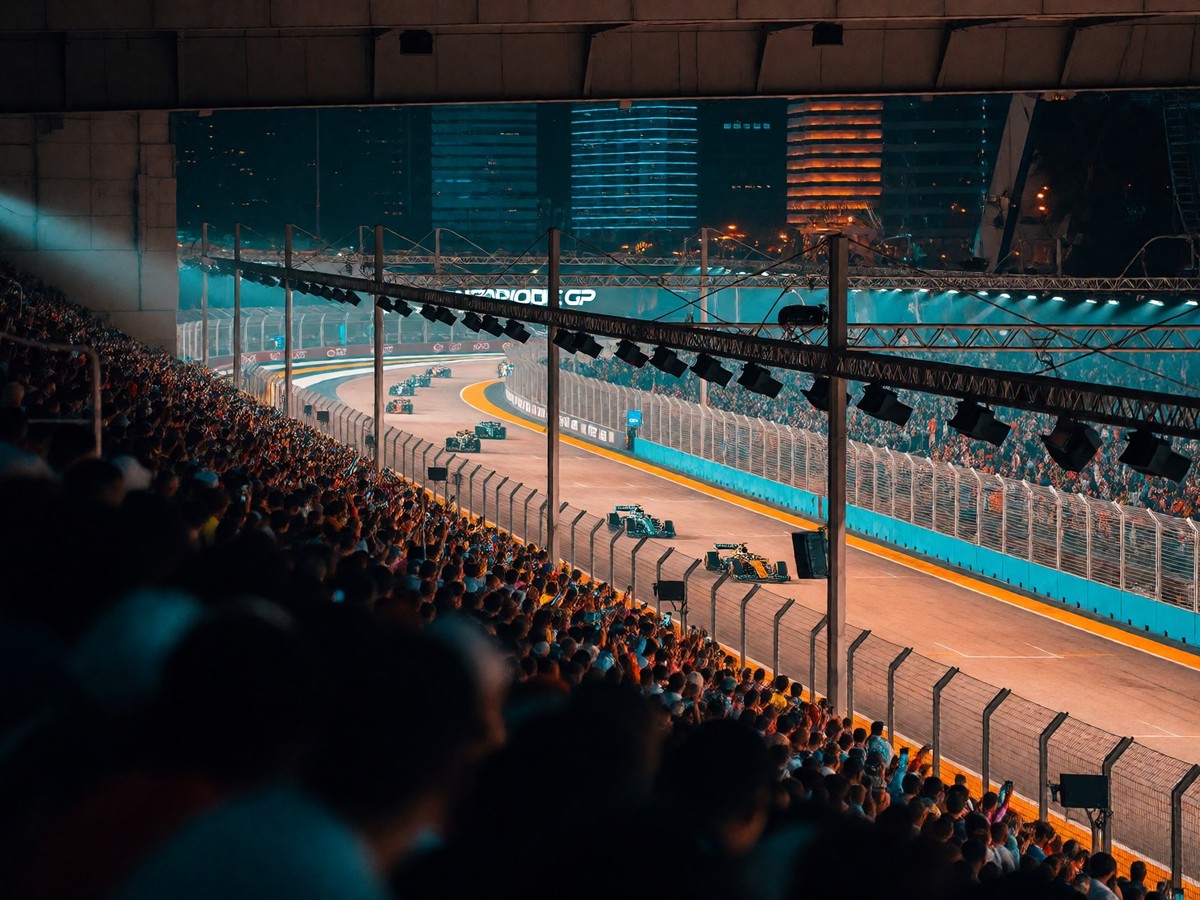
The Singapore track layout has changes this year. Construction work led to the removal of four near 90-degree corners at the end of the lap. This new section is a longer straight. It leads from the left-hander at Turn 15 to the tight right-hander at Turn 16. This change reduces the demand on brakes. It also helps drivers to keep the tyres alive over a full lap. Tom McCullough is the Aston Martin performance director. He says the changes make life easier from the tyre side. The old layout caused the rear tyres to get stinking hot because there was not a lot of recovery time. The new layout allows them to cool a bit. Williams’ head of vehicle performance, Dave Robson, says the change in layout is helpful. The energy the brakes deal with and the rear tyre degradation were difficult by the time the cars reached the last sector. Removing those corners changes the characteristic of the circuit. Esteban Ocon is an Alpine driver. He thinks the new Turn 16 could create an overtaking opportunity. The track is 5.073 kilometres long. The race distance is 61 laps. You know the difficulty of managing rear tyre life in the Singapore humidity.
McLaren’s Rear Tyre Problems
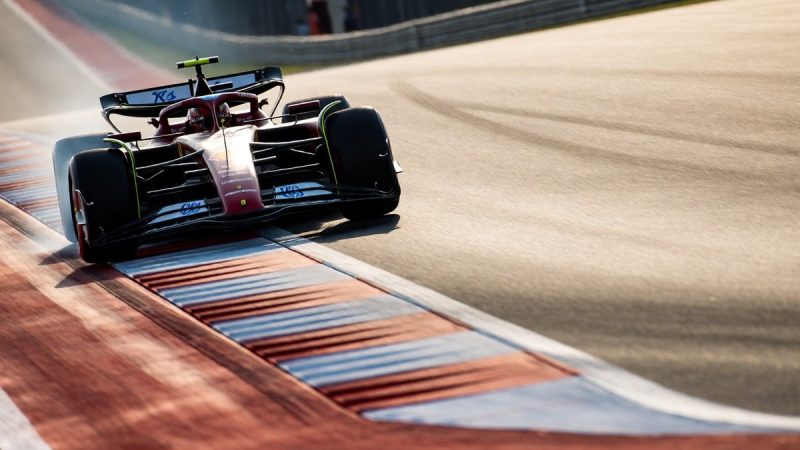
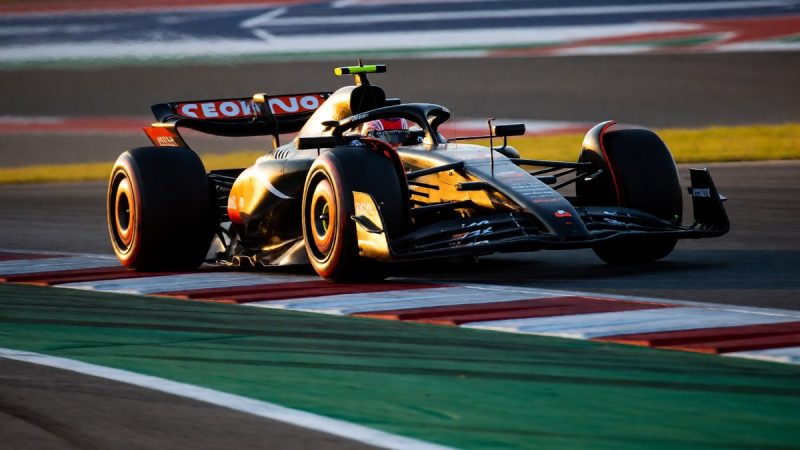
McLaren faces a technical headache with the MCL40. Andrea Stella is the Team Principal. He says the team needs to optimize car set-up and driving style. The team saw severe rear tyre degradation on medium rubber during the Zandvoort Sprint. Lando Norris and Oscar Piastri both struggled. Norris told the team the rear tyres were difficult mid-Sprint. The MCL40 is the third-fastest car on the grid. It is competitive in qualifying but struggles in race trim. The team is in the third position in the Constructors’ Championship. Red Bull has a different advantage. Max Verstappen has less degradation. His tyres degrade by about one-tenth every two laps. Lando Norris noted he slips back from the Dutchman after 10 to 15 laps of strong pace. The gap in tyre management is a key problem for McLaren. The car is stable and predictable. It lacks the outright performance to challenge the leaders. The team needs to improve aerodynamic efficiency and downforce. Reliability also remains an issue for the team. The team lost an entire race weekend of data in China due to electrical issues.
Friday’s Long-Run Data
The Friday practice data in Singapore provides a clear picture. Oscar Piastri is the fastest driver. His best time is 1m30.714s. Lando Norris is fifth, 0.483s behind Piastri. Max Verstappen is third, 0.143s behind Piastri. Verstappen is faster in the long run, as he averaged 0.134s per lap quicker than Piastri. Both drivers set their personal bests in the second practice. They both did a long run without refuelling in the same stint. Piastri’s long run started with a 1m34.771s. Verstappen’s long run started with a 1m35.082s. Verstappen lost 0.146s in the final sector. He lost time in Turn 5 and Turn 18. Ferrari and Mercedes are not yet close to the front. Lewis Hamilton’s best sector times would be 1m30.967s, which is 0.250s behind McLaren. Both Mercedes drivers were much slower in the first practice. George Russell is 18th and Andrea Kimi Antonelli is 20th. The pitlane speed limit is 80 km/h. It was 60 km/h before. This change reduces the pitlane delta from 29s to 26s.
Strategy and Pit Lane Economics
Strategy decisions at Singapore are harder now. The pitlane speed limit is 80 km/h. It was 60 km/h before. This change reduces the pitlane delta from 29s to 26s. A one-stop strategy is 4s quicker on paper than a two-stop strategy. Only a safety car makes an extra stop viable. The chance of a safety car is 100%. There is at least one safety car at every Singapore GP. The race is 61 laps long. The distance is 309.316 kilometres. The track is 5.073 kilometres. You know the difficulty of managing rear tyre life in the Singapore humidity. The track provides a good level of grip. High-pressure water jets and resurfaced sections help this. Pirelli chief engineer Simone Berra says all three compounds seem viable. The soft tyre is the highest-numbered slick. The hard tyre is the lowest-numbered slick. The medium is in the middle. The pit lane is narrow. The undercut remains a useful tactic to gain places. A driver pits before the cars ahead to use the performance of the new tyres.
Comparing the 2026 Compounds
The 2026 tyre data is very different from 2025. In 2025, the soft tyre lost 0.048 seconds per lap of tyre age. The medium was 0.027 seconds and the hard was 0.011 seconds. The soft degraded 4.4 times faster than the hard in 2025. The 2026 numbers are different. The soft tyre degradation is 0.0454 seconds per lap. The medium is 0.0374 seconds and the hard is 0.0394 seconds. The hierarchy has collapsed. The narrowest degradation spread of the ground-effect era, measuring only 0.008 seconds per lap, means that the decision to switch from a hard compound to a soft compound now saves about 2.4 seconds over a 25-lap stint. This is a major change for the pit wall. The compound decision is worth less than a slow pit stop. The 2026 cars are 32 kilograms lighter. They carry less downforce. Drivers spend parts of the lap lifting and coasting. All these factors lower the load on the rubber. A hard tyre running below its working window slides instead of grips.
The Technical Driver of Degradation
The mechanism for tyre wear is the load. A hard tyre is stiff and produces little heat of its running. It relies on load from heavy cars and high downforce to bring the rubber into its working window. The 2026 rules took the energy away. The cars are 32 kilograms lighter. They carry markedly less downforce. Drivers spend parts of the lap lifting and coasting to manage the 50-50 electric power units. All these factors lower the load passing through the rubber. A hard tyre running below its window slides rather than grips. Sliding triggers graining and blistering. The soft compound is more durable because it lives comfortably under these conditions. Pirelli built the 2026 range around a softer step in its nominations. The company dropped the fragile C6 compound from the range. The convergence of degradation rates is a real effect. The circuit decides the strategy, not the rubber.
The Performance Verdict
The MCL40 is a competitive car, but McLaren struggles with race trim. The team lacks the outright performance to challenge the leaders. Andrea Stella says the team needs to improve aerodynamic efficiency and downforce. The team is in the third position in the Constructors’ Championship. Red Bull is still the leader in tyre management. Max Verstappen is faster in the long run than Oscar Piastri in practice. The narrowest degradation spread of the ground-effect era, measuring only 0.008 seconds per lap, means that the decision to switch from a hard compound to a soft compound now saves about 2.4 seconds over a 25-lap stint. Will the increased pitlane speed lead to more frequent two-stop strategies? The McLaren team still needs to close the gap to the leaders. The team is focused on extracting the maximum potential from the current package.