How McLaren’s AI-driven race strategy software works at COTA
McLaren runs 300 million simulations using Google Gemini to determine optimal pit windows and tire strategies. This AI-driven approach helps engineers manage extreme heat and tire degradation challenges at the COTA circuit.

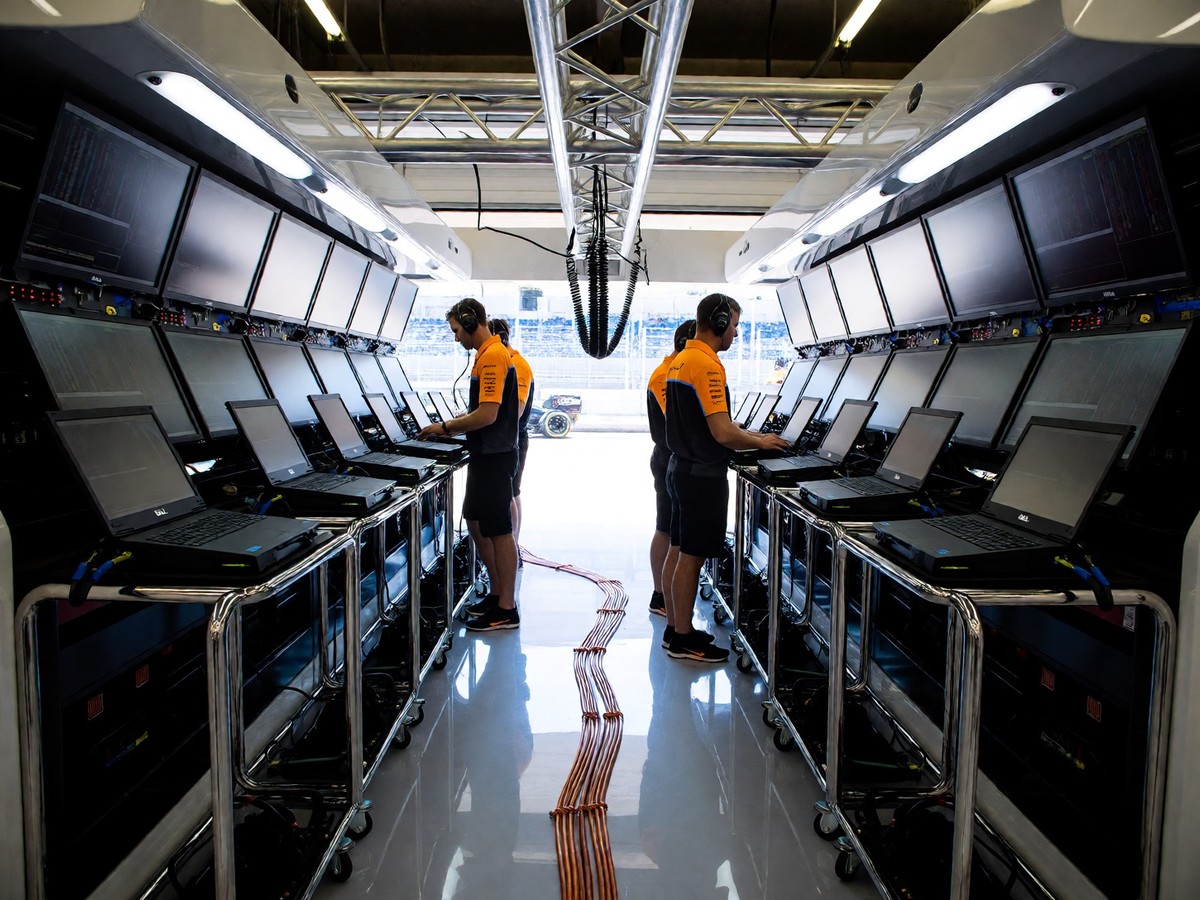
McLaren runs 300 million simulations to prepare for race scenarios during the 2026 season. They use Google Gemini to perform generative AI tasks. This software suggests optimal pit windows and tire strategies. Dell Technologies provides the AI Factory to deploy these solutions. This system combines hardware, data management, and partner integrations. The team uses trackside micro-datacenters to handle information. Historical data from the Ayrton Senna and Alain Prost era used to depend on stopwatches and paper pads. Today, the team processes a massive influx of data via Dell AI PCs. These devices allow engineers to work with data and collaborate in real time.
The environmental challenges at COTA
Austin temperatures exceed 30C. They can reach 40C. Wind gusts of 30 to 40kph destabilize the cars when they lose downforce. High heat causes tire overheating. The surface of the tire overheats, and drivers slide around more. This causes a loss in lap time. Degradation in Texas is higher than teams predicted. A two-stop strategy is now a likely option for many teams. The pit entry is on the inside of the final corner. This results in a pit lane loss time of 20 seconds.
The 2026 technical regulations
The 2026 regulations make the cars 30kg lighter. The cars are narrower. They use active aerodynamics with movable front and rear wings. Power units have a 50/50 split between combustion and electric power. The MGU-H is no longer part of the design. The MGU-K has triple the electric output. This makes energy management a major factor in lap times. Drivers must manage software deployment and battery management to navigate high-speed sections. This changes how drivers approach iconic corners.
The trackside computing hardware
McLaren engineers use Dell Pro Max 16 mobile workstations to process the massive datasets that stream from 300 sensors regarding tire temperature, engine performance, aerodynamics, and driver biometrics during every race weekend. They use Dell Pro 14 Premium laptops for light workloads. Monitors include the Dell Ultrasharp 27 and the Dell Pro 27 Plus. Intel provides the compute foundation for these workloads. Intel Xeon and Intel Core Ultra processors support race strategy analytics and real-time decision systems. The team runs 3.5km of copper cabling to connect the garage.
| Strategy Component | Details |
|---|---|
| Sensor Count | 300 sensors |
| Data Cabling | 3.5km copper |
| Primary Compute | Intel Xeon and Intel Core Ultra |
| AI Partner | Google Gemini |
The strategy landscape for the United States Grand Prix
Drivers at COTA have multiple options depending on their tyre availability and temperature.
| Strategy Type | Tyre Compounds | Estimated Laps |
|---|---|---|
| Two-Stop (Aggressive) | Medium $\rightarrow$ Hard $\rightarrow$ Hard | 10-18 (Medium) |
| One-Stop (Flexible) | Medium $\rightarrow$ Hard | 25 (Medium) |
| Soft Start (Aggressive) | Soft $\rightarrow$ Hard $\rightarrow$ Hard | 10 (Soft) |
Max Verstappen and Lewis Hamilton have two options. Sergio Perez has only one set of hard tyres. He must use the medium for 10 to 18 laps or use softs for a 10-lap stint. Carlos Sainz and Yuki Tsunoda started on softs. They aim for lap 10. Vettel, Alonso, and Russell might start on hard tyres. They could switch to mediums around lap 25.
Power unit performance engineering
McLaren has a specialist group for power unit performance. They focus on the Mercedes package. This team studies track data and uses simulators. They work alongside race engineers. They want to maximize performance from the Mercedes engine. This department is a response to the 2026 technical regulations. The team uses simulation work and detailed offline analysis to identify opportunities. This work helps them extract additional performance from the power unit.
The driver and automation interface
A2RL describes a future of autonomous racing. Algorithms interpret data at 300 km/h. These systems work without steering inputs or pit radios. Max Verstappen says the 2026 cars demand more effort from drivers. He says the cars might feel too heavy in certain configurations. Drivers must wrestle with the machines. You already know that drivers are the ones who feel the car most. Will AI eventually replace the engineer?
The political and corporate structure
The owner’s box handles cost cap compliance and engine partnerships. Decisions regarding Audi, Honda, and Cadillac are negotiated. Manufacturers watch the race for brand valuation and power alignment. Modern team principals manage engineering departments the size of aerospace firms. They navigate FIA politics like diplomats. Personnel moves are part of the long-term strategy. Will Courtenay joined McLaren on 1 January 2026. Gianpiero Lambiase moves to McLaren in 2028.