A beginner’s guide to Red Bull’s 2026 active suspension system
Explore the technical shift in the Red Bull RB22 as it moves to a double-pushrod suspension layout. This guide covers the 2026 regulations, active aerodynamics, and the history of the FIA ban on active suspension technology.

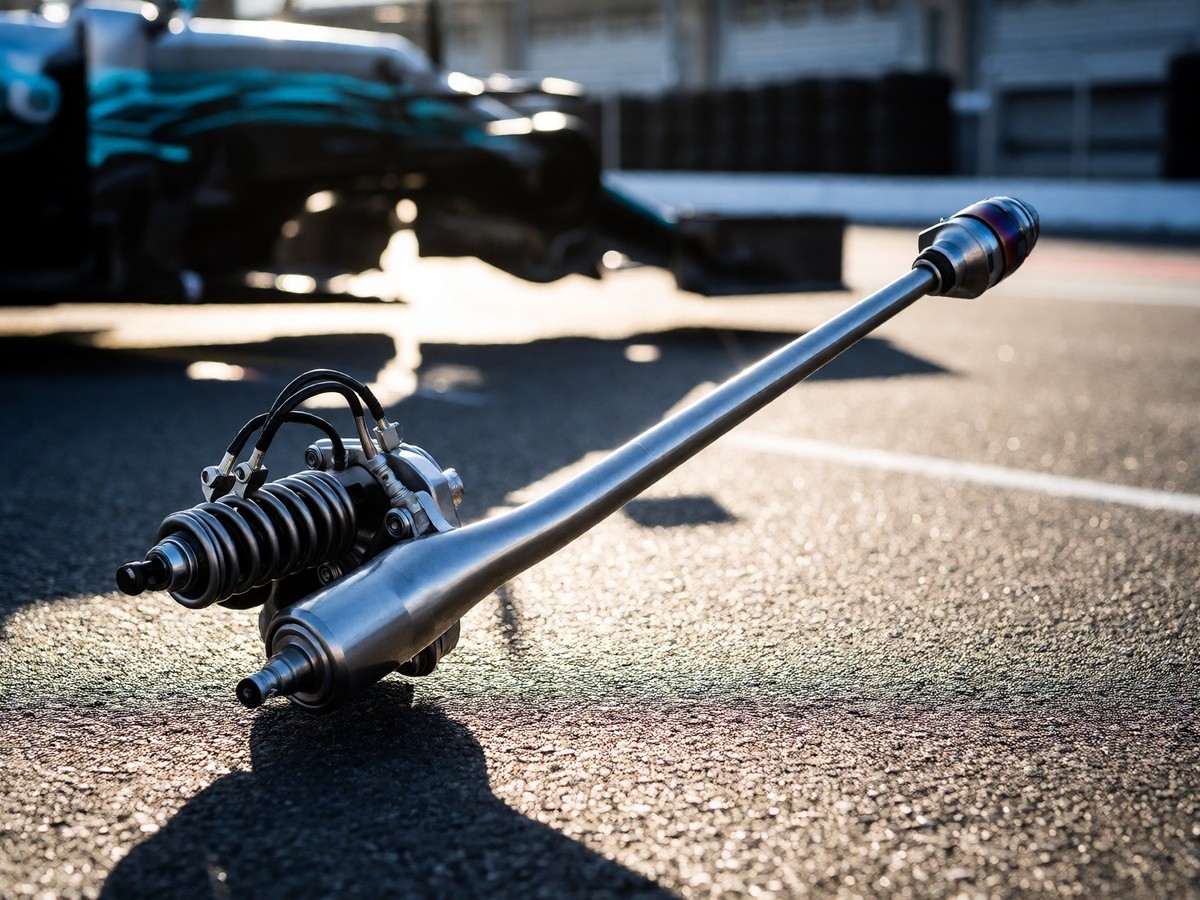
The RB22 mechanical configuration
Red Bull uses a pushrod suspension layout for the 2026 RB22. This design replaces the pullrod configuration used from 2022 to 2025. The front pushrod sweeps rearward toward the chassis. This arrangement assists the team with packaging the Red Bull Ford DM01 power unit. The team expects this geometry to improve vehicle dynamics and accommodate the new engine layout. The RB22 also utilizes a double-pushrod suspension at the rear. This differs from the pullrod front suspension used in previous seasons. Engineers expect the pushrod layout to provide better mechanical grip and simplified packaging. The change follows a move toward flatter floors and increased ride heights in the 2026 regulations.
The transition to pushrod suspension
Red Bull Racing abandons the pullrod philosophy from the ground-effect era. This shift helps the team accommodate the new power unit layout. The front pushrod design provides better packaging advantages. The RB22 utilizes double-pushrod suspension at both the front and the rear. This differs from the pullrod front used in previous years. The front pushrod sweeps rearward toward the chassis. This geometry helps manage the space around the driver’s feet. Engineers believe the pushrod layout provides better handling. The change follows the reduction in ground-effect influence. The move to pushrod suspension helps with the packaging of the 1.6-liter V6 turbocharged engine. This engine is mid-mounted and uses a rear-wheel-drive layout.
Active aerodynamics and mode management
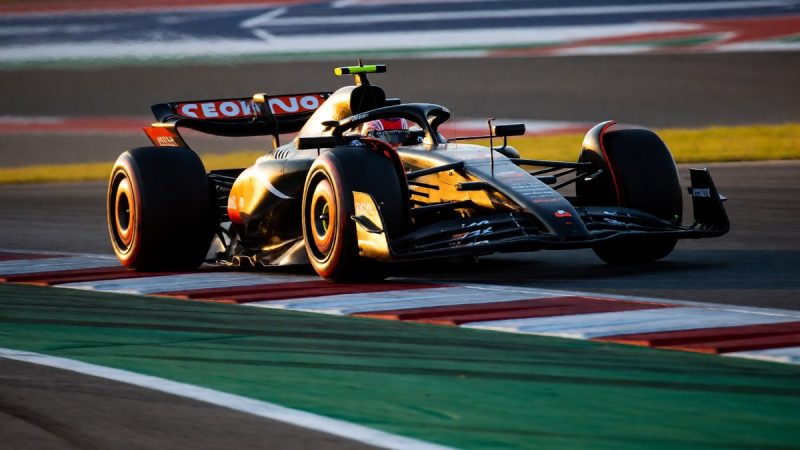
Active aerodynamics allow the car to change its profile during a lap. The front and rear wings adjust their angles to manage drag and downforce. The system uses two modes: Straight Mode and Corner Mode. In Straight Mode, the flaps flatten to reduce drag and increase top speed. In Corner Mode, the flaps move to a steeper angle to increase downforce. This system functions regardless of whether a car is near another competitor. The RB22 lacks the wing actuators seen on the Racing Bulls VCARB03. Instead, the RB22 has an additional stay under the nose. This stay might house a central system that connects to both sides of the wing. This could provide a more integrated solution than the VCARB03. The connections between the RB22 flaps suggest both flaps move together. This functionality allows the car to switch between high-downforce and low-drag states. You can observe the differences in the wing movement during a race.
The historical ban on active suspension
The FIA prohibited active suspension in 1994. This decision followed the 1993 season. The FIA cited three main concerns: rising cornering speeds, the widening competitive gap between teams, and the unpredictable behavior of cars if electronic systems misbehaved. The FIA banned active suspension in 1994 because the technology pushed cornering speeds to levels that caused safety concerns and the high cost of the hardware widened the competitive gap between teams. Active suspension replaces conventional springs and dampers with hydraulic or electro-hydraulic actuators. A control unit reads sensor data hundreds of times a second to drive these actuators. This maintains the car at an ideal ride height and rake angle. Lotus pioneered this technology with the Lotus 92 in 1983. Nigel Mansell drove the Lotus 92 at the Brazilian and Long Beach Grands Prix. He found the system fragile due to hydraulic failures and rogue computer signals. The system also added weight and sapped engine power. The death of Colin Chapman in late 1982 also impacted Lotus. Williams achieved greater success with the fully active FW14B in 1992. Nigel Mansell won the championship with that car. Alain Prost won again in 1993 with the FW15C. The FIA banned the technology to ensure drivers remained at the center of car control.
The Nimble Car concept and aerodynamic changes
The 2026 regulations prioritize the Nimble Car concept. This approach aims to reduce the size and weight of the cars. The maximum wheelbase dropped by 200mm to 3.4m. The width of the floor decreased by 100mm to 1.9m. Pirelli produces narrower tires, with a 25mm reduction at the front and 30mm at the rear. Lighter cars react faster and brake later. The minimum weight limit is 724kg. This is a 30kg reduction from previous years. Smaller cars should look more balanced and allow more racing lines. The narrower tires cut down the turbulent wake behind the car. This helps cars follow closely. The new regulations also feature simplified front wings. These wings have fewer elements to prevent turbulent air from being cast wide.
The Red Bull RB22 performance issues
The RB22 shows instability in its current form. Drivers report understeer on corner entry and oversteer on exit. The car lacks a consistent distribution of downforce. Red Bull estimates the car is 10kg overweight. This weight issue impacts the optimal weight distribution. The team prioritizes a weight reduction program to improve efficiency. Verstappen expressed frustration with the car’s balance in China and Japan. He complained about the engine and the balance. The car has had two DNF results from the first three races. This is due to engine reliability issues. The team currently sits sixth in the standings. They have only 16 points. They trail Mercedes, which has 135 points. How much more weight will the team remove before the Miami Grand Prix?
Power unit and energy recovery
The 2026 power unit uses a 50-50 power split. The internal combustion engine provides half the power and the MGU-K provides the other half. The MGU-K delivers 350kW of electrical power. Drivers use Recharge mode to build energy during braking or lift-off. Recharge happens automatically through the ECU, though drivers control lift-off regeneration. This mode can disable active aero devices. Superclipping tops up the battery at full throttle. The MGU-K harvests energy that normally goes to waste during braking. This power unit uses 1.6-liter V6 turbo engines. The engines run at 15,000 rpm. They use advanced sustainable fuels. This fuel comes from waste and non-food sources. The 50-50 split makes the technology closer to road-going hybrids. The amount of electrical power increases to 350kW from 120kW.
Overtaking mechanics and energy deployment
Overtake Mode replaces the old DRS system. This mode activates when a car is within one second of the car it follows. The system provides an extra 0.5MJ of electrical energy. This allows for a higher speed for a longer period. Drivers can also use the Boost button to change power settings. Boost allows for manual control of energy deployment. Drivers use it to attack or defend. The deployment can be used all at once or spread across the lap. This provides more thrills as cars attack in unusual places. The MGU-K power remains 350kW in acceleration zones, but the rules reduce the maximum electric power to 250kW to improve safety. This reduction helps prevent sudden speed differences of 30+kph.
RB22 Technical Specifications
| Specification | Detail |
|---|---|
| Constructor | Red Bull Racing |
| Engine | Red Bull Ford DM01 1.6 V6 turbo |
| Suspension (Front) | Double-pushrod |
| Suspension (Rear) | Double wishbone push-rod |
| Weight | 770 kg |
| Fuel | Advanced Sustainable Fuel |
| Power Split | 50% ICE / 50% Electrical |
| MGU-K Power | 350kW |
| Maximum Wheelbase | 3.4m |
| Minimum Weight | 724kg |