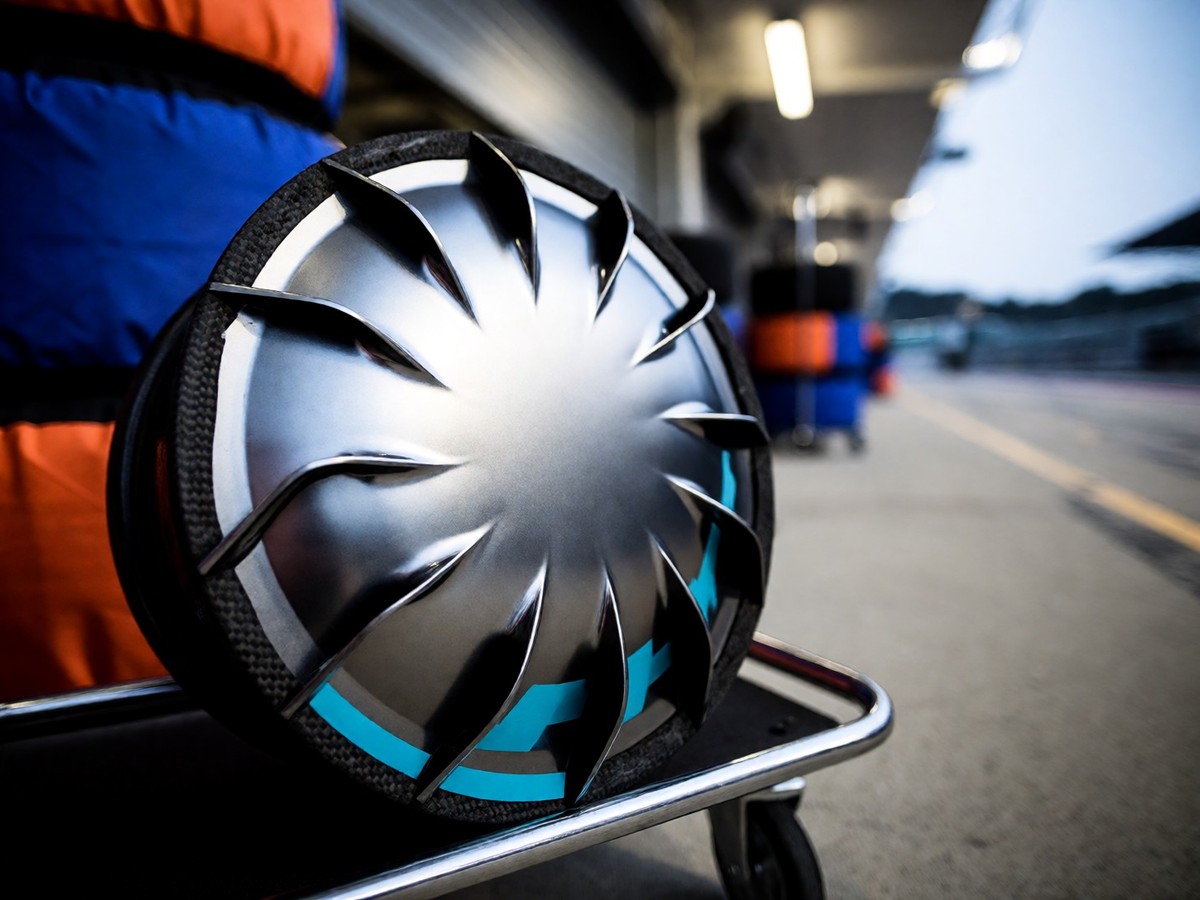
A beginner’s guide to McLaren’s 2026 wheel cover aero trick
Explore how McLaren manages dirty air and tyre temperatures through advanced MCL40 design. Learn about the 2026 F1 technical regulations, including the 768kg minimum weight limit and the FIA's investigation into wheel-fairing spray.

The 2026 Formula 1 technical regulations introduce a 30kg reduction in the minimum weight limit, bringing the floor down from 800kg in 2025 to 768kg. These cars are narrower, with a 100mm reduction in floor width and 25mm narrower front tyres, while the rear tyres have lost 30mm of width. The wheelbase is also 200mm shorter than in 2025, measuring 3400mm instead of 3600mm. These dimensions create a more nimble car, although the smaller contact patch of the tyres may affect grip. Because the 2026 cars use a 50-50 split between internal combustion and electrical power, the power unit requirements changed significantly. The removal of the MGU-H helped lower the weight, and the MGU-K now produces 350kW of electrical energy.
The FIA spray investigation
Nikolas Tombazis, the FIA single-seater director, noted that the July testing at Silverstone regarding wheel-fairings did not yield the expected results. The experiment at Silverstone involved Mercedes, which created the parts, and McLaren, which provided the car to gather feedback on spray. The spray guards covered too little of the wheel, making the results of the test too optimistic. Spray from the wheels accounts for approximately 40% of the total spray produced by a car. This spray comes from water extracted from the tyres, water accumulating between the wheel and the asphalt in the tyre squirt area, and water that stagnates in ground cracks. If the FIA limits this phenomenon, drivers will lose some visibility, but they will gain better racing conditions.
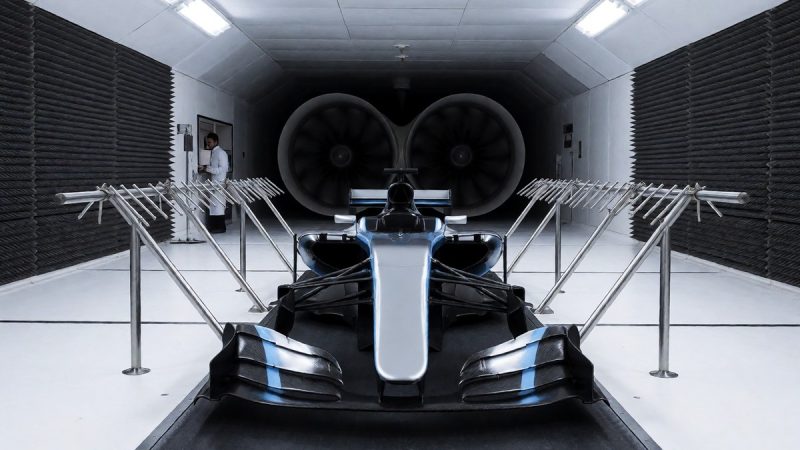
The aerodynamic impact of larger wheel covers is a major concern for the FIA. In some configurations, the loss of downforce was nearly zero, but in extreme solutions tested in a tunnel, the loss reached 80 points, which equates to two or three seconds in lap time. The FIA wants a solution that teams can put on and take off only during a wet monsoon. Tombazis ruled out interfering with the tyre squirt area because that work would be too difficult for the teams.
McLaren and the battle for dirty air
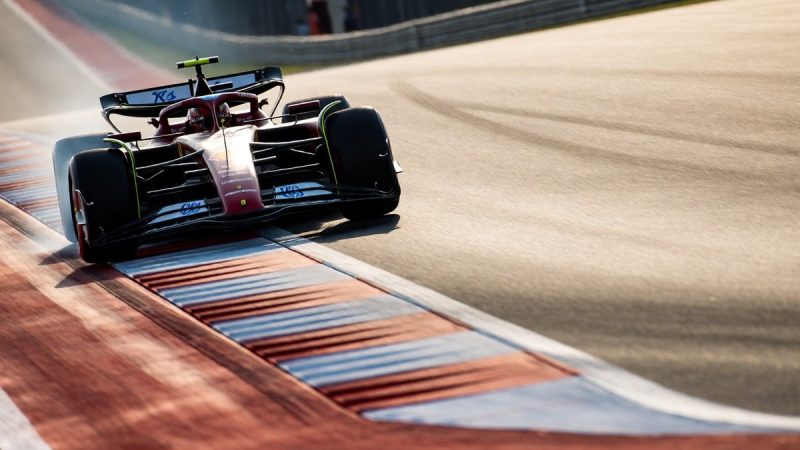
The MCL40 manages dirty air through three thin horizontal elements topped by a vertical profile and a large panel. This setup aims to use the maximum area the regulations permit. This design differs from the Ferrari SF-26, which uses a four-element structure consisting of one vertical and three horizontal profiles. Mercedes, Red Bull, and Audi have also pursued an independent approach for the wakeboard area. McLaren’s work in this area is advanced, and the team will likely update these sections in the coming weeks.
The management of dirty air remains a primary focus because the removal of the beam wing and the simplification of the front and rear wings were meant to help cars follow each other. The 2026 front wings are 10cm narrower and have a two-element active flap. The rear wing has a three-element flap. These changes aim to reduce outwash, which is the practice of pushing turbulent air away from the car.
Complex brake ducts and tyre temperatures
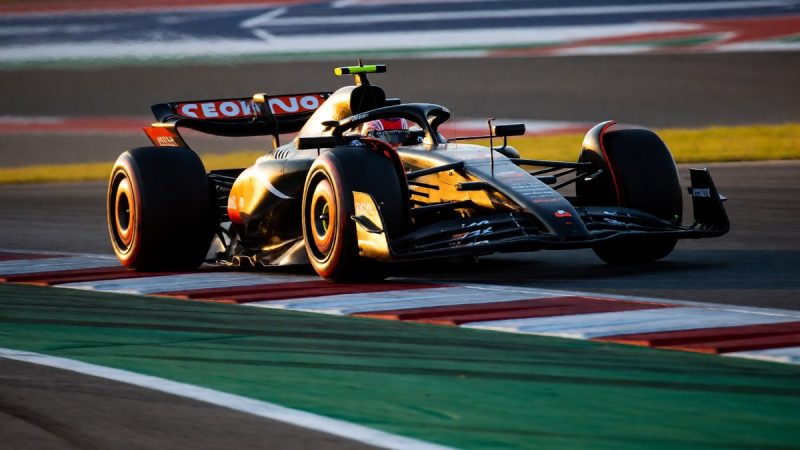
McLaren’s MCL40 brake ducts have multiple internal sections. The complexity of these ducts exists because the team must work around the packaging constraints of the suspension pull rods. This differs from Ferrari and Mercedes, which use integrated inlets within the inner vertical flow deflector to reduce the impact of turbulence. All other teams use more conventional shapes for their brake ducts.
McLaren also uses its brake drums to control tyre temperatures. This method helped the team manage tyre performance throughout the 2026 season. At the Emilia Romagna Grand Prix, the Red Bull RB21 managed tyre degradation better than the McLaren MCL39, which had previously won the 2025 Constructors’ and Drivers’ championships. While McLaren denies that technical directives from the FIA regarding tyre treatment affected its performance, the team continues to search for advantages in managing thermal loads.
Front end aerodynamics and weight reduction
The Mercedes W17 and the Aston Martin AMR26 are the only cars to mount nose support pylons on the first flap of the front wing, a choice that carries a disadvantage in terms of drag during race conditions. Mercedes uses a spoon-shaped main plane that rises toward the outer sections, while the second and third flaps have a more linear geometry. The Aston Martin AMR26 also uses a spoon-shaped main plane but has nearly horizontal flap chords to promote stable airflow.
Mercedes also uses angular shapes in the central section of the third profile beneath the nose. These shapes use vortices to guide airflow toward the T-tray. Unlike Mercedes, McLaren uses undulating surfaces in this area. The McLaren MCL40 also has a nose with a reduced tip diameter to reduce weight. Alpine uses a raised main plane at the extremities of its front wing.
The placement of nose support pylons on the second element provides structural stiffness. Attaching them to the main plane instead reduces drag but requires a stronger nose to resist the torsion from the flaps. The Mercedes engineers use the pylons to direct airflow toward the lower chassis and the floor entry.
Sidepod designs and airflow management
Teams follow different philosophies regarding sidepod design. Ferrari, Mercedes, and Aston Martin use a concept with a long undercut along the lower edge to create a double floor effect. This seals the airflow exiting the floor. Both the Ferrari SF-26 and the Aston Martin AMR26 have squared side profiles and tapered engine covers. These cars use mid-height openings to channel air rearward, using hot air to improve efficiency.
Red Bull and Alpine take a different path. The Red Bull RB22 has bodywork that stays close to the internal surfaces to maximize airflow toward the rear suspension and the upper diffuser. This shields the airflow from tyre squirt. The Alpine A526 uses wide, sloped sidepods. An internal ramp on the Alpine directs air toward the rear, while an external lateral channel sends clean air toward the outer floor edge. Haas uses a similar approach on the VF-26. Audi also uses wide sidepods under the direction of Mattia Binotto.
McLaren uses heavily tapered lower sidepods and a pronounced downward slope. You should know that these different shapes change how the car handles dirty air from the front wheels.
| Feature | McLaren MCL40 | Mercedes W17 | Ferrari SF-26 |
|---|---|---|---|
| Wakeboard Elements | 3 thin horizontal + 1 vertical | 3 horizontal angled outward | 1 vertical + 3 horizontal |
| Sidepod Style | Tapered lower/Downslope | Long undercut | Squared/Tapered |
| Nose Pylon Position | Undulating surfaces | First flap | Second element |
| Brake Duct Style | Multiple internal sections | Integrated inlet | Integrated inlet |
| Minimum Weight | 768kg | 768kg | 768kg |
The exhaust gas downforce war
Seven teams modified their cars in Miami to exploit exhaust gases for downforce. This trick involves placing a wing element behind the exhaust. Ferrari discovered a loophole by arranging suspension geometry and driveshaft positioning around the rear axle to use hot exhaust gases. This method is worth several tenths of a second per lap.
Different teams use different methods to capture this gas. Williams uses a narrow but tall element in the exhaust stream. Alpine uses a flat and wide winglet. McLaren and Red Bull cover the lower edge of the tailpipe with a baffle. Mercedes uses a double wing attached to the exhaust. Haas is the only team that closely replicates the original Ferrari concept because it shares the same rear suspension architecture.
Power unit and fuel specifications
The 2026 power unit is a 1.6-litre V6 turbo hybrid. The internal combustion engine produces around 400kW of power. The MGU-K produces 350kW of electrical energy. The battery can be recharged with more than 4MJ of energy per lap. Drivers use a Boost button to activate extra energy, or they use the Overtake Mode.
Overtake Mode replaces the DRS that ended after the 2025 Abu Dhabi Grand Prix. This mode provides additional electrical energy to drivers who are within one second of the car in front at a detection point. The cars run on Advanced Sustainable Fuel. This fuel comes from second-generation sources like organic waste or industrial residues. The molecules are not in competition with the food chain.
Will the increased electrical power in the 2026 cars eventually make the internal combustion engine irrelevant?