The history of Monza’s banking that shaped modern F1 slipstreaming
The Autodromo Nazionale di Monza's high-speed banking and its evolution from the 1922 construction to the Curva Parabolica shaped racing physics. Fatalities involving drivers like Giuseppe Campari eventually ended Formula One's use of the combined oval and road circuit layout.

The 1922 construction and the ACI
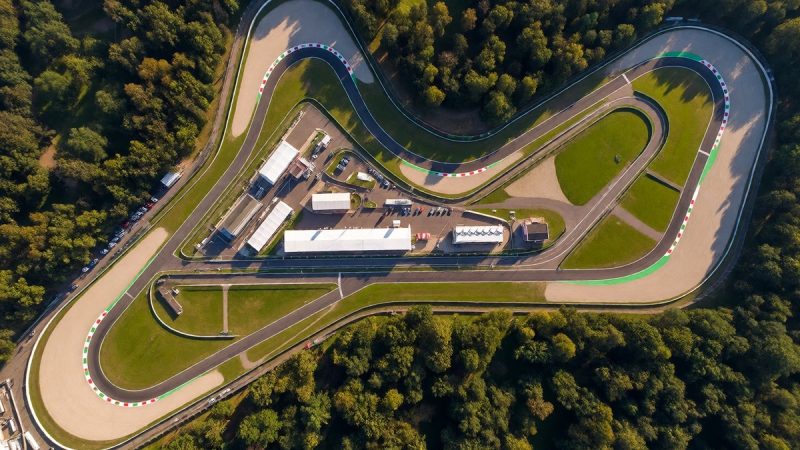
The Automobile Club di Milano initiated construction of the Autodromo Nazionale di Monza in 1922. A workforce of 3,500 workers completed the track in 100 days. This venue became the third purpose-built racing circuit in the world, following Brooklands in the United Kingdom and Indianapolis in the United States. The original layout spanned 10 kilometers. It combined a 5.5 kilometer road circuit with a 4.5 kilometer high banked oval. Italian car manufacturers wanted a permanent circuit in Italy to test their cars. The track opened on 3 September 1922. The maiden race occurred on 10 September 1922 during the second Italian Grand Prix. The start/finish straight measured twice the width of the rest of the track. Drivers entered the oval from the southern banking, crossing the start/finish line twice each lap. The circuit sits in a park north of Milan. The Automobile Club di Milano created the Societa Incremento Automobilismo e Sport to run the track. The design included two banked corners with a 21-degree banking. These corners had a radius of 320 meters. The corners connected via two straights measuring 1.22 kilometers.
Fatalities on the original oval
Fatal accidents forced early modifications to the Monza layout. In 1928, Emilio Materassi crashed his Talbot during the Italian Grand Prix. He attempted to catch up to Giulio Foresti’s Bugatti on the main straight. His car plunged into the spectators. This accident killed Materassi and 27 spectators. Following this event, organizers closed the oval loop to reduce high speeds on the main straight. The 1931 return of the Italian Grand Prix saw the full 10 km circuit used again. The last time the original Monza track was used occurred in 1933. Three drivers died during that 1933 race. Giuseppe Campari and Baconin Borzacchini crashed on the southern banking. Campari swerved toward the top of the banking and lost control. He hit a lamppost and tore down the concrete retaining wall before flipping into a ditch. He died at the scene. Borzacchini died later at the hospital after being thrown into a tree. Stanislaw Czaykowski also crashed and died at the same location during the final.
The oil incident and the slow layout
The 1933 tragedy at Monza stemmed from track conditions. Guy Moll reported a large patch of oil in the middle of the banked South Curve. He claimed the Duesenberg of Carlo Felice Trossi dumped the oil. Officials tried to clean the track. A saloon car drove the length of the track while a person in the back used a broom. Workers then dumped sand on the oil. The second heat began after a significant delay. During the first heat, Giuseppe Campari and Baconin Borzacchini failed to come around for a second lap. The reporter from Automobil-Revue described the scene as people stood and realized something had happened that did not belong in the program. Nurses hurried away as ambulances appeared. After this, organizers changed the track again. They built a very slow layout in 1934 with a hairpin at the end of the main straight. This layout used the Florio link and the Curva Sud.
The 1955 concrete banking and Parabolica
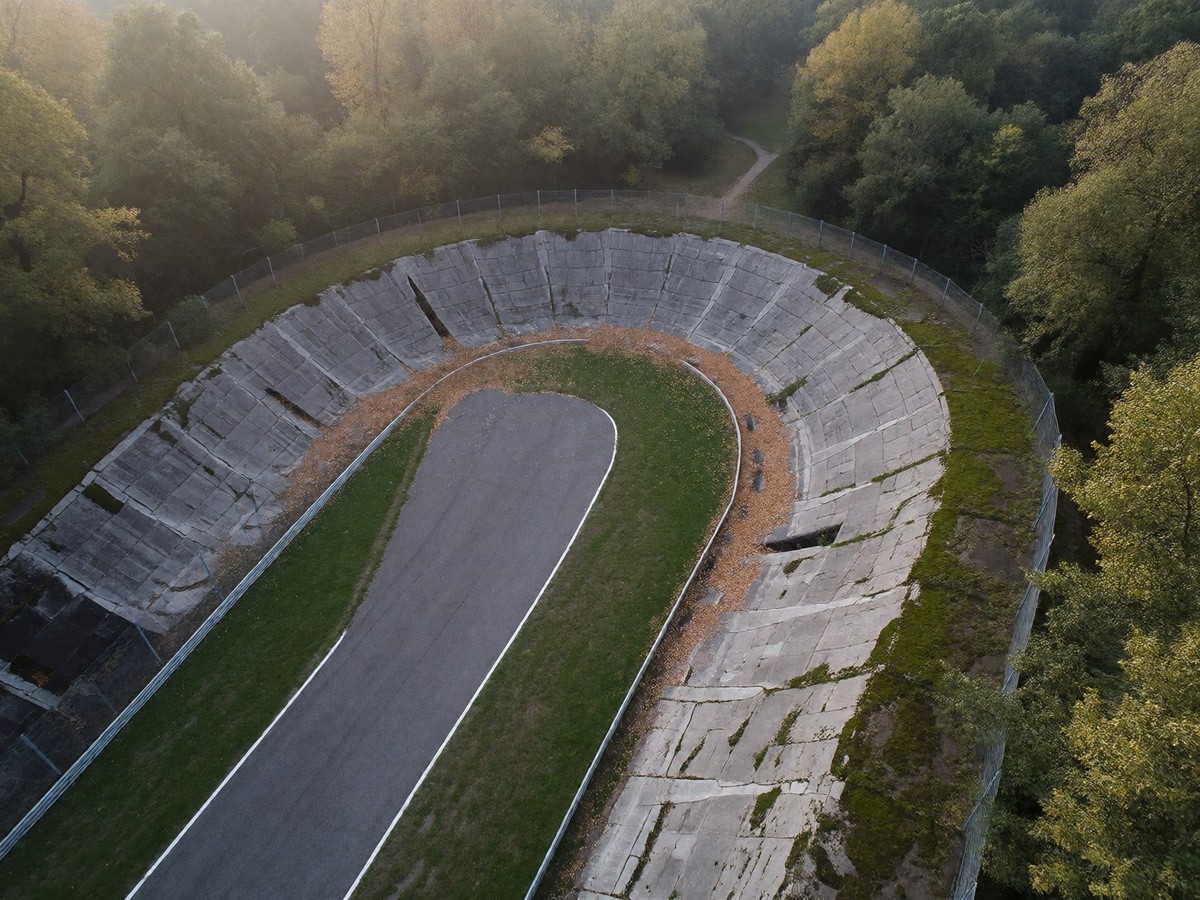
Engineers redesigned the circuit in 1955 to incorporate a new southern banking. This new section sat north of the original location to accommodate a planned tunnel. The new high speed corners had a concrete structure rather than an earth embankment. These corners featured a progressive banking with a 38.69 degree angle at the top. To keep the track at 10 km, designers built a new corner between the central straight and the main straight. This corner had a small radius that increased along its length. This parabolic course became the Curva Parabolica. In 1956, the high G-forces and the bumpy surface of the concrete banking caused the tires of several cars to fail, which forced organizers to decide against using the combined layout for several years. A major reconstruction in 1938 had also demolished the original disused oval. This rebuilding process was finished in 1940 but the track fell into decay due to World War Two.
Monzanapolis and the Race of Two Worlds
The Race of Two Worlds brought American Indy cars to Monza. This event occurred in 1957 and 1958. American drivers won both races. Jimmy Bryan won in 1957, and Jim Rathmann won in 1958. American teams used Firestone tires reinforced for high speeds. The American cars raced better on ovals than European machinery. In 1957, Ecurie Ecosse used Le Mans-specification tires but lost to the American cars. The event earned the nickname Monzanapolis. The 500 Miles race took place on the oval only. For this occasion, the oval was driven counter-clockwise like usual in the USA. The presence of Americans did not end the preference for the road circuit. The banking was used for the 1000 Kilometers of Monza for sports cars between 1965 and 1969. The banking remains in a decayed state today.
The 1961 tragedy and the end of F1 banking
Formula One used the combined track in 1955, 1956, 1960, and 1961. In 1956, the Ferraris and Maseratis suffered mechanical issues on the banking. In 1960, organizers used the full circuit to help Ferrari, as the cars were faster on the straights. In 1961, Wolfgang von Trips died at the approach to the Parabolica. His car hit the barriers and killed 15 spectators. This accident ended Formula One’s use of the banking. F1 drivers now use the road circuit instead of the oval. The banking appeared one last time in the film Grand Prix. Will the banking ever see a return to top-tier racing?
| Record Type | Driver | Speed/Value | Year |
|---|---|---|---|
| Fastest Qualifying Lap | Kimi Raikkonen | 263.587 km/h | 2017 |
| Fastest Qualifying Lap | Juan Pablo Montoya | 262.242 km/h | 2004 |
| Smallest Winning Margin | Peter Gethin | 0.01 seconds | 1971 |
The physics of speed and slipstreaming
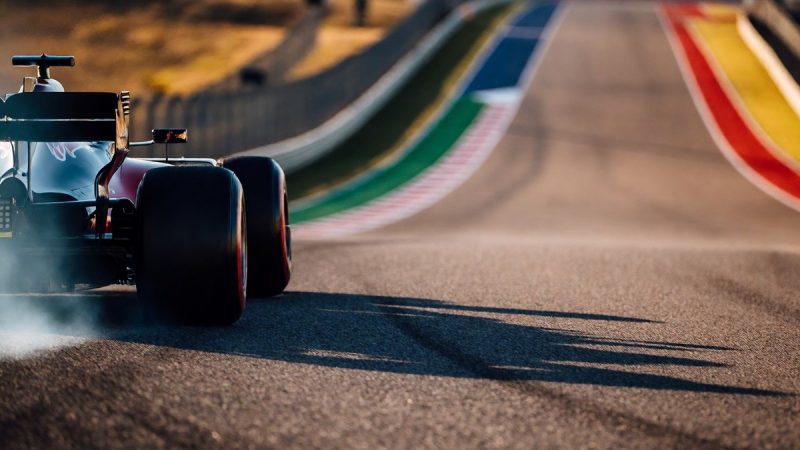
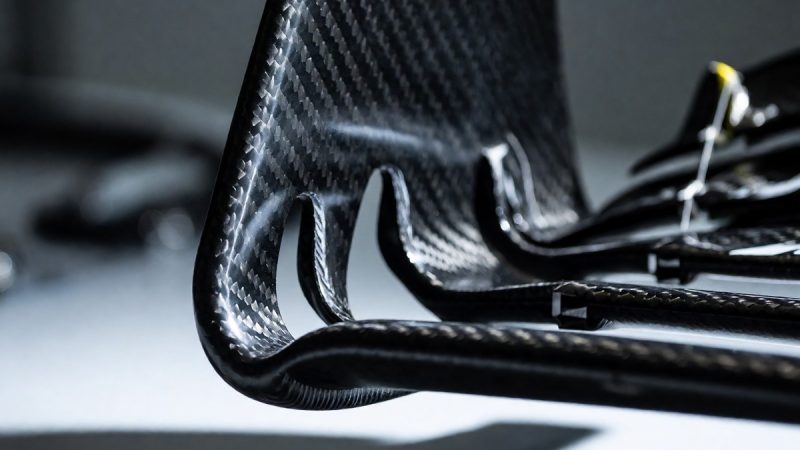
Modern drivers chase extreme speeds at Monza. The track holds the record for the highest average speed. Kimi Raikkonen set a benchmark in 2017 with an average of 263.587 km/h. Juan Pablo Montoya set a qualifying record in 2004 with an average of 262.242 km/h. In 2026, Pierre Gasly took pole position with a time of 1:21.786. He edged out George Russell by six hundredths. Piastri followed by under two tenths. Leclerc was fourth and Hamilton was fifth. The layout demands low downforce and low drag. Teams use skinny front and rear wings to minimize resistance. This setup increases speeds to 360 kph. The slipstreaming battles happen because the low drag allows cars to pull closely behind one another on the straights. You know the atmosphere of a Grand Prix, but the roar at Monza comes from a different history.
The modern Temple of Speed
Fans call Monza the Temple of Speed. The Tifosi provide the atmosphere for the Italian Grand Prix. The track remains one of the fastest on the calendar. It has hosted the race since 1950, missing only 1980 when the race moved to Imola. The circuit secured its place via a new contract in 2022. The current layout features the Curva Grande, the Curva di Lesmo, the Variante Ascari, and the Curva Alboreto. The Curva Grande follows the Variante del Rettifilo. Drivers pass underneath the historic banking before braking for the Ascari chicane. The Parabolica remains the final corner. The track continues to be a mainstay on the Formula 1 calendar.