How Aston Martin’s 2026 Honda turbocharger anti-lag system works
The removal of the MGU-H in 2026 forces engineers to use the 350 kW MGU-K to create artificial engine load to spool the turbocharger. This mechanism helps compensate for turbo lag, though battery capacity limits on street circuits like Monaco create significant management challenges.

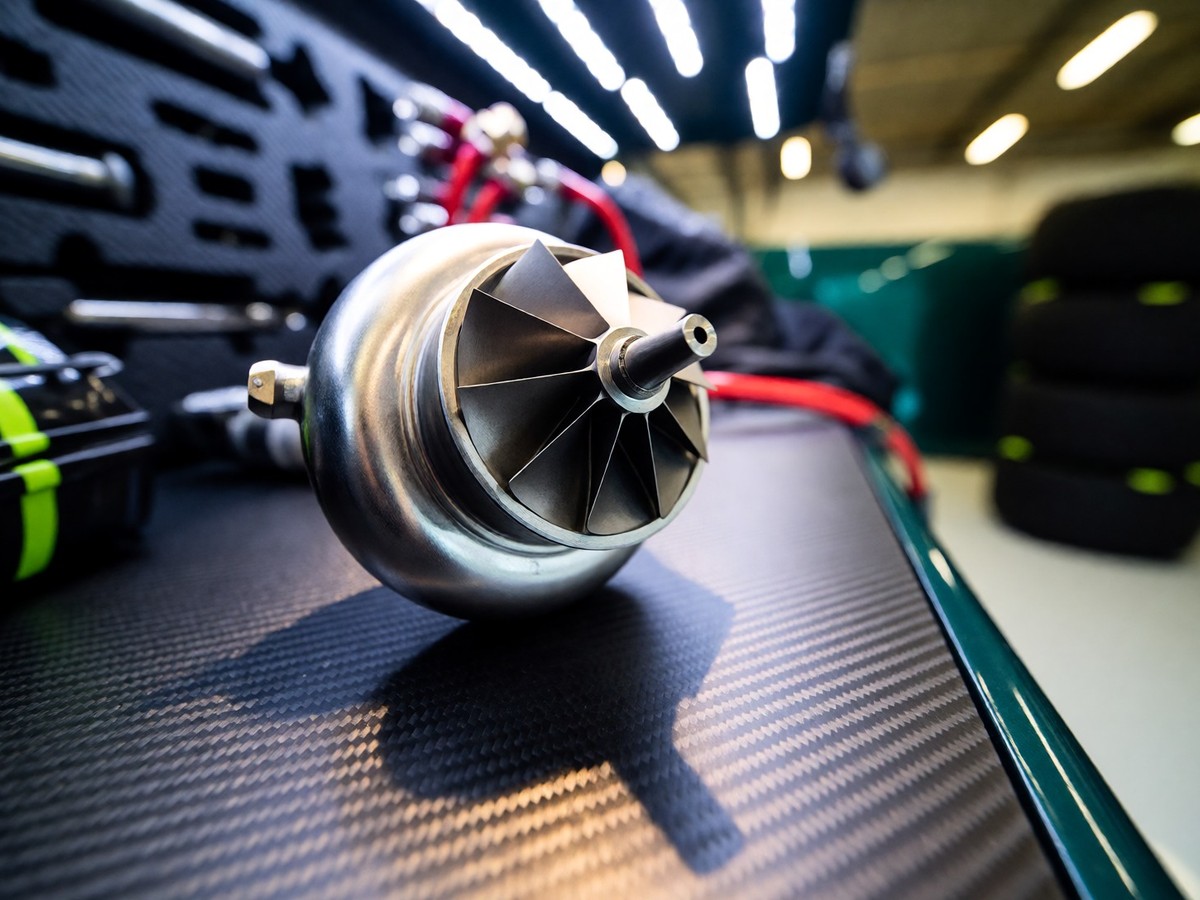
The removal of the Motor Generator Unit-Heat (MGU-H) from the 2026 power unit architecture removes the primary method for spinning the compressor turbine using electrical energy. In previous regulations, the MGU-H harvested thermal energy from exhaust gases to spin the turbocharger compressor wheel. This capability allowed engineers to fill power deficits and ensure acceleration remained instant and constant. Without the MGU-H, the 1.6-liter V6 turbocharged engine relies on the Motor Generator Unit-Kinetic (MGU-K) or higher engine revs to bring the turbo into its operating range. When the internal combustion engine load is low, such as during the first moments of acceleration out of a slow corner, less air flows through the engine. This reduced airflow makes it harder for the turbocharger to reach its required operating speed quickly.
The MGU-K provides electrical torque to the crankshaft
The MGU-K provides up to 350 kilowatts of peak electrical power. It converts electrical energy from the battery into mechanical torque delivered directly to the crankshaft. In the previous generation, the MGU-K provided 120 kilowatts. The 2026 MGU-K is 16kg, while the previous version was 7kg. The geared connection for the MGU-K has a minimum weight of 4kg. At speeds below 290 kilometers per hour, the MGU-K provides its full output to the rear wheels. As the car reaches 355 kilometers per hour, the MGU-K output reaches zero. Engineers use the MGU-K to create additional load on the engine to help the turbo spool up faster. This mechanism helps compensate for the loss of the MGU-H.
The MGU-K operates in two modes: driving and harvesting. In driving mode, the unit draws energy from the battery to add torque to the crankshaft. In harvesting mode, the rotating crankshaft turns the MGU-K as a generator to charge the battery. The 2026 regulations allow a maximum of 9 megajoules of energy harvesting per lap. The battery has a maximum usable capacity of 4 megajoules delta state of charge. Engineers must manage these cycles to ensure energy is available for acceleration.
The battery capacity problem on street circuits
A full battery prevents the MGU-K from assisting the turbocharger. On tracks with many braking zones like Monaco, the battery recharges very quickly. When the battery reaches its capacity, the MGU-K can no longer convert power into stored energy. Because the MGU-K can only provide its maximum power output to the rear wheels at speeds below 290 kilometers per hour, drivers must manage the energy deployment carefully to avoid running out of electrical capacity too early in the lap. This lack of energy conversion means the MGU-K cannot generate the artificial load needed to spool the turbo. Drivers then experience increased turbo lag and weaker acceleration out of corners. At Monaco, the MGU-K begins losing power at 200 kilometers per hour rather than the 290 kilometers per hour threshold used at other circuits.
This creates a difficult management task for drivers. If the battery reaches its 9 megajoule limit, the MGU-K cannot help the turbo. Drivers must find ways to keep the turbo spinning without using the battery. On the first lap or at the start of a race, when everyone drives slowly, they cannot deploy energy. This makes managing the power unit complicated when energy recovery is easy.
Technical specifications of the 2026 power unit
The 2026 power unit shifts the balance of power to a 50/50 split between the combustion engine and the electric motor. The internal combustion engine produces approximately 400 kilowatts of power. The MGU-K provides up to 350 kilowatts. The compression ratio for the engine is 16:1, a reduction from the previous 18:1 limit. This change helps the engine run on Advanced Sustainable Fuel. This fuel contains no fossil carbon and uses carbon from non-food biomass, municipal waste, or atmospheric carbon capture. The fuel has a Research Octane Number between 95 and 102.
| Feature | Specification |
|---|---|
| Engine Configuration | 1.6-liter V6 |
| Compression Ratio | 16:1 |
| MGU-K Peak Power | 350 kW |
| MGU-K Speed Limit | 290 km/h |
| Energy Recovery Limit | 9 MJ per lap |
| Fuel Energy Flow Limit | 3000 MJ/h |
| Race Fuel Mass Limit | 70 kg |
The fuel energy flow limit is 3000 megajoules per hour. The race fuel mass limit is 70 kilograms. The fuel flow meter is an FIA-supplied component that monitors the fuel circuit in real time.
Regulatory limits on the starting grid
Article 5.2.12 of the technical regulations prohibits the use of the MGU-K for the initial start phase until the car reaches 50 kilometers per hour. Article 5.2.19 states that MGU-K torque on the grid remains negative to charge the energy store. Drivers cannot use the MGU-K to prep the turbo before the lights go out. They must instead keep engine revs very high to ensure the compressor spins. Lando Norris stated that drivers no longer have the perfect amount of battery to fill in the dodgy gaps.
The difficulty of the start comes from the need to balance revs, clutch release, and turbo speed. If the driver does not execute this perfectly, they have no way to recover until they reach 50 kilometers per hour. Drivers also avoid using too much battery at the start because they need energy for the rest of the lap. Using the battery to fill turbo lag is inefficient and can leave a driver as a sitting duck later in the corner.
Managing engine revs and gears for turbo response
Drivers use first gear or low gears to increase torque and maintain engine revs. High revs help the turbo stay responsive. You already know the basics of F1 hybrid systems, so focus on how the 2026 changes specifically impact turbo lag. Oscar Piastri noted that when a driver loses boost pressure at full electrical power, they lose significant power from the combustion engine. Because the MGU-K is a near-equal partner to the combustion engine, any loss in boost pressure reduces the total power output by a large margin.
Drivers must also manage the transition between aerodynamic modes. When a driver lifts the throttle before a corner, the MGU-K harvests energy from the deceleration. This event disables the active aerodynamic system, forcing the wings from X-mode into Z-mode. This transition happens to ensure the car has maximum downforce for the corner. This link between energy harvesting and aerodynamic configuration adds another layer of complexity to managing turbo lag and corner exit.
Staggered engine updates and driver struggles
Honda split its development updates for the Aston Martin drivers. Lance Stroll received his IHI turbo update in Madrid, while Fernando Alonso received his in Azerbaijan. This staggered rollout meant the drivers struggled with an engine that snapped during downshifts and lost composure under braking. The IHI turbo updates arrived at different times because Honda split two development tokens.
The drivers faced an engine that was unreliable and underpowered during certain periods. Adrian Newey noted that the team started from a four-month disadvantage because they did not have a car in the wind tunnel until mid-April. The engine development process is difficult because the team must balance the combustion engine efficiency with the electrical system performance.
Vibration issues in the AMR26
The 2026 Honda power unit for Aston Martin struggles to balance the increased MGU-K output with the loss of the MGU-H. The engine produces severe vibrations that cause the car’s mirrors to fall off. Adrian Newey stated that the car’s mirrors were falling off because of the issue. These vibrations also cause nerve damage to Alonso and Stroll. Honda stated they did not expect the vibrations to be as bad as they were during testing.
The team must integrate the chassis and the power unit to solve these vibrations. Honda tested the engine on a dyno, but the vibration issues only became clear when the engine was paired with the AMR26 chassis during testing. Engineers work to ensure that the packaging and the electronic systems communicate correctly to prevent these issues. Will Honda’s revised turbo design resolve the vibration issues for Alonso and Stroll?