Alpine’s 2026 rear-wheel steering legality fight
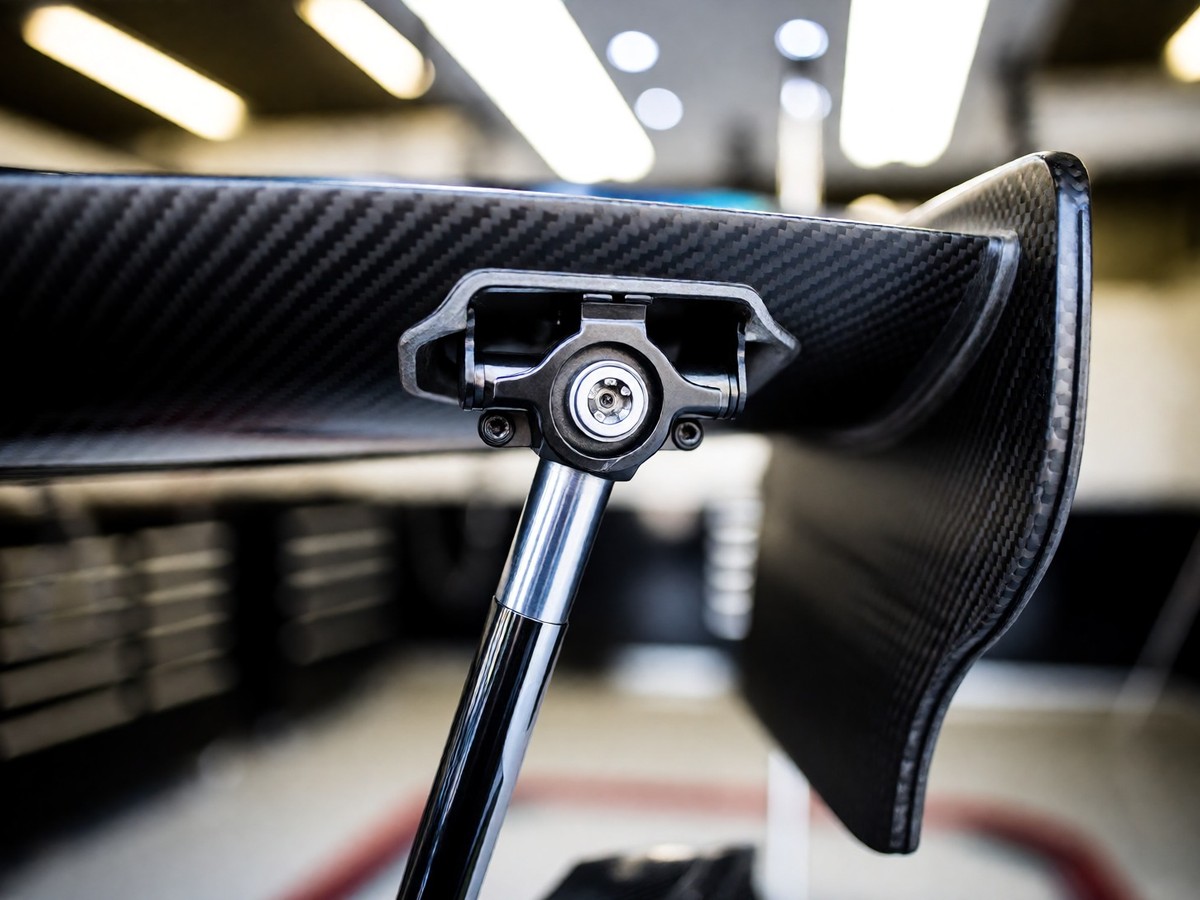
Alpine's A526 features an innovative rear wing actuator that could spark FIA legality debates. The article explores this design alongside historical F1 innovations like Benetton's rear-wheel steer and McLaren's brake-steer pedal.

Alpine is swapping Renault power for Mercedes power for the 2026 season. This move changes the team from a works outfit to a customer squad. Flavio Briatore leads the team through this transition. David Sanchez oversees the development of the A526. The team finished at the bottom of the constructors’ championship in 2025. Pierre Gasly and Franco Colapinto will drive the new car. The team unveiled the A526 in Barcelona. You already know that Formula 1 teams always push the limits of the rulebook.
The A526 rear wing innovation
The A526 uses an innovative rear wing actuator. This system lowers the trailing edge of the moveable section. This method differs from other teams. Most teams raise the front of the wing instead. The endplates of the rear wing curve outwards at the top to increase flow capacity. The design must fit within a small regulatory box. The A526 also uses pull-rod front suspension. This setup is also used by Cadillac. The radiator inlet sits far forward relative to the side-impact spur. The engine cover opens to vent hot air from the Mercedes power unit.
The A526 features a bargeboard behind the front wheel with a second support strut. This strut was not present on the first day of testing. The flow conditioners under the front wing remain on the car. The sidepods are less boxy than the launch model. A channel over the top of the sidepod feeds towards the top surface of the diffuser. This allows the top surface airflow and the lower reaches of the sidepods to merge more cleanly. Will the FIA classify Alpine’s rear wing actuator as a prohibited driver aid?
Benetton’s failed rear-wheel steer
Benetton tested a rear-wheel steer system in the B193C at Estoril in 1993. The B193C chassis used a hydraulically operated rear steering rack. Moog electro-valves changed the rear wheel angle by two degrees in either direction. Michael Schumacher and Riccardo Patrese used the system during free practice. The system included a fail-safe to return wheels to a straight-ahead position if hydraulic lines failed. Steve Matchett wrote in The Mechanic’s Tale that the decision was driven by ego. The team investigated the system during the final two races at Suzuka and Adelaide. The FIA banned four-wheel steering before the 1994 season.
The Benetton engineers modified the B193C chassis with a hydraulically operated rear steering rack that used Moog electro-valves to change the rear wheel angle by two degrees in either direction. Schumacher said the system felt good but did not change things a lot. He used the same lines and saw little movement at the rear. The system did not work well in slow corners. The team did not use the system in Adelaide.
McLaren’s discovered brake-steer pedal
McLaren used an extra pedal in the late 1990s to control a single rear brake caliper. This helped the car pivot under braking. Photographer Darren Heath discovered the mechanism at the Luxembourg GP. He saw the brakes glowing in Mika Hakkinen’s cockpit. The extra pedal sat on the left hand side. It required more pressure to prevent accidental use. The system helped the driver balance the car when transferring from the main brake pedal. It also reduced wake turbulence from the front wheels.
In 1998, McLaren added a switch in the cockpit to select which rear brake the pedal operated. Other teams lobbied the FIA to ban the system as a four-wheel steering solution. The extra pedal helped the driver dial out inherent understeer.
| Feature | McLaren Brake-Steer Specification |
|---|---|
| Control Mechanism | Additional left-side pedal |
| Operating Target | Single rear brake caliper |
| Activation Requirement | High pressure application |
| Aerodynamic Benefit | Reduced front wheel wake turbulence |
Mercedes’ steering column innovation
Mercedes technical director James Allison discussed the DAS system in a Q&A. Chief designer John Owen led the development. The system involved pushing and pulling the steering wheel. This replaced a design that used a paddle on the steering wheel. The FIA consulted on the design. Red Bull threatened to protest the system in Australia. The regulations were amended for 2021 to prohibit the use of DAS.
John Owen took the challenge of the steering column mechanism. He used his gut feel to decide if the project was doable. The team picked one of three ways to achieve the goal. The DAS system appeared at the beginning of the season.
The 2026 technical landscape
The 2026 power units use a 1.6-litre V6 turbo hybrid. The engine splits power 50-50 between internal combustion and electrical energy. The electrical side provides 350kw of power. This is an increase from 120kw. The removal of the MGU-H reduces weight and complexity. Drivers manage energy through Recharge modes and the Boost button. Recharge happens during braking, part throttle, or lifting off. Super clipping tops up the battery at full throttle. Overtake Mode gives a car extra power if it stays within one second of a rival. This mode allows a recharge of +0.5MJ. The minimum weight for cars is 768kg. The wheelbase is 3.4m. The cars use active aerodynamics. In corner mode, the flaps stay in a closed position. On straights, the flaps move to an open position.
| Component | 2026 Specification |
|---|---|
| Power Split | 50% Petrol / 50% Electrical |
| Electrical Power | 350kw |
| Minimum Weight | 768kg |
| Maximum Wheelbase | 3.4m |
| Floor Width | 1.9m |
| Fuel Type | Advanced Sustainable Fuel |
The fuel uses carbon capture, municipal waste, and non-food biomass. The 2026 regulations include a stronger roll-hoop. It must withstand a 20g vertical impact test. A two-stage nose cone provides protection during secondary impacts. The cars feature simplified front wings and in-washing bargeboards. These changes reduce turbulence. The ground-effect tunnels are gone. They are replaced by a flatter floor and larger diffuser openings.
Red Bull’s struggles in 2026
Pierre Gasly beat Max Verstappen to seventh in the Japanese Grand Prix. Both teams have 16 points. Alpine holds the lead on countback. Red Bull drivers struggle with the RB22. Isack Hadjar and Verstappen have had technical issues. Verstappen finished eighth in China. Hadjar finished eighth in Australia. The RB22 is unstable in high-speed corners. Verstappen had to make multiple steering corrections in Turn 1. Hadjar said the chassis is terrible. Red Bull is struggling to align aerodynamic efficiency and energy management.
| Position | Driver | Team | Points |
|---|---|---|---|
| 1 | Lando Norris | McLaren | 390 |
| 2 | Oscar Piastri | McLaren | 366 |
| 3 | Max Verstappen | Red Bull | 341 |
| 4 | George Russell | Mercedes | 276 |
| 5 | Charles Leclerc | Ferrari | 214 |
Verstappen had no battery on the straight after passing in the final chicane. Hadjar said the car is slow in the corners. The RB22 had reliability issues in Melbourne and Shanghai. Hadjar’s engine failed in Melbourne. Verstappen’s engine failed in Shanghai.
Alpine’s 2026 season calendar
Alpine follows a busy schedule across five continents. The season begins in Australia.
| Round | Grand Prix | Date |
|---|---|---|
| 1 | Australia | March 6-8 |
| 2 | China | March 13-15 |
| 3 | Japan | March 27-29 |
| 4 | Bahrain | April 10-12 |
| 5 | Saudi Arabia | April 17-19 |
| 6 | USA | May 1-3 |
| 7 | Canada | May 22-24 |
| 8 | Monaco | June 5-7 |
| 9 | Spain | June 12-14 |
| 10 | Austria | June 26-28 |
| 11 | United Kingdom | July 3-5 |
| 12 | Belgium | July 17-19 |
| 13 | Hungary | July 24-26 |
| 14 | Netherlands | August 21-23 |
| 15 | Italy | September 4-6 |
| 16 | Spain | September 11-13 |
| 17 | Azerbaijan | September 25-27 |
| 18 | Singapore | October 9-11 |
| 19 | USA | October 23-25 |
| 20 | Mexico | October 30 – November 1 |
| 21 | Brazil | November 6-8 |
| 22 | USA | November 19-21 |
| 23 | Qatar | November 27-29 |
| 24 | Abu Dhabi | December 4-6 |
Alpine’s A526 rear wing actuator is a clever way to navigate the 2026 aerodynamic rules. It mirrors the history of teams trying to find performance through unconventional hardware. While the FIA often bans such innovations, Alpine’s solution stays within the regulations. The team’s shift to Mercedes power provides the stability needed to challenge the top teams.