Verstappen’s Monza qualifying deficit and Red Bull performance drop
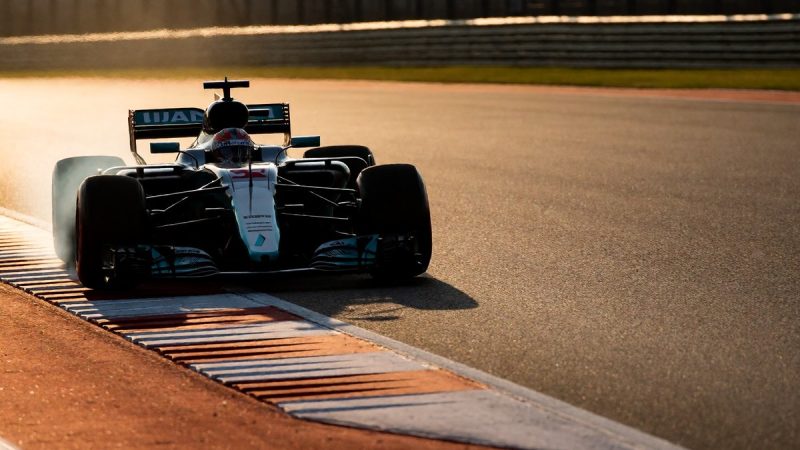
Max Verstappen qualified sixth at the 2026 Italian Grand Prix after his Red Bull RB22 dropped four-tenths slower in Q3 compared to Q2. Technical issues including bouncing and handling instability caused the performance decline behind pole-sitter Pierre Gasly.

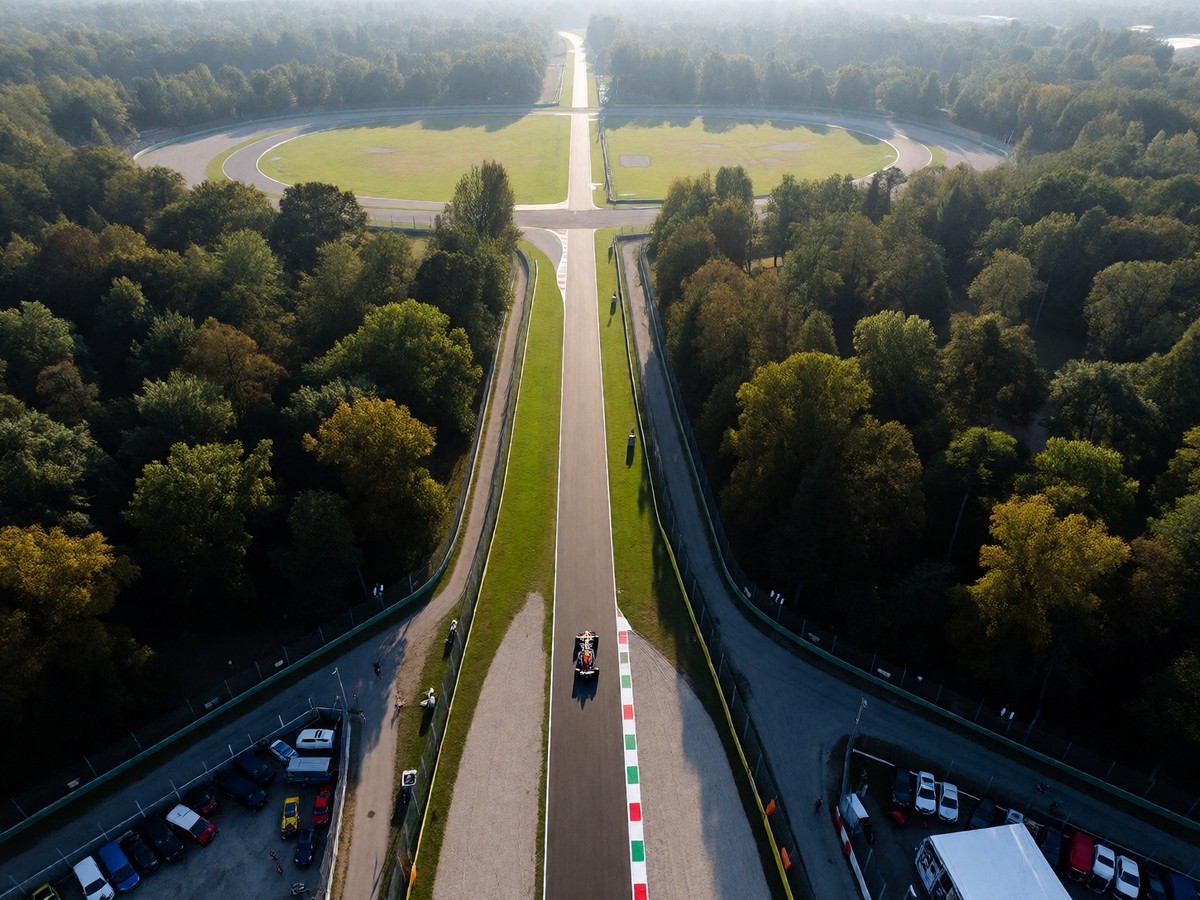
Pierre Gasly took pole position at the 2026 Italian Grand Prix with a 1:21.786. George Russell qualified second for Mercedes with a 1:21.846, which placed him 0.060s behind Gasly or 5.6 m of track distance behind. Oscar Piastri took third for McLaren with a 1:21.966, trailing the pole position by 0.180s or 16.7 m. Charles Leclerc finished fourth with a 1:22.004, leaving a 0.225s gap or 20.2 m to Gasly. Lewis Hamilton took fifth for Ferrari with a 1:22.011, trailing Gasly by 0.225s or 20.9 m. Max Verstappen qualified sixth with a 1:22.070, sitting 0.284s behind Gasly or 26.3 m back. Kimi Antonelli took seventh with a 1:22.093, which amounts to 0.307s or 28.5 m behind the pole sitter. Franco Colapinto finished eighth with a 1:22.220, 0.434s behind Gasly or 40.3 m behind. Lando Norris qualified ninth with a 1:22.256, 0.470s behind Gasly or 43.6 m behind. Arvid Lindblad took tenth with a 1:22.286, 0.500s behind Gasly or 46.4 m behind.
The Red Bull performance drop in Q3
The Red Bull performance fluctuated significantly between the second and third qualifying sessions. Verstappen recorded a 1:19.662 during Q2. However, the Q3 session saw him drop four-tenths slower than his Q2 time. Christian Horner noted that the team produced a 1:20.0s when they should have improved on new tyres. This drop placed Verstappen in sixth, although Oscar Piastri’s three-place grid penalty for impeding Liam Lawson at Turn 2 in Q2 moved Verstappen up to fifth on the starting grid. While George Russell missed the pole position by a mere 0.060 seconds, the resulting physical gap of 5.6 m between the Mercedes and the Alpine highlights how narrow the margin for error remained during the session.
The driver reported significant issues with the RB22 throughout the afternoon. Bouncing and imbalance plagued Verstappen during his runs. The car failed to turn effectively in Turns 1, 4, 6, and 7. He also struggled with energy usage between Turns 2 and 4 compared to his competitors. This technical instability forced the driver to change his approach to racing risk. He admitted to holding back on multiple occasions this year because the handling problems changed how he assessed risk. When the car loses aerodynamic downforce with the rear wing, the situation becomes dangerous, but he described the bouncing as a loss of lap time.
Technical failures and handling instability
Verstappen experienced persistent handling problems that undermined his Saturday performance. The car lacked balance and struggled with understeer. He specifically mentioned that the car did not turn in several key areas of the Monza circuit. He also faced difficulty with energy usage between Turns 2 and 4. This lack of performance forced him to settle for sixth on the grid. You know the RB22 has struggled with balance all season, but the Monza data reveals a specific failure in the Q3 transition. The team failed to extract the necessary pace from the fresh tyres.
Horner stated that the team does not understand the drop in pace from Q2 to Q3. The Red Bull boss noted that the team achieved a 1:19.6s on scrubbed tyres but could not exceed 1:20.0s on new tyres. He also observed that while other teams improved on new tyres, Red Bull fell miles away. The team needs to address this engineering problem to regain competitiveness. Verstappen expressed frustration that the car’s performance failed to match his expectations despite his efforts to extract the maximum from the machine.
A contrast in Monza speeds
The 2026 qualifying session stands in stark contrast to the 2026 historical context of the circuit. In 2025, Verstappen produced an extraordinary demonstration of speed at the Temple of Speed. He delivered a 1:18.792 qualifying lap, which set the record for the fastest qualifying lap in Formula 1 history by average speed. That lap reached 264.682 km/h, surpassing the 2020 benchmark of 264.362 km/h set by Lewis Hamilton. This year, he sits much further back in the field.
| Driver | Year | Lap Time | Average Speed |
|---|---|---|---|
| Max Verstappen | 2025 | 1:18.792 | 264.682 km/h |
| Lewis Hamilton | 2020 | 1:18.887 | 264.362 km/h |
| Kimi Raikkonen | 2018 | 1:19.119 | 263.587 km/h |
Verstappen achieved pole in 2025, but he starts fifth in 2026 after the grid reorganization. The massive difference in lap times highlights the decline in Red Bull’s relative performance.
The Isack Hadjar comparison
Isack Hadjar remains a close benchmark for Verstappen in qualifying. The comparison covers the first eleven rounds of the 2026 season. Hadjar’s average deficit, when adjusted to a ninety-second reference to account for different circuit lengths, sits slightly above one tenth of a second. This normalized figure suggests that Hadjar has stayed closer to Verstappen than many recent teammates. Daniel Ricciardo recorded the closest full-season average beside Verstappen in 2017, with a gap around half a tenth. Hadjar currently ranks next in that historical comparison.
Verstappen maintains a significant lead in the championship standings. He leads Hadjar by forty-one points after eleven rounds. The gap in race pace remains larger than the qualifying gap. Data from the first half of the season shows that Verstappen averages 0.542s faster per lap in the race than the Frenchman. In five of the six Grands Prix both finished, Verstappen beat Hadjar. How will Red Bull resolve the handling issues to keep this gap from closing further?
Teammate performance statistics
The 2026 season shows varying levels of performance across the various team pairings. At Red Bull, Verstappen leads Hadjar in qualifying 8-4 and in the race 9-3. Liam Lawson, who replaced Hadjar for the Dutch Grand Prix, has a qualifying lead over Lindblad of 7-5. At Mercedes, Antonelli leads Russell in qualifying 8-7 and in the race 10-5. At Ferrari, Leclerc leads Hamilton in qualifying 8-7 and maintains a race lead of 7-8.
| Team | Driver 1 | Driver 2 | Qualifying H2H | Race H2H |
|---|---|---|---|---|
| Red Bull | Verstappen | Hadjar | 8-4 | 9-3 |
| Mercedes | Antonelli | Russell | 8-7 | 10-5 |
| Ferrari | Leclerc | Hamilton | 8-7 | 7-8 |
| McLaren | Norris | Piastri | 9-6 | 8-6 |
| Alpine | Gasly | Colapinto | 12-3 | 9-5 |
| Haas | Bearman | Ocon | 10-5 | 8-6 |
| Racing Bulls | Lawson | Lindblad | 7-5 | 8-4 |
| Audi | Hulkenberg | Bortoleto | 7-8 | 7-8 |
| Williams | Sainz | Albon | 10-5 | 9-6 |
| Aston Martin | Alonso | Stroll | 13-2 | 8-2 |
| Cadillac | Perez | Bottas | 8-7 | 9-4 |
At Alpine, Gasly leads Colapinto in qualifying 12-3 and in the race 9-5. At McLaren, Norris leads Piastri in qualifying 9-6 and in the race 8-6. At Racing Bulls, Lawson leads Lindblad in qualifying 7-5 and in the race 8-4. At Haas, Bearman leads Ocon in qualifying 10-5 and in the race 8-6. At Audi, the drivers remain even with 7-8 in both qualifying and race statistics. At Williams, Sainz leads Albon in qualifying 10-5 and in the race 9-6. At Aston Martin, Alonso leads Stroll in qualifying 13-2 and in the race 8-2. At Cadillac, Perez leads Bottas in qualifying 8-7 and in the race 9-4.
Complete qualifying results for Monza
The following data details the final classification for the 2026 Italian Grand Prix qualifying session.
| Pos | Driver | Team | Lap Time | Gap | Gap (m) |
|---|---|---|---|---|---|
| 1 | Pierre Gasly | Alpine | 1:21.786 | Pole | – |
| 2 | George Russell | Mercedes | 1:21.846 | +0.060 | 5.6 m |
| 3 | Oscar Piastri | McLaren | 1:21.966 | +0.180 | 16.7 m |
| 4 | Charles Leclerc | Ferrari | 1:22.004 | +0.218 | 20.2 m |
| 5 | Lewis Hamilton | Ferrari | 1:22.011 | +0.225 | 20.9 m |
| 6 | Max Verstappen | Red Bull | 1:22.070 | +0.284 | 26.3 m |
| 7 | Kimi Antonelli | Mercedes | 1:22.093 | +0.307 | 28.5 m |
| 8 | Franco Colapinto | Alpine | 1:22.220 | +0.434 | 40.3 m |
| 9 | Lando Norris | McLaren | 1:22.256 | +0.470 | 43.6 m |
| 10 | Arvid Lindblad | Racing Bulls | 1:22.286 | +0.500 | 46.4 m |
| 11 | Gabriel Bortoleto | Audi | 1:22.517 | +0.731 | 67.8 m |
| 12 | Oliver Bearman | Haas | 1:22.756 | +0.970 | 90.0 m |
| 13 | Nico Hulkenberg | Audi | 1:22.779 | +0.993 | 92.1 m |
| 14 | Liam Lawson | Red Bull | 1:22.821 | +1.035 | 96.0 m |
| 15 | Carlos Sainz | Williams | 1:23.453 | +1.667 | 154.7 m |
| 16 | Esteban Ocon | Haas | 1:23.454 | +1.668 | 154.8 m |
| 17 | Yuki Tsunoda | Racing Bulls | 1:23.755 | +1.969 | 182.7 m |
| 18 | Alexander Albon | Williams | 1:24.356 | +2.570 | 238.4 m |
| 19 | Valtteri Bottas | Cadillac | 1:24.364 | +2.578 | 239.2 m |
| 20 | Sergio Perez | Cadillac | 1:24.595 | +2.809 | 260.6 m |
| 21 | Fernando Alonso | Aston Martin | 1:25.150 | +3.364 | 312.1 m |
| 22 | Lance Stroll | Aston Martin | 1:25.222 | +3.436 | 318.8 m |
Championship standings and race results
Verstappen secured his fifth podium of the 2026 season at Monza, finishing third behind Kimi Antonelli and George Russell. This result places him sixth in the Drivers’ Championship with 127 points. The championship standings reflect the competitive nature of the current season.
| Pos | Driver | Points |
|---|---|---|
| 1 | George Russell | 51 |
| 2 | Andrea Kimi Antonelli | 47 |
| 3 | Charles Leclerc | 34 |
| 4 | Lewis Hamilton | 33 |
| 5 | Oliver Bearman | 17 |
| 6 | Lando Norris | 15 |
| 7 | Pierre Gasly | 9 |
| 8 | Max Verstappen | 8 |
| 9 | Liam Lawson | 8 |
| 10 | Arvid Lindblad | 10 |