The FIA investigation into Mercedes front wing flexibility
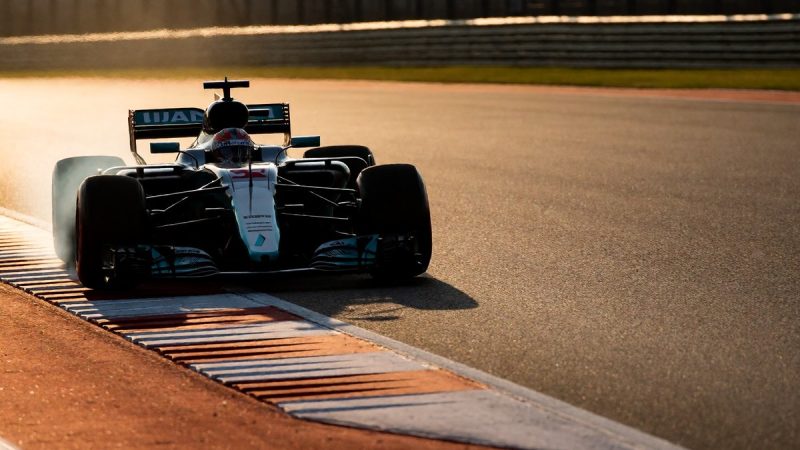
Ferrari has lodged a formal inquiry into the Mercedes W17 after its two-phase closing mechanism allegedly provides a braking stability advantage. The investigation examines whether the design violates aerodynamic influence limits defined in the technical regulations.

Mercedes engineers designed a two-phase closing mechanism for the W17 active aero front wing. This device snaps the wing partially shut within the 400ms window the FIA sensors require. It then settles into its final position over an additional 800ms. Ferrari lodged a formal inquiry into this mechanism after the Mercedes 1-2 finish in China. The investigation targets whether the W17 exceeds the aerodynamic influence limits defined in the technical regulations. This mechanism allegedly provides a massive braking stability advantage. I believe the FIA’s decision to delay front wing testing in previous seasons created the very loopholes Mercedes now exploits.
Technical limits for front wing deflection
The FIA regulates front wing flexibility through Articles 3.15.4 and 3.15.5 of the technical regulations. These rules define the permitted deflection for both the bodywork and the flaps. The testing involves applying specific loads to the wing to see how much it moves. When a 100kg load is applied symmetrically to both sides of the car, the vertical deflection must not exceed 10mm. If the load is applied to only one side of the car, the vertical deflection must be no more than 15mm. This is a significant reduction from the 15mm symmetrical and 20mm asymmetrical limits used previously. For the front wing flap, the trailing edge may deflect no more than 3mm under a 6kg point load. The previous limit for the trailing edge allowed 5mm of deflection.
| Component | Load Type | Limit |
|---|---|---|
| Front Wing Bodywork | Symmetrical (100kg) | 10mm |
| Front Wing Bodywork | Asymmetrical (100kg) | 15mm |
| Front Wing Flap | 6kg Point Load | 3mm |
The investigation into the W17 focuses on the investigation of the two-phase mechanism. The team claims the movement satisfies the position sensors connected to the FIA Standard ECU. If the FIA decides the mechanism violates the intent of the active aero regulations, a Technical Directive will force Mercedes to alter its hydraulic actuators or software.
Historical context of wing flexibility battles
Flexi-wings are an ongoing challenge for the governing body. In the 2024 season, the focus was on the rear wings of the McLaren MCL38. Video footage from the Azerbaijan Grand Prix showed the McLaren rear wing flexing under aerodynamic load. This created a gap in the rear wing that reduced drag and improved straight-line speed. Some observers called this a mini-DRS effect. While McLaren reported the wing complied with all FIA load tests, the team proactively adjusted the design following conversations with the FIA before the Singapore Grand Prix.
Red Bull and Ferrari also raised concerns during the 2024 championship battle. These teams did not exploit the concept as fully as their rivals. Red Bull and Ferrari were reluctant to spend development money on flexi-wings because they expected the FIA to tighten the regulations. Mercedes and McLaren felt aggrieved when they believed Red Bull exploited similar rules. The FIA eventually responded to these concerns by tightening the rear wing tests. For the 2025 season, the FIA mandated that if 75kg of vertical load is applied to either extremity of the rear wing mainplane, the slot gap between the mainplane and the flap cannot vary by more than 2mm.
FIA monitoring and camera technology
The FIA uses specific methods to monitor aerodynamic deflection. During the 2025 season, the FIA installed cameras on the rear wings of cars at the Australian Grand Prix. After reviewing that footage, the FIA reduced the rear wing mainplane tolerance from 2mm to 0.75mm at the Chinese Grand Prix and to 0.5mm at the Japanese Grand Prix. The FIA also uses 4K video cameras to track front wing movement.
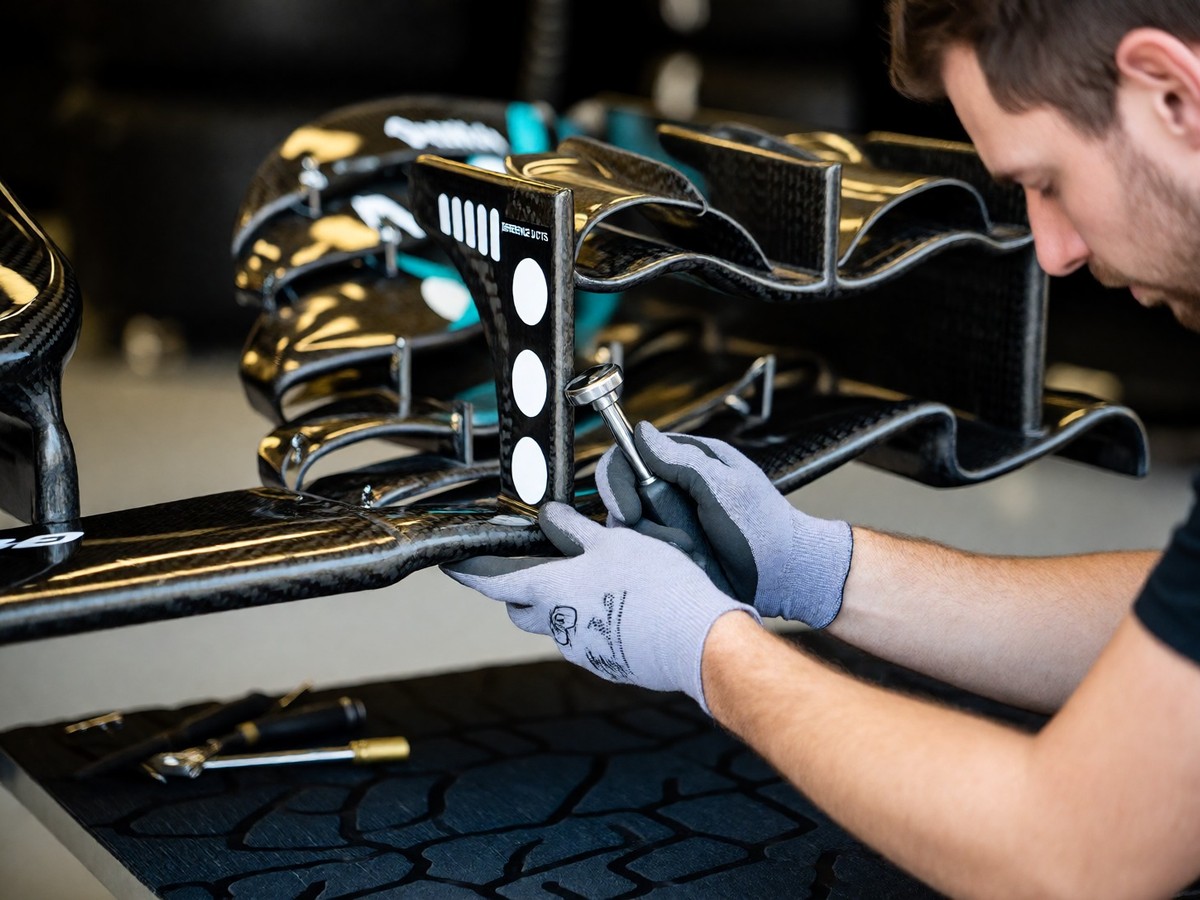
To assist this analysis, the FIA requires selected teams to fit a 4K camera in a location on the car nose. Teams also place reference dots on the front wing elements and endplate. These dots are 20mm in diameter. The FIA specifies their locations to establish movement vectors for the flaps and endplate. There are three dots on the flaps and six dots on the endplate. This process allows the FIA to track excessive deformations during Friday practice sessions. The FIA conducts component testing on a regular basis. They check teams at various points in the season by asking for components to be tested in isolation or on the whole car. They also perform tests in parc ferme conditions on Saturday after qualifying or Sunday morning.
Active aerodynamics and the 2026 power unit
The 2026 regulations introduce active aerodynamics to assist the new power units. The new engines use a 1.6-liter V6 turbo hybrid architecture with a 50-50 split between combustion and electric power. This shift requires a significant reduction in aerodynamic resistance to manage energy effectively. The 2026 cars are shorter, narrower, and lighter than previous models. The minimum weight for the car and driver is 724kg. The 2026 regulations also remove the MGU-H component to reduce costs and attract manufacturers like Audi and Ford.
Active aerodynamics replaces the traditional DRS with a system where both front and rear wings can adjust. In corner mode, the flaps stay closed to maintain grip. In straight-line mode, the flaps open to reduce drag and increase maximum speed. This reduces rolling resistance and allows for better energy recovery during braking. The drivers use three tools to manage the car. They have an Overtake Mode for when they are within one second of a rival, a Boost button for extra electrical energy, and different modes to manage battery recharge. The driver and race engineer select modes to recharge the battery from braking and engine energy.
Aero balance and driver control
The movement of the front wing is vital for car balance. Teams use aero elasticity to dial out low-speed understeer and high-speed oversteer. Mercedes technical director James Allison stated that having a degree of flexibility within the rules is beneficial for car balance. The investigation into the W17’s two-phase mechanism concerns the stability of the car during braking. A sudden reduction in front downforce could cause snappy weight transfers.
If the FIA bans the two-phase mechanism, drivers like Kimi Antonelli and George Russell might face increased front tire wear. They would also need to adjust their braking markers to handle the change in downforce. The FIA’s goal is to keep the wake of the cars clean to make following easier. Outwashing airflows make the wake more turbulent, which makes following difficult. The FIA continues to monitor the internal structures of front wings to ensure compliance with Article 3.2.2, which requires all aerodynamic components to be rigidly secured and immobile.
Team politics and the pecking order
The regulation changes cause significant tension between team principals. Red Bull Team Principal Christian Horner has questioned the timing of the FIA’s front wing testing. He noted that changing rules at race nine creates a two-stage set of issues for teams and increases costs. Horner also suggested that the FIA could use these changes to disadvantage certain teams. Mercedes boss Toto Wolff described the new testing as a half-baked solution that gives teams more opportunity to bend the rules.
Ferrari boss Frederic Vasseur believes the front wing changes could be a gamechanger in Barcelona. He noted that teams have been working on these issues for a long time. McLaren Team Principal Andrea Stella dismissed the concerns, stating that the focus on McLaren’s car is a distraction. He argued that the aero elasticity does not cause McLaren’s competitiveness. I find the political maneuvering between the teams regarding these technical loopholes to be a predictable part of the sport.
| Driver | Team | Wins | Poles | Points |
|---|---|---|---|---|
| Kimi Antonelli | Mercedes | 12 | 8 | 302 |
| George Russell | Mercedes | 6 | 3 | 236 |
| Lewis Hamilton | Ferrari | 4 | 1 | 199 |
| Lando Norris | McLaren | 1 | 2 | 186 |
| Charles Leclerc | Ferrari | 16 | 1 | 179 |
The consequences of non-compliance
The FIA has several ways to handle teams that breach the technical regulations. If the FIA determines that a component violates the intent of the rules, they issue a Technical Directive. This clarifies how the rules will be enforced moving forward but does not typically result in retrospective penalties. This is what happened with the McLaren rear wing in 2024.
However, if the FIA classifies a device as a direct breach of the regulations rather than a loophole, penalties become retrospective. Mercedes could face disqualification from the Chinese Grand Prix. This would mean the loss of 43 World Championship points. This outcome would be a massive blow to their title hopes. In the past, protests have led to points deductions, such as the case with Racing Point’s brake ducts.
Mercedes might defend itself by arguing that the W17 passed all physical load tests. Clause (q)(iii) of the regulations requires movement to be measured by sensors connected to the FIA Standard ECU. If the Mercedes sensors reported legal closure within 400ms, the team can argue they complied with the letter of the law. Will the FIA prioritize the technical intent of the active aero rules over the sensor data?