Sainz’s Williams vs Alonso’s Aston Martin at COTA
The Williams FW48 struggles with a heavy 772.4 kg chassis in high-downforce sectors, while the Adrian Newey-designed Aston Martin AMR26 utilizes active aerodynamics to excel on the long Turn 12 straight. This technical divergence will dictate overtaking opportunities at the Austin circuit.

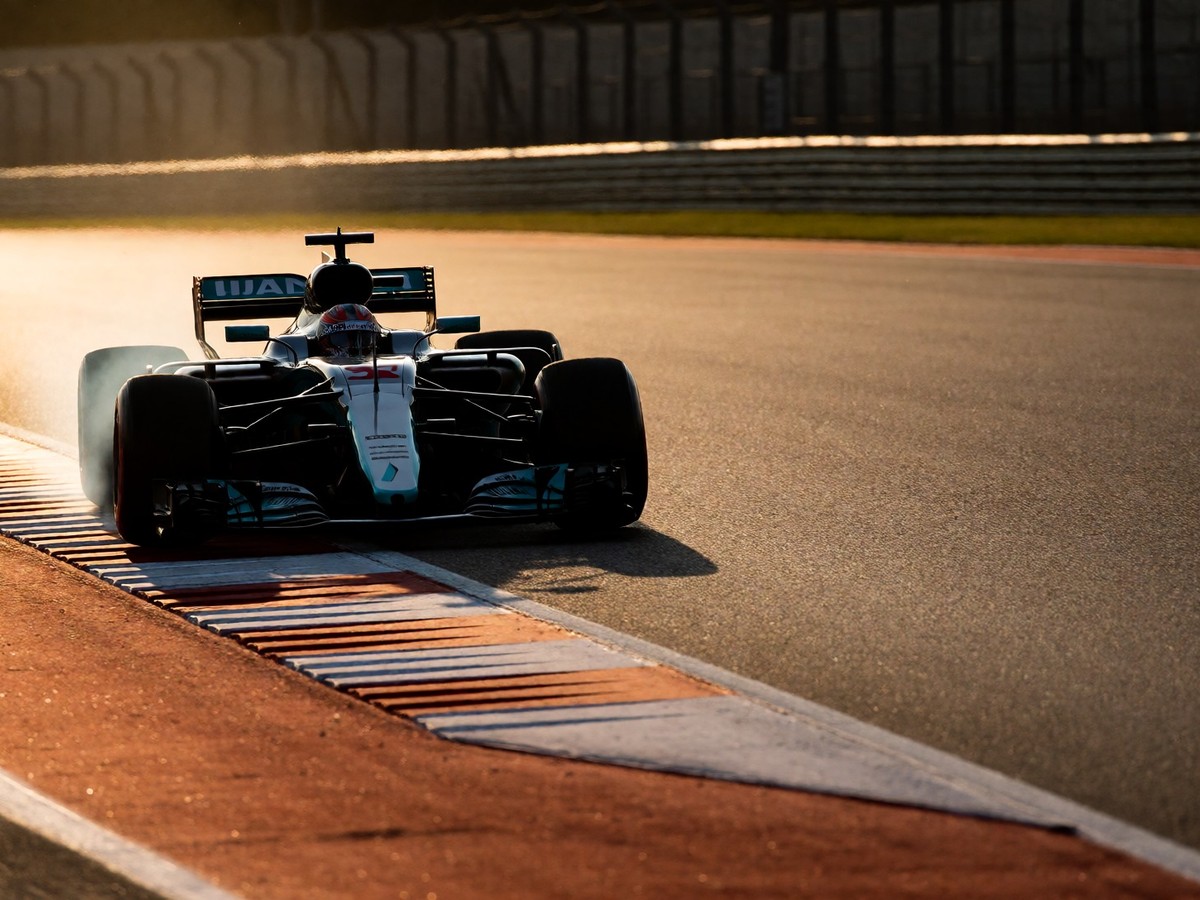
I expect the high-downforce requirements of the middle sector at the Circuit of the Americas to expose the weight and aerodynamic deficiencies of the Williams FW48. The Aston Martin AMR26 uses an aero efficiency philosophy that should perform better on the long Turn 12 straight. The divergence between these two technical directions will define the overtaking battles in Texas.
Williams’ struggle with the FW48
Carlos Sainz says the Williams FW48 is stuck near the tail end of the grid. He says the team is only faster than Cadillac. The FW48 is overweight. Sainz says the team must lose weight and gain downforce to improve their position. The car is 772.4 kg including the driver. This weight hampers performance in high-downforce environments. The team missed the Barcelona shakedown in January. Williams is in survival mode until the last major package arrives around the Azerbaijan Grand Prix in September.
The technical team includes Piers Thynne, Dan Milner, and Claire Simpson. The design department includes Pat Fry, Matt Harman, Angelos Tsiaparas, Steve Winstanley, Fabrice Moncade, Jonathan Carter, Richard Frith, Adam Kenyon, and Juan Molina. The team is sitting ninth in the championship with 11 points. Neither Sainz nor Alex Albon has scored since the April break. This slump tested the faith of the driver. James Vowles says the team must prove they can build a car to the right level of quality. Williams is working to improve the production side to address weight issues.
The Aston Martin aero strategy
The AMR26 uses active aerodynamics to manage two modes of operation. The X-mode reduces drag on straights. The Z-mode provides more downforce for corners. Adrian Newey designed the car with a focus on aerodynamic efficiency. The front wing uses a pivot for the third element to allow it to back off when requested. The sidepods have reduced volume. The engine cover has a large cooling outlet that helps mix hot cooling airflow with free-stream airflow before it reaches the rear wing.
The gearbox is an eight-speed, semi-automatic transmission. It is the first in-house development at the AMR Technology Campus. The gearbox must handle large torque loads in both directions because the MGU-K delivers more power. Valvoline provides the lubricants for the transmission and power unit. The car also uses a rear wing that can adjust to reduce drag. This setup allows for better straight-line speed.
Technical demands of the Austin track
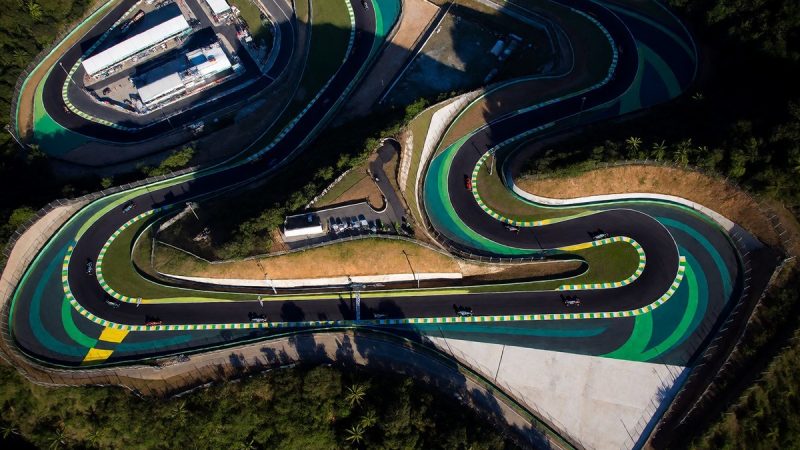
The Circuit of the Americas measures 5.431 km on the racing line. The single most distinctive thing about COTA does not show up in a lap time, as the run from the grid to Turn 1 rises around 41 metres of elevation into a blind, tightening left-hander. The slowest point of the lap is 80 km/h. This speed is faster than the slowest points at Singapore or Monza. The middle sector contains the rapid left-right-left-right sequence of Turns 3 to 6. These corners demand a car that changes direction without complaint.
The track requires a well-balanced car. Drivers spend 58.3% of the lap at full throttle. The long back straight leads into Turn 12. This area is a reliable overtaking spot. You should keep an eye on the weather because the surface is famously bumpy. The construction of the track began on December 31, 2010. Tavo Hellmund and Red McCombs were the primary figures in the project. The circuit was designed by HKS, Inc. and Tilke Engineers & Architects. The asphalt was finished on September 21, 2012.
Power unit divergence and the 2026 rules
The 2026 regulations change the power unit architecture. The MGU-K power rises to 350 kW. The energy recovery limit is 8.5 megajoules per lap. Williams runs the Mercedes-AMG M17 engine. The engine is a 1.6 litre V6 turbo. Aston Martin uses a Honda power unit. Honda updated the turbocharger in Madrid and Baku to improve boost following. This update helps driveability and energy management.
The Honda engine is still over a second off the pace in some scenarios. Honda focuses on fundamental changes for 2027. They provide small updates in 2026 if they do not take resources from next year’s development. The 50/50 split between thermal and electrical power is a design philosophy. Drivers manage energy deployment to gain an advantage. The extra electrical power provides a push on the straights.
Comparison of car specifications
| Specification | Williams FW48 | Aston Martin AMR26 |
|---|---|---|
| Driver | Carlos Sainz / Alex Albon | Fernando Alonso / Lance Stroll |
| Engine | Mercedes-AMG M17 | Honda |
| Weight | 772.4 kg | Not stated |
| Aero Focus | Downforce and balance | Efficiency and active aero |
| Technical Lead | Pat Fry | Adrian Newey |
The Williams car is heavy. The Aston Martin car is efficient. The Williams team needs more downforce. The Aston Martin team needs to manage energy.
The overtaking mechanism at COTA
Overtaking at COTA relies on the Overtake mode. This is a driver-triggered deployment that replaces DRS. The mode provides extra electrical power at the top end of the speed range for a car following another closely. The long back straight into Turn 12 remains the best spot to use this. The high-speed esses in the middle sector reward cars with good direction change.
The current cars carry 30% less downforce than the previous generation. This makes the cars behave differently in high-speed corners. The active aerodynamics help mitigate this. The X-mode and Z-mode allow teams to find a balance between cornering and straight-line speed. The Williams car struggles to find this balance because of its weight and lack of load. The Aston Martin car is built around this exact distinction.
Performance evaluation at Austin
The Williams FW48 is a disappointment in high-downforce settings. It lacks the aerodynamic load to compete in the middle sector. The car’s weight makes it difficult to handle in the rapid direction changes of Turns 3 to 6. Sainz says the car is stuck at the back. The lack of stability in the corners will likely prevent Williams from making moves on the higher tiers.
The Aston Martin AMR26 is better suited to the track’s layout. The aero efficiency helps in the high-speed sections. The Honda engine’s turbocharger update helps with energy management. Alonso’s ability to manage race pace will be important. He finished P10 in Monaco despite starting P21. He used an aggressive one-stop strategy with soft tyres. The AMR26’s ability to manage the X-mode will make it strong on the Turn 12 straight.
Will the Williams late-season upgrades provide enough downforce to keep them out of the gravel in the middle sector? The heavy chassis and aerodynamic deficit suggest the gap to Aston Martin will remain. The Aston Martin AMR26 is the superior tool for the Austin circuit.