McLaren aerodynamic elasticity and Baku straight-line deficits
Oscar Piastri's McLaren utilized rear wing deflection to gain speed on Baku straights, while Lando Norris faced a 3.4km/h top speed deficit. The FIA continues to monitor wing flexibility to prevent illegal aero elasticity advantages.

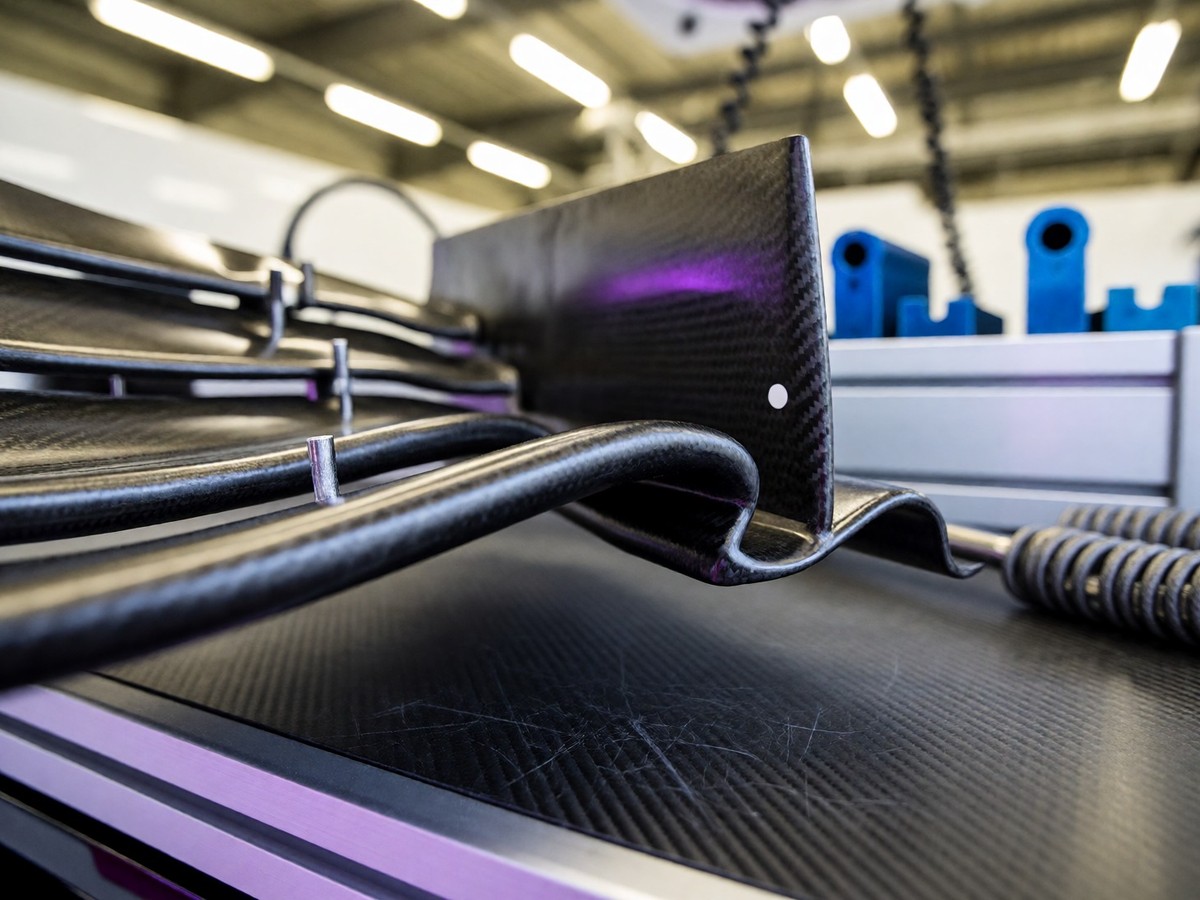
Oscar Piastri’s race-winning McLaren showed rear wing deflection at high speeds during the Azerbaijan Grand Prix. Onboard footage of the MCL38 revealed the top element of the rear wing bending at high speed. This movement increases the slot gap between the main plane and the flap when the car is not using DRS. This phenomenon creates a mini-DRS effect that reduces drag on long straights. Charles Leclerc failed to overtake Piastri because of this aerodynamic behavior. The rear wing flap at the outer edges can bend or twist slightly to increase the gap. This provides a small straight-line speed boost that benefits a driver leading the race.
Engineering the Load Shedding
Engineers use aero elasticity to manage the trade-off between downforce and drag. A flexible front wing allows teams to generate more load in slow corners to combat understeer. The wing then changes its angle of attack at high speeds to prevent oversteer. This helps engineers find a balance that the 2026 regulations attempt to address through active aero. The 2026 cars use X-Mode for low drag on straights and Z-Mode for high downforce in corners. You know the struggle of following a car through dirty air when aerodynamics do not behave predictably.
The transition from laminar flow to turbulence occurs when fluid perturbations cannot be effectively suppressed by the laminar flow structure in the boundary layer. External disturbances like surface roughness or changes in the angle of attack induce small perturbations. These perturbations amplify within the boundary layer and lead to the transformation of laminar flow into turbulence. The momentum thickness Reynolds number at the transition point describes this process. When the ratio of the vorticity Reynolds number to the critical momentum thickness Reynolds number exceeds one, the intermittency factor increases.
Norris and the Straight-Line Deficit
Lando Norris struggles with a significant straight-line speed deficit in the 2026 Azerbaijan Grand Prix. In qualifying, Norris finished in fifth place after a lock-up in Turn 3. His fastest lap was 1:43.672, which was 1.146s slower than pole sitter George Russell. The Briton noted his car had more issues than the other car, forcing him to push more than Oscar Piastri to compensate for the lack of speed. His top speed trailed Piastri by 3.4km/h. Mercedes proved much faster, with George Russell outperforming Piastri by 8.1km/h and Norris by 11.5km/h. Norris also suspected that 45kph wind speeds in Baku contributed to his performance.
Andrea Stella, the McLaren team principal, explained a deficit of power on the side of Norris, which seemed to link to some behavior of the fuel injection. This caused the power unit to generate less power occasionally. While the team confirmed that the upgrades were performing, Norris found the lack of pace in the straights painful. He was 0.8s off the pace in qualifying, and much of that loss occurred on the straights.
FIA Testing and Technical Directives
The FIA investigates front wing flexibility using cameras and static load tests. Nikolas Tombazis, the FIA single-seater director, stated that testing would not undergo changes in 2025. However, the FIA already reduced the permitted deflection for rear wing mainplanes in the 2025 season. In China, the tolerance for the rear wing mainplane fell to 0.5mm. The FIA also introduced tougher load tests for the front wing in Spain during the 2025 season. These tests require the wing to deflect no more than 10mm under symmetrical load. When the load applies to only one side, the deflection must stay within 15mm. For the front wing flap, the permitted deflection dropped to 3mm under a 6kg point load.
The FIA uses dedicated cameras to monitor the flex of the front wings, often using adhesive dots in strategic positions. This monitoring began after observations during the Belgian Grand Prix. The FIA believes these tests are the only tool to enforce the flexibility of front wings. The governing body also evaluates whether to extend these updates to the rear wings.
| Component | Regulation Type | Limit/Value |
|---|---|---|
| Front Wing (Symmetrical Load) | Max vertical deflection | 10mm |
| Front Wing (Asymmetrical Load) | Max vertical deflection | 15mm |
| Front Wing Flap (6kg point load) | Max deflection | 3mm |
| Rear Wing Mainplane (75kg load) | Max slot gap variance | 0.5mm |
| 2026 Power Unit Split | ICE to Electric ratio | 50:50 |
| 2026 Car Weight | Minimum weight | 768kg |
The Physics of Airflow Transition
The transition from laminar to turbulent flow is a process where the flow pattern undergoes a change due to the instability of the fluid’s internal structure. In a cambered airfoil, the upper surface is more curved than the lower surface, which means the flow velocity is higher on the upper surface. This accelerated airflow tends to result in transition at lower angles of attack. As the angle of attack increases, the transition point shifts backwards and may eventually occur in the centre or the rear of the airfoil.
For a symmetrical airfoil, the airflow above and below the airfoil is symmetrical at a zero angle of attack. Transitions usually occur on the upper surface, especially at medium to high angles of attack. In a biconvex airfoil, both surfaces have large curvature. The airflow accelerates on the upper surface and flows at a lower velocity on the lower surface. This can cause the flow to separate and transition. At high angles of attack, the transition moves forward and causes flow instability.
Rival Discontent and Regulatory Gaps
Red Bull executives Christian Horner and Helmut Marko expressed concerns regarding wing flexibility. Horner stated that the FIA cannot treat the front wing differently from the rear wing. He argued that what applies to the rear wing should also apply to the front wing. Mercedes principal Toto Wolff called the decision to delay stricter testing incomprehensible, describing the situation as a mess that leaves Formula 1 in no-man’s land.
McLaren team principal Andrea Seidl also disagreed with the delay of new tests. He noted that the current tests exist to support the FIA in checking if cars comply with regulations, but they are not the only criteria. The FIA has maintained that the current designs on McLaren and Mercedes cars are legal. The governing body acknowledged the controversy but stated it would not react to front wing flexibility until 2025 at the earliest.
Strategic Aero Management
Teams focus resources on the development of materials and their elasticity to optimize aerodynamic efficiency. A flexible front wing offers a way to handle the difficult aerodynamic loading patterns of ground effect cars. These cars tend to understeer in slow corners and oversteer in fast ones. By using a wing that varies its load, engineers can increase front grip in slow corners and reduce it at high speeds.
The FIA has previously issued technical directives to combat the mini-DRS effect. This happens when a wing element is designed to back off at different rates along its length. The FIA wants to ensure that any aerodynamic deformation is uniform across the length of the component. This prevents teams from using aero elasticity to gain an advantage that circumvents the intention of the active aero regulations.
Will the FIA introduce more stringent rear wing tests after analyzing the data from the Chinese Grand Prix? McLaren will implement a new rear wing configuration before the Las Vegas Grand Prix.