How Red Bull’s 2026 chassis-mounted anemometer array is changing real-time aero balance adjustments at COTA
Max Verstappen faced significant bottoming issues with the RB21 at COTA due to aggressive rear axle ride height. Red Bull engineers resolved the stability struggle by raising the car, allowing Verstappen to secure pole position in the Sprint qualifying.

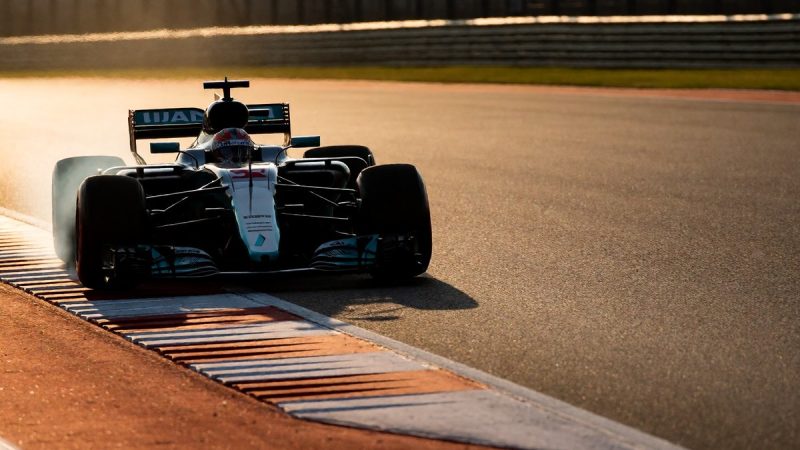
Max Verstappen faced significant bottoming issues in the first sector at the Circuit of the Americas. He used the hard C1 tyre for most of the session and completed a brief long run on that set. The RB21 used an aggressive ride height on the rear axle to maximize downforce. This attempt to balance the car between front and rear caused the back floor to scratch against the track surface. This contact interrupted the flow of air and led to a loss of downforce and grip. Verstappen finished the session in P5 after this technical struggle.
The team made mechanical changes after the practice session to resolve these issues. They raised the car on the rear axle enough to avoid bottoming. This adjustment did not result in a significant loss of downforce. The change produced positive results as Verstappen secured pole position in the Sprint qualifying. The ability to manage this balance in the high-speed corners of the first sector defines the current technical struggle for Red Bull. You know as well as any engineer that a millimetre of ride height determines the difference between pole position and a midfield struggle.
The mechanical reality of the RB21 floor
The aggressive ride height strategy at COTA directly impacted the aerodynamic stability of the RB21. When the rear floor makes contact with the ground, it disrupts the air underneath the car. This disruption causes the downforce levels to fluctuate. Such fluctuations prevent the driver from maintaining a consistent line through high-speed sequences. Verstappen complained that this bottoming prevented him from pushing the car to its absolute limit. The loss of grip in the first sector made it difficult to challenge the McLarens.
The team must find a way to run the car as low as possible to maximize the downforce from the Venturi channels. If the car sits too high, the effectiveness of the floor decreases. If the car sits too low, the physical contact with the track creates the turbulence seen in Austin. The engineers at Milton Keynes must balance these two extremes. They must decide how much downforce they can sacrifice to ensure the car remains stable. Will Red Bull find a way to maintain this aggressive floor setup without sacrificing the high-speed downforce needed in Sector 1?
Active aerodynamics and mode transitions
The 2026 technical regulations introduce a sophisticated active aerodynamics system. This system replaces the old DRS flap and works through two distinct states. The FIA calls these states X-Mode and Z-Mode. X-Mode provides a low-drag configuration for use on straights. The system flattens both the front and rear wing elements to reduce drag. This setting increases top speed but makes the car more vulnerable in mid-corner phases. It activates automatically when the car reaches a certain speed threshold.
Z-Mode provides the high-downforce setting required for corners and chicanes. The wings load up to increase grip and shorten braking distances. The system reads speed sensors and switches between these modes without driver input. Teams can tune how aggressively these transitions occur during the setup process. This ability to manipulate aerodynamic surfaces based on speed and cornering load is a major change. The car moves between these states to maintain stability across different track sections.
Power unit dynamics and the 50/50 split
The 2026 power unit formula relies on a 50/50 split between internal combustion and electrical power. This represents a massive shift from the previous hybrid era. Half of the total power comes from the 1.6-litre V6 turbo engine. The other half comes from the electrical systems. The MGU-K output increased from 120kW to approximately 350kW. This increase in electrical power provides significant torque for corner exits.
The removal of the MGU-H changes how teams manage energy. The battery also grew in size and recharges faster under braking. Drivers can recover 8.5 MJ of energy per lap during the braking phase. This change places more responsibility on the MGU-K and the battery management systems. The power delivery must be seamless to avoid inconsistent acceleration. Any imbalance between the combustion engine and the electrical deployment becomes obvious during corner exit.
| Specification | 2026 Value |
|---|---|
| Minimum Weight | 768kg |
| Maximum Wheelbase | 3400mm |
| Maximum Width | 1900mm |
| MGU-K Output | 350kW |
| Energy Recovery (Braking) | 8.5 MJ |
| Front Tyre Width | -25mm |
| Rear Tyre Width | -30mm |
Dimensions and chassis agility
The 2026 regulations aim to create more agile cars through reduced dimensions and weight. The minimum weight target for the cars is 768kg. This is 30kg lighter than the cars from 2022. The maximum wheelbase is now 3400mm, which is 200mm shorter than previous models. The width of the car is 1900mm, a reduction of 100mm. These changes help the cars follow each other more closely through medium-speed corners.
A lighter, narrower car produces less turbulent wake. This helps the following driver pick up cleaner air sooner after cornering. The reduction in weight also impacts tyre management. The cars are more responsive to steering inputs and quicker in direction changes. The team must manage these changes to ensure the car remains stable through high-speed sequences.
Inwash aerodynamics and the new floor
The aerodynamic philosophy for 2026 focuses on an inwash design. This design aims to reduce the turbulent wake left behind the car. The front wing is narrower and sits between the front tyres. This placement helps guide airflow around the car. New front wheel wake boards sit behind the front wheels. These devices guide the wheel wake inboard to flow between the rear wheels.
The underfloor aerodynamics have also changed. The ground effect tunnels from the previous era are gone. The cars now use a stepped floor and a diffuser setup. The floor is effectively flat from the leading edge to the diffuser. There is an allowance to create more downforce at the front of the floor with teeth at the leading edge. This new design negates the need to run the car as low as the previous generation. This change helps reduce the bouncing issues that affected the 2022 cars.
Overtaking strategies and energy modes
Drivers use two different power modes to manage race strategy: Overtake Mode and Boost Mode. Overtake Mode is the attacking setting used by the chasing driver. It provides extra electrical power to help the driver pull alongside a rival into a braking zone. This mode is available when a driver is within one second of the car ahead at the detection point. The rules allow for a limited number of seconds of deployment per lap.
Boost Mode is the defensive setting used by the leading driver. It allows the driver to hold maximum power output for longer. This helps the driver maintain high straight-line speed and makes it harder for the chasing car to close the gap. Both modes draw energy from the same battery allocation. If a driver uses too much energy for one mode, they may lack the power for the other. This creates a constant tension in energy management throughout the race.
Competitive comparisons at COTA
The performance at COTA highlights the different approaches to the new regulations. McLaren used a conservative ride height for the RB21 and the MCL39. Their floor produces good downforce even at higher heights. This stability allowed both Lando Norris and Oscar Piastri to show strong performance in the medium-speed corners of the first sector. The McLaren brake duct design also helps the team keep tyre temperatures under control throughout the lap.
Ferrari faced different challenges with the SF-25. The car is designed to run as close to the ground as possible to maximize downforce from the Venturi channels. The bumpy nature of the COTA track forces teams to raise their cars. Ferrari loses more performance than competitors when they increase the ride height. This makes the SF-25 struggle in various corner types. Charles Leclerc and Lewis Hamilton found it difficult to reach the final qualifying stages because of these limitations.
Mercedes also struggled with the versatile layout and hot conditions in Austin. The W16 showed mediocre performance in high-speed and medium-speed corners. The team had difficulty with rear tyre management in the third sector. This led to a mediocre Sprint qualifying for George Russell and Kimi Antonelli. The ability to find a working window for the car remains a primary goal for the Mercedes engineers.