How Ferrari’s 2026 turbo lag solution works in plain terms
Ferrari utilizes a smaller turbocharger with a compact turbine assembly to improve responsiveness and reduce turbo lag following the removal of the MGU-H. This design choice provides a mechanical advantage during race starts and low-speed cornering despite a trade-off in peak power.

Ferrari-powered cars, including the SF-26 and the Haas VF-26, achieved notably better starts during pre-season testing at the Bahrain International Circuit. This advantage is visible in race starts where Ferrari drivers get off the line with speed that rivals cannot match. One example from testing showed Lewis Hamilton leading by the first corner after starting on the fifth row of the grid. This performance advantage is a direct result of a design decision regarding the turbocharger. Ferrari chose a smaller turbocharger to improve responsiveness, which addresses the difficulties created by the new 2026 power unit regulations.
The removal of the MGU-H
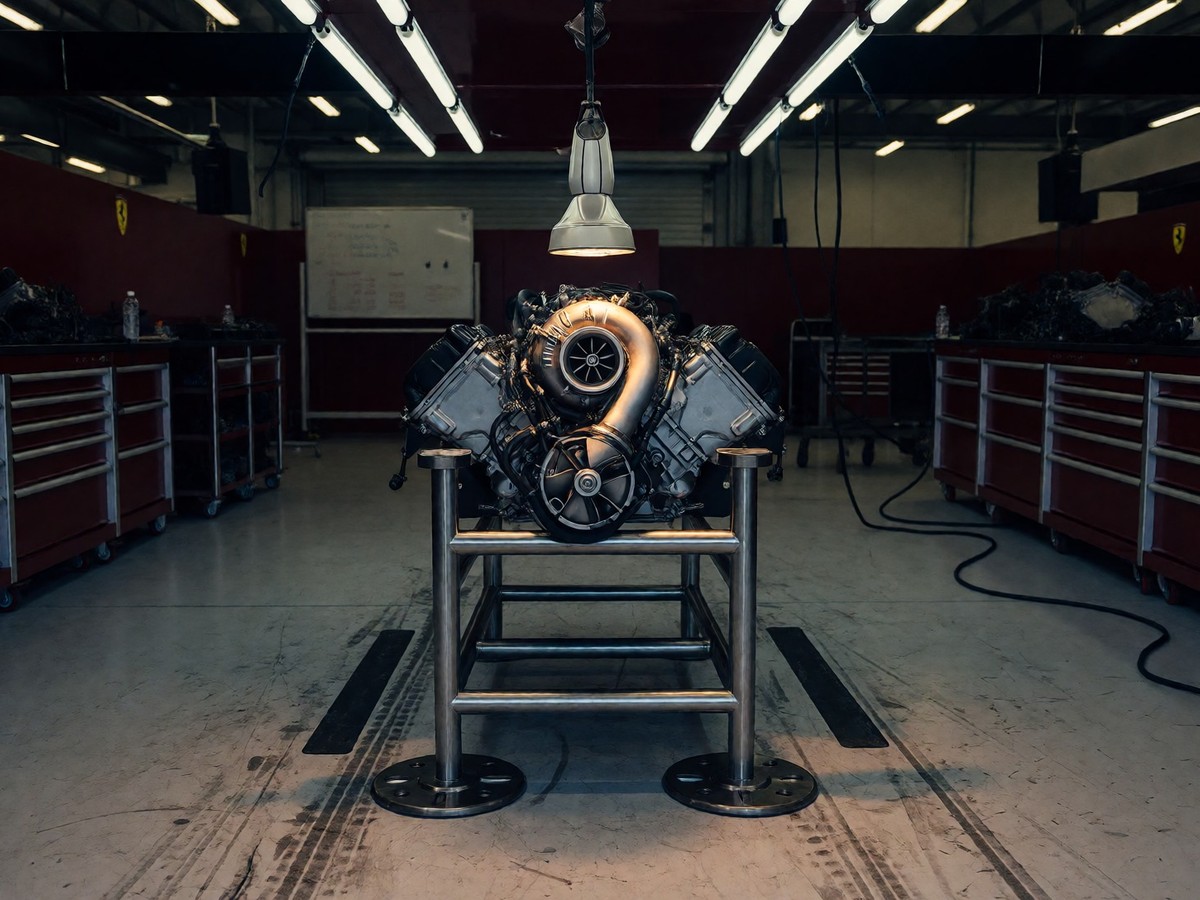
The 2026 regulations removed the Motor Generator Unit-Heat from Formula 1 power units. This component is an electrical motor connected to the compressor-turbine shaft. Previously, the MGU-H could spin the turbo up to the required speed to ensure effective launch pressure. It also acted as a generator to harvest energy from exhaust gases or to hold the turbo back from overspeeding. Without this electrical assistance, the turbocharger relies solely on exhaust gas flow from the 1.6-liter V6 engine to build plenum boost pressure.
This change creates a significant problem with turbo lag. Drivers can no longer preload the turbo, so they must manually spool it up to speed once they reach their grid slot. This manual process can take up to 10 seconds. The lack of an MGU-H makes it difficult for drivers to keep the turbo at the correct RPM while they perform the rest of the start procedure. This difficulty increases the potential for cars to stall and creates safety concerns. The FIA implemented a revised start process during testing to help stabilize the power units, but Ferrari’s smaller turbo provides a mechanical advantage that remains effective.
Physics of the smaller turbocharger
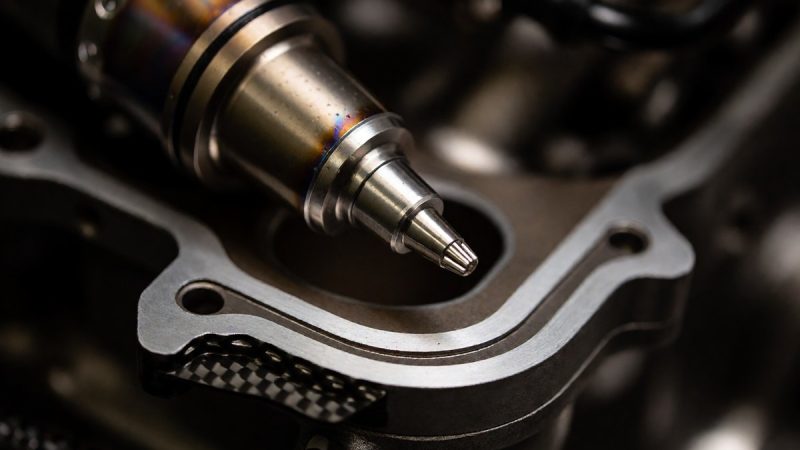
Ferrari’s engineers focused on the physical properties of the turbocharger to solve the lag problem. They developed a turbocharger with a more compact compressor and turbine assembly than their competitors. This choice targets the moment of inertia of the rotating parts. A smaller turbine wheel has less mass and a smaller radius, which means it requires less energy to accelerate. Because the moment of inertia increases with the square of the radius, a modest reduction in the diameter of the turbine wheel can generate meaningful changes in how quickly the turbocharger responds to incoming exhaust gas flow.
The regulations permit turbine diameters between 90 and 100 millimeters. Ferrari’s configuration likely sits at the lower end of this range. Because a smaller turbine reaches its optimal operating speed more quickly, the engine provides better response at lower RPM. This is especially helpful during low-speed cornering, pit lane exits, and standing starts. A smaller turbo is better when the engine is at lower RPM, such as at circuits with low-speed corners like Monaco. The smaller size allows for faster spooling, which helps the car manage the transition from idle to boost.
| Component | Specification or Detail |
|---|---|
| Engine Type | 1.6-liter turbocharged V6 |
| Maximum Turbo Speed | 150,000 rpm |
| MGU-K Power Output | 350 kW |
| Turbine Diameter Range | 90 to 100 mm |
| Minimum Power Unit Weight | 150 kg |
The trade-off with peak power
Every engineering advantage involves a compromise. While the smaller turbo provides better low-end response, it limits the ability of the system to sustain maximum power at high engine speeds. A larger turbo has a higher pumping capacity and can move more air, which helps achieve higher peak power. Mercedes and other rivals use larger turbochargers to maintain higher top speeds on long straights. This explains why Mercedes often looks stronger when developing maximum speed.
Ferrari’s power unit produces between 400 and 500 kW from the internal combustion engine. This is a more conservative output compared to rivals who chase higher peak outputs. The difference in performance is often discussed in terms of 30, 40, or 50 horsepower. However, a 2026 Power Unit is an integrated system where energy management matters more than peak combustion output. Ferrari’s difficulty with energy deployment is visible in the super-clipping behavior of the SF-26. This behavior happens when electrical energy management influences straight-line performance. You already understand the basics of hybrid energy, so the shift in turbo management is the primary concern.
Managing boost and pressure
Engineers must control turbo overspeeding and excess boost pressure. They use two main tools: the pop-off valve and the wastegate. The pop-off valve is located on the compressed airflow or the plenum. When boost pressure reaches the maximum allowable limit, the valve opens to release extra pressure. This released flow goes back into the system before the compressor inlet, but the process wastes the original exhaust gas energy. The wastegate is located on the exhaust system and wastes excess exhaust gases to prevent the turbo from overspeeding.
A small turbo reaches maximum boost pressure and speed faster than a large turbo. This makes it easier for engineers to control both turbo speed and boost pressure. With a large turbo, the wastegate must react very quickly to maintain control. Ferrari’s use of a smaller turbo means they require less management from the pop-off valve and wastegate to maintain an optimum level. This improved control helps with traction and acceleration out of corners. Different management of electrical torque can also improve how torque transfers through the rear tires and limits slip.
Project 678 and thermal stability
Ferrari’s engine strategy, known internally as Project 678, prioritizes stability and durability over maximum horsepower. The team uses steel alloy cylinder heads with copper and ceramic components instead of traditional aluminum. This decision adds 30 kilograms to the power unit weight. The FIA increased the minimum power unit weight from 120 kilograms to 150 kilograms for 2026, which gives Ferrari breathing room for this heavy design. Aluminum cannot match the thermal consistency of steel when combusting sustainable fuels at extreme pressures.
The decision to use steel was a gamble that required help from Austrian engine specialist AVL. Engineers initially doubted if steel heads could survive the mileage requirements for 24 races. Ferrari developed aluminum heads as a backup, but the thermal performance was insufficient. The steel construction handles extreme temperatures without degrading performance. This weight penalty is a major disadvantage, as it is equivalent to adding half a driver’s weight to the engine. Will the aerodynamic advantages of the Project 678 packaging compensate for the massive weight penalty in the long run?
The 50/50 power distribution
The 2026 regulations fundamentally change how a power unit generates performance. In previous years, the combustion engine provided about 70 percent of the power, while the electrical system provided 30 percent. In 2026, the split is approximately 50 percent from combustion and 50 percent from electrical power. The MGU-K is much more powerful than its predecessor, delivering 350 kW to the rear wheels, up from 120 kW.
The removal of the MGU-H means Ferrari cannot harvest thermal energy from exhaust gases. The car only harvests kinetic energy through braking. This makes energy management more difficult. Ferrari focuses on linear power delivery to make battery management simpler. The team uses a compact battery and smaller radiators to create room for aerodynamic improvements. The compact packaging of the power unit allows the chassis designer to create a slimmer rear end. This design helps airflow reach the diffuser and active aero elements more effectively.
ADUO and future development
Manufacturers that fall behind can use the Additional Development and Upgrade Opportunities system, known as ADUO. The FIA uses an ICE Performance Index to determine which manufacturers struggle, but this index only measures the combustion engine and not the full power unit effectiveness. If a manufacturer’s deficit is between 2 percent and 4 percent, they receive one upgrade in 2026 and another in 2027. If the gap exceeds 4 percent, they get two upgrades per season.
Ferrari may use ADUO to intervene on the turbocharger. The team could focus on the turbine wheel, blade profiles, or airflow attack angles. This would allow them to shift the optimal operating range toward higher speeds while keeping the responsiveness of the small turbo. Improving the internal aerodynamics of the turbo is a logical way to reduce the gap to competitors. Ferrari must wait for the FIA to decide how much development freedom they will have. The current strategy focuses on reliability and traction, but a targeted turbo upgrade could change the performance profile later in the season.