Why Liam Lawson’s Red Bull 2026 seat pressure matters now
Liam Lawson accounts for 57.3% of Racing Bulls' total points this season, making his performance critical for the team's financial standing. He must overcome technical aero issues and intense competition from drivers like Arvid Lindblad to secure a seat for 2026.

Lawson’s points efficiency
Liam Lawson has 59 points in the 2026 season. He scored points in five of eleven rounds. He is responsible for 43 of the 75 points Racing Bulls has scored so far this year. This accounts for 57.3% of the total points for the team. If the team used two drivers with the scoring rate of Arvid Lindblad, the team would be below Alpine in the standings. The current gap between P5 and P6 is $9m, which is £6.7m. Lawson is the primary reason the team is 13 points ahead of Alpine.
Lawson has shown consistency in qualifying by staying within two tenths of his teammate on six occasions. He struggles on circuits with long, high-speed radius corners like Bahrain, Imola, and Austria. On these tracks, he has gone more than three tenths down. The car has an aero balance issue that causes understeer on corner entry. This understeer prevents him from rotating the car and getting to throttle early. He needs more from the front of the car to fix this.
His race pace remains a strong part of his game. He manages tyres well over long stints, especially on the medium compound. At Suzuka, he ran an extended middle stint four laps longer than the strategy required. He managed the thermal window of the tyre without significant degradation. This discipline helped the undercut timing work in his favour. Lawson is a driver who can extract results when the strategy allows.
Technical aero issues
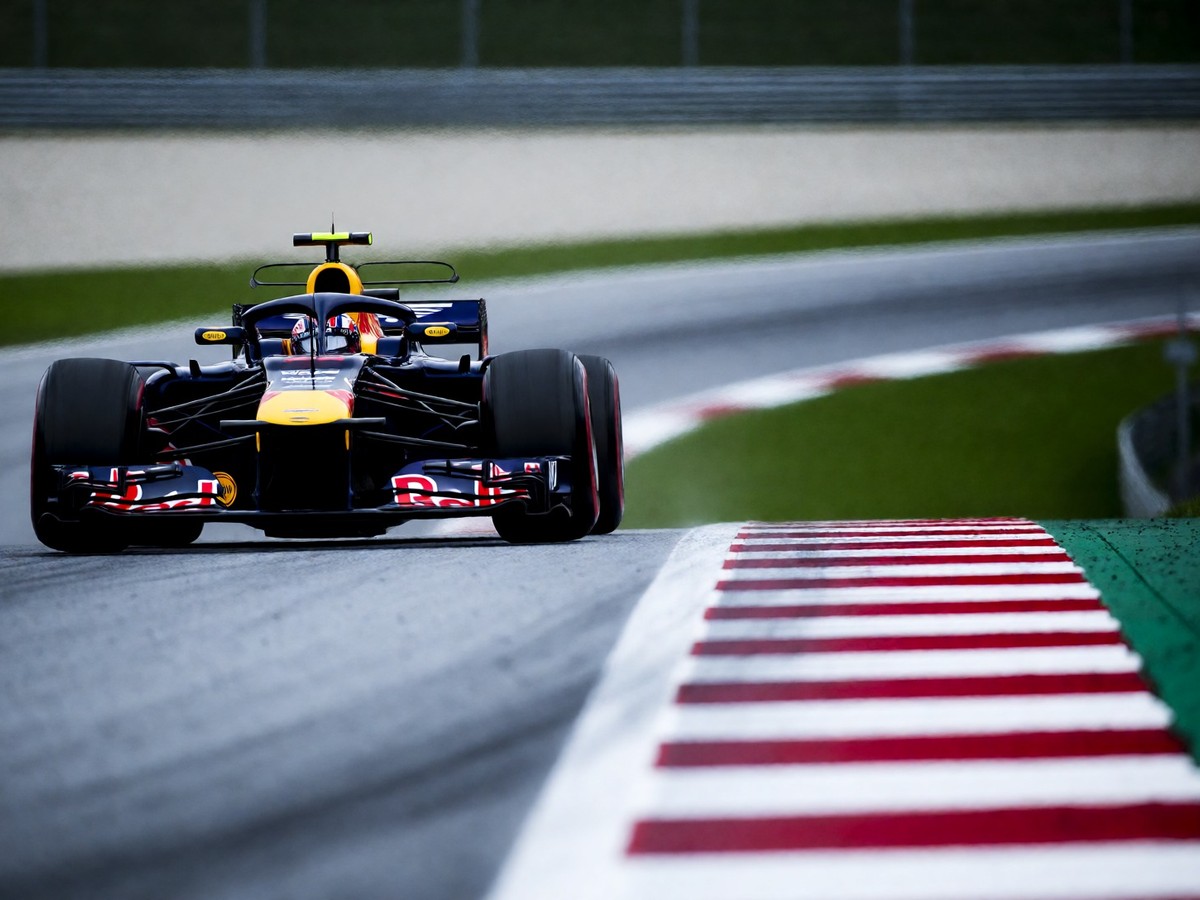
The RB car loses time through the Zeltweg sweepers during high-speed sections. At the Austrian Grand Prix, Lawson was around four tenths per lap off the pace of the cars immediately ahead. This was a mechanical grip issue that built since the sprint weekend began on Friday. Lawson qualified twelfth and finished ninth at the Austrian Grand Prix. He required clean execution and a decent strategy call to score those points.
The team must address the front wing angle, suspension geometry, and weight distribution. The current aero balance issue affects his ability to rotate the car. If the team does not resolve this, the difficult weekends will outnumber the strong ones. Lawson’s qualifying performance depends on the team’s ability to fix the front-end behaviour. He needs a car that allows him to turn in effectively.
The technical development resources follow the senior Red Bull programme. When Max Verstappen’s car needs a floor update, the supply chain reflects that. Lawson and his engineers work within a system that was not designed for their specific needs. This shapes what is achievable on any given weekend. The development bandwidth moves between the two teams based on the needs of the senior squad.
Financial risks for Racing Bulls
Racing Bulls faces financial suicide if they let Lawson go for a driver who lacks his production. The team is the best of the rest behind the top four. Lawson provides the majority of the points needed to stay ahead in the constructors’ standings. A driver like Nikola Tsolov might have a higher ceiling in the long run, but he is unlikely to be as consistent at the outset.
The driver market movement is closer than it looks. A driver change could see Racing Bulls drop down the standings next year. This would cost the team a large amount of prize money. Lawson can act as a dependable benchmark for Arvid Lindblad. Sacrificing points to train prospects is a risk that the team might not take.
The decision rests with Red Bull sports boss Oliver Mintzlaff. Input comes from Alan Permane and Laurent Mekies, but Mintzlaff has the final say. The team wants to choose drivers who fit the long-term vision. They are evaluating Lawson, Yuki Tsunoda, and Lindblad very closely. Lawson is doing a good job, but the competition is intense.
The history of Red Bull demotions
Red Bull demoted Lawson in 2025 after only two races. Christian Horner said the team had a duty of care to protect and develop the driver. Lawson was swapped with Yuki Tsunoda ahead of the Japanese Grand Prix last year. This happened because Lawson struggled with the RB21. He crashed out on his debut in Australia and finished 15th in the Chinese Grand Prix. That result later became 12th after a trio of post-race disqualifications.
Lawson is no stranger to the pressure of the Red Bull family. He was promoted to the senior team in 2025 to replace Sergio Perez. He stayed in that seat for only 99 days before the demotion. He has worked as a reserve driver and stepped into the seat when Daniel Ricciardo broke his hand in 2023. He has faced the cutthroat nature of the Red Bull structure before.
The pattern of replacing juniors is common in Milton Keynes. Drivers like Pierre Gasly and Daniil Kvyat struggled in the difficult Red Bull seat. Some drivers broke through the pressure and some did not. Lawson is in a position where he has less room to manage a slow start than those before him. The 2026 regulation cycle is already set.
Verstappen and the Zandvoort comparison
Lawson was 0.115s slower than Max Verstappen in qualifying at the Dutch Grand Prix. This was an unusually close margin. His average qualifying gap to Verstappen at Zandvoort is 0.245s. This is very close to Isack Hadjar’s average gap of 0.232s. Hadjar’s gap is lower than any average Red Bull teammate gap since Daniel Ricciardo in 2018.
Verstappen thinks it is easier to find the limit in 2026 because of the energy demands. He believes the car is easier to land in qualifying when you are down on battery. He noted that everyone is within one tenth or two tenths throughout the season. Lawson’s performance in the senior car at Zandvoort was a strong indicator. He has performed better in the senior team than he did at the start of 2025.
| The Zandvoort qualifying gaps for Lawson were as follows: | Session | Gap to Verstappen |
|---|---|---|
| FP1 | +0.536s | |
| SQ1 | -0.165s | |
| SQ2 | +0.374s | |
| Q1 | +0.102s | |
| Q2 | +0.427s | |
| Q3 | +0.115s |
Is the aero balance issue the main reason for his struggle?
The competition for 2026 seats
The battle for Red Bull seats is intensifying. Alan Permane is looking at Lawson, Tsunoda, and Lindblad. Lindblad is a long-term project with tremendous potential. Isack Hadjar is expected to sign a new deal, which locks him out of Red Bull. Nikola Tsolov is the F2 championship leader and remains an alternative to Lawson.
Tsunoda has shown strong flashes of speed. He wants to remain within the Red Bull family, but consistency is his main challenge. Lawson has the advantage of familiarity with the Racing Bulls car. He has had a full 24-race campaign to build his reputation. The team expects things to become clearer during 2025.
Arvid Lindblad is also a factor in the driver market. His impressive rookie campaign means he is almost certain to continue for another year. The development of the juniors adds pressure to the existing drivers. Every session counts for Lawson as he tries to extend his career. He must show he is the right choice for the long-term vision.
The difficulty of the 2026 cars
The 2026 cars are difficult to drive for many reasons. Andrea Stella says the cars have low grip and smaller tyres. This makes the cars slide more than the previous generation. The power unit deployment can also be inconsistent. Drivers might lose braking reference if they have a sudden superclip before braking.
Verstappen says the 2026 cars make it easier for drivers to reach the limit. He argues that the margins are small because the cars are easier to land. However, Stella disagrees and says the 2026 cars are more difficult. He notes that drivers have to adapt to unpredictable grip levels. The cars are sensitive to wind and the loss of downforce is significant.
Lawson has spent time working on the car in the simulator. He says the 2026 cars are a very different spectacle. He is more aware of the changes than he was in previous years. He must learn to handle the sliding nature of the car to be successful. The ability to predict car behaviour in braking and traction is essential.
Lawson’s career trajectory and verdict
Lawson has climbed through the ranks from karting to Formula 1. He won races in the Toyota Racing Series and was a front-runner in F3 and F2. He has 103 career points from his various entries. In 2021, he finished 9th in F2 with 103 points. In 2022, he finished 3rd in F2 with 149 points. In 2023, he finished 2nd in Super Formula with 106.5 points. He finished 14th in the 2025 championship with 38 points.
You know that Lawson is fighting for his professional life. He is working on a one-year contract. He has performance clauses that keep him under constant evaluation. He has received advice from Max Verstappen during his time as a reserve driver. Lawson must deliver results at Silverstone to prove he belongs. If he cannot show qualifying pace in the high-speed sections, the team will look elsewhere.
Lawson must address the understeer to remain in the Red Bull ecosystem. The technical data shows he struggles when the car cannot rotate. If the team prioritises the development of Isack Hadjar, Lawson’s seat is in danger. He must use his experience in tyre management to compensate for the aero issues. Lawson must secure his future by mastering the 2026 machinery.