The engineers shaping Red Bull’s 2026 rookie driver academy pipeline
Red Bull's engineering programs and driver academy prepare talent for the 2026 regulations. Key figures like Guillaume Rocquelin and Simon Rennie manage technical tasks and driver feedback, while Isack Hadjar prepares to partner Max Verstappen in 2026.

Red Bull Powertrains develops the 2026 power unit at the Red Bull Technology Campus. They work with Ford to use expertise in electrification and advanced technologies. This project follows the 2022 and 2023 championship wins. The Red Bull Engineering Academy 2026 Graduate Programme is in its fourth year. STEM graduates join this two-year programme in autumn 2026. They work on the 2026 regulations to build a power unit.
The INFINITI engineering academy
The INFINITI Performance Engineering Academy provides a 12-month assignment for three candidates. They work at the Red Bull UK base. Applications run from March 19 to April 11. Candidates submit a resume and a 500-word entry to the website. Paul Monaghan and Andreas Sigl lead the program. Winners receive a salary, free accommodation, and an INFINITI company car. Candidates from Australia, Canada, China, Germany, Hong Kong, Malaysia, Mexico, Russia, Singapore, UAE, UK, and the US can apply. These candidates work on technical tasks for the team and with INFINITI road car engineers.
The technical engineering split
The team divides technical tasks between performance engineers and race engineers. Simon Rennie leads simulation engineering. He was the race engineer for Mark Webber, Daniel Ricciardo, and Alex Albon. Hugh Bird works as the race engineer for Checo. He was the performance engineer for Max Verstappen. The performance engineer manages electronic settings like differential settings, brake balance, electronic control systems, and mapping. The performance engineer is in control of the electronic settings on the car. The race engineer manages physical setup like wing levels, ride-height, roll bars, and tyres. They also check the legality of the car and the parts of the build process. The performance engineer is in control of the electronic settings on the car, which leaves the race engineer free to be accountable for the physical set-up of the car.
Interpreting driver feedback
Guillaume Rocquelin is the Head of Race Engineering. He joined the team in 2006. He was the race engineer for David Coulthard and Sebastian Vettel. He translates driver feedback into engineering terminology. He says the approach changes with the driver. He provided more guidance to Vettel than to Coulthard, who had 14 years of experience. Engineers must manage the mood of the driver. They decide when to provide facts or when to cheerlead. Telling a driver to drive faster can be demoralizing when they are at the limit. They must also handle the driver’s reaction to penalties. I find it interesting how engineers manage the personality clashes between drivers and technical staff.
The 2026 driver moves
Isack Hadjar moves to Red Bull in 2026 to partner Max Verstappen. He replaces Yuki Tsunoda. Hadjar scored points in 10 Grands Prix this season. He took a podium at Zandvoort. Arvid Lindblad moves to Racing Bulls. He follows Hadjar. Lindblad finished sixth in F2 with 134 points. He won at Barcelona, Jeddah, and Yas Marina. He will be 18 years and 212 days old in Melbourne. He won the Formula Regional Oceania Championship. Liam Lawson stays at Racing Bulls. He replaces the vacancy left by Hadjar. Lawson replaced Daniel Ricciardo in 2024. Yuki Tsunoda remains as a reserve driver for both Red Bull and Racing Bulls.
Training the junior roster
The academy supports many drivers in different series. Nikola Tsolov is 18. He finished second in F3 and moves to F2 with Campos. He took six podiums, including two wins. His best result was at Monaco, where he led every lap from pole position. Mattia Colnaghi is 17. He won the Eurocup-3 championship with a 71-point margin. He won five races and five podiums in 16 races. He moves to F3 with MP Motorsport. Ernesto Rivera is 17. He finished fourth in Eurocup-3 and earned seven podiums. He moves to F3 with Campos. Fionn McLaughlin finished first in the British F4 championship and third in the Formula Regional Oceania Trophy. Scott Kin Lindblom is in the UAE4 Series and F4 British Championship.
| Driver | 2025 Series | 2025 Position |
|---|---|---|
| Arvid Lindblad | F2 | 6th |
| Nikola Tsolov | F3 | 2nd |
| Tim Tramnitz | F3 | 4th |
| Mattia Colnaghi | Eurocup-3 | 1st |
| Ernesto Rivera | Eurocup-3 | 4th |
| Fionn McLaughlin | British F4 | 1st |
Hardware and simulation
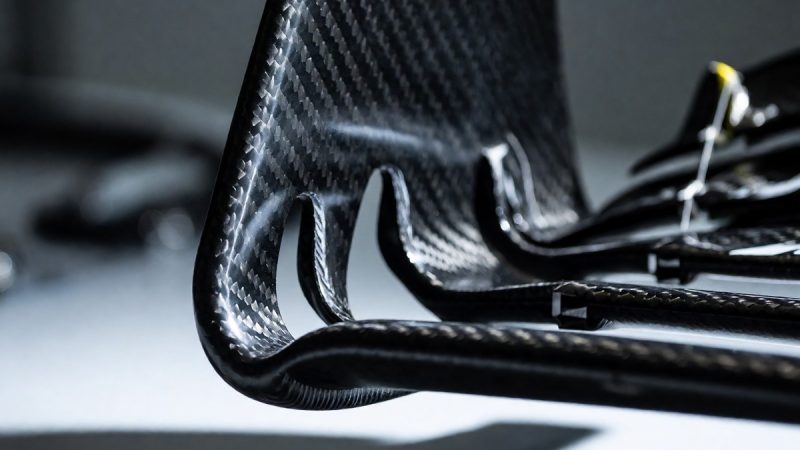
F1 Authentics and Memento Exclusives manufacture the 2026 Team Licensed Formula One Simulator. It uses the 2026 season livery. The build uses bespoke composite tooling for carbon fibre moulds via an autoclave. The hardware includes motion systems and haptic actuators. It uses LIDAR scanning for high graphical fidelity. The simulator includes a front pivot configuration and haptic rumble feedback. It runs the F1 25 game. This hardware replicates the feeling of racing at speed.
The promotion strategy
I think the decision to promote Arvid Lindblad at eighteen is premature. He was not consistent enough in F2 to sustain a championship challenge. He finished sixth in the standings. His promotion mirrors previous moves that did not work. Drivers like Daniil Kvyat and Pierre Gasly were promoted when the driver they replaced failed. Is the driver academy’s technical progression enough to overcome the pressure of the senior grid?