Russell’s Mercedes peak against Norris’s McLaren consistency in Austin
George Russell's Mercedes W17 single-lap speed faces Lando Norris's McLaren MCL40 race-pace consistency at the Austin circuit. High tire degradation at COTA favors the McLaren's superior long-run stability over the Mercedes energy management challenges.

The Mercedes W17 maintains a 0.166s per lap advantage over the McLaren MCL40 in Miami. This margin is much smaller than the 0.310s gap recorded in Japan. The W17 averaged 1:32.496 per lap, and the MCL40 averaged 1:32.662 per lap. The convergence of these two teams shows that the McLaren is closing the gap. George Russell relies on his single-lap speed. Lando Norris relies on his race-pace consistency. The variable tire degradation in Austin will decide which driver holds the upper hand.
Russell and the Mercedes energy management
Russell hits the recharge limit during single-lap qualifying. In Japan, this energy management issue caused him to lose time after the final corner. The Mercedes W17 works to balance energy harvest and deployment. If track grip increases, harvesting becomes more difficult because braking points move. This makes energy management a complex task for the driver. Mercedes engineers work to ensure the car is ready for the peak grip of the weekend. Russell leads Antonelli 7 to 9 in qualifying. He trails him 5 to 11 in the race. Russell also trails him 3 to 2 in the Sprint. Russell had a retirement in Malaysia. He is currently second in the championship. He has two wins this season.
The Mercedes W17 is the fastest car on the grid. It averaged 1:32.496 per lap in Miami. This remains the fastest average lap time of the 2026 season. Mercedes held back a major development package for Canada. This means the W17 in Miami was not the ultimate version of the car. Russell confirmed that the team has an upgrade bundle in reserve. This suggests the Mercedes performance might increase in the coming rounds.
Norris and the McLaren race pace
The McLaren MCL40 suffers from front graining. Norris killed his tires after only three laps in Australia. This graining happens when the rubber becomes too cold and the polymer chains become ordered and stiff. The chunks of rubber then fall off the tire. Norris also faced a frustrating result in Spain. He was third after a battle with Verstappen. A Virtual Safety Car cost him the lead. He had to wait a full lap to pit for hard tires. This delay allowed him to rejoin behind both Mercedes cars and Verstappen.
The MCL40 shows a different energy deployment approach in Japan. It uses more battery power coming out of the chicane. This gives the car a 20km/h top speed advantage on the straight. The McLaren is faster through the start-finish straight, but Mercedes remains faster through the corners. Piastri was 0.092s faster than Antonelli in practice in Japan. He reached a top speed of 321km/h at the run to 130R. This is lower than the Mercedes top speed of 330km/h. Norris has 186 points this season. He won in Hungary and Zandvoort. You should know that the McLaren is a much more consistent threat than the Mercedes in long stints.
The mechanics of tire degradation
Tire degradation is a physical process. Thermal degradation occurs when heat buildup causes the rubber to stretch. This creates surface damage called blistering. Physical wear comes from friction between the rubber and the track. Rough asphalt grinds the rubber away. This thins the tire and makes temperature management harder. Heat also increases internal pressure. This follows the equation P=nRT. A smaller contact patch reduces grip. This forces the driver to slow down.
At high temperatures, the long polymer chains gain thermal energy. This leads to an increase in the mobility and flexibility of the chains. This can create a rupture at the surface, and this is known as tyre blistering. At low temperatures, the long polymer chains in rubber lose thermal energy. The chains become ordered and stiff. This causes sections of the rubber to fall off during the race, and this is called tyre graining.
Drivers must balance the performance loss of worn tires against the 18 to 20 seconds lost in a pit stop. The undercut works when teams pit early for fresh tires. The overcut works when drivers stay out longer on older rubber. Engineers use Python and the FastF1 API to process data. They use Bayesian state-space models to predict degradation. These models treat tire wear as a latent process. They analyze lap times, tire age, and environmental data.
The Austin circuit and historical context
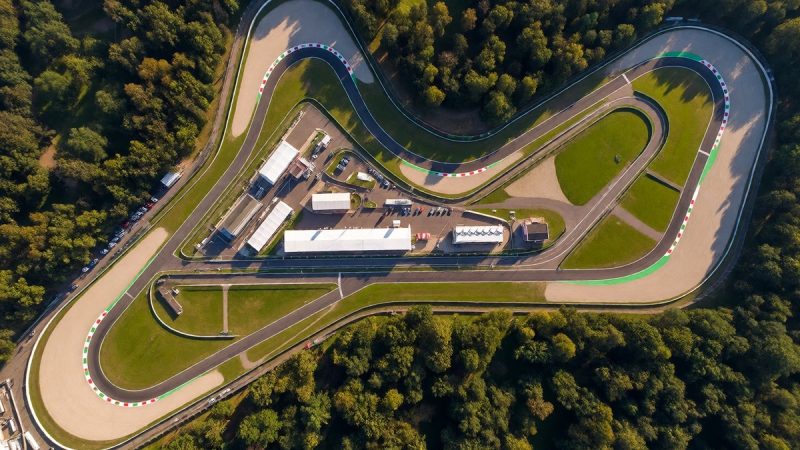
The Austin circuit is the 45th edition of the event. COTA tests aerodynamic efficiency and tire management. Lewis Hamilton has won five times at this venue. Michael Schumacher also won five times at Indianapolis. Hamilton and Schumacher tie for four pole positions. Ferrari has eleven wins in Austin. The track surface influences how fast the tires wear. Drivers must balance the performance loss of worn tires against the time lost in a pit stop.
The Austin track surface is a factor in how drivers manage their rubber. High degradation rates favor the car with the best long-run stability. Mercedes has the fastest single-lap pace. McLaren has the better development trajectory in race trim. The battle in Austin will depend on how the MCL40 handles the thermal load.
Driver head-to-head statistics
The following table compares the 2026 season performance of the primary contenders.
| Driver | Qualifying Lead | Race Lead | Sprint Lead |
|---|---|---|---|
| Lando Norris | 10 | 8 | 5 |
| George Russell | 7 | 5 | 3 |
| Kimi Antonelli | 9 | 11 | 2 |
| Oscar Piastri | 6 | 7 | 0 |
The numbers favor Norris in almost every format. Norris leads Piastri 10 to 6 in qualifying. He leads 8 to 7 in race trim. He also leads 5 to 0 in the Sprint. Russell trails Antonelli 7 to 9 in qualifying. He trails him 5 to 11 in the race. These statistics show the difference between single-lap speed and race-distance management.
Other drivers show similar gaps. Gasly leads Colapinto 13 to 3 in qualifying. He leads 9 to 6 in the race. Bearman leads Ocon 11 to 4 in qualifying. He leads 9 to 6 in the race. Alonso leads Stroll 14 to 2 in qualifying. He leads 9 to 2 in the race. Verstappen leads Hadjar 9 to 4 in qualifying. He leads 10 to 3 in the race.
The mathematical model of race pace
Engineers use specialized software to refine pit stop strategies. They analyze cumulative degradation and progressive degradation. Cumulative degradation is the total loss since the stint began. Progressive degradation is the lap-to-lap time difference. In 2025, researchers found that Hamilton’s hard tires at Austria degraded at 0.054s per lap. His medium tires degraded at 0.060s per lap.
Teams use Skewed T distributions to handle outliers like traffic or driver errors. These tools help determine if the degradation is performance-limiting. In Austin, the high degradation rates will favor the car with the most stable progressive degradation. The McLaren MCL40 has shown it can manage this better than the Mercedes W17.
Will the Mercedes upgrade bundle in Canada close the gap enough to beat the McLaren in Austin?
The Austin verdict
Norris will beat Russell in Austin. The McLaren MCL40 has a better development trajectory. The Mercedes W17 struggles with energy harvest when grip is high. The graining issues for McLaren are a concern, but the race pace is better. Russell has the speed, but Norris has the consistency.