Max Verstappen’s 2026 Red Bull DRS stall myths versus facts
Red Bull is switching to a conventional rear wing for the Belgian Grand Prix after Max Verstappen experienced dangerous instability due to a 225-degree DRS rotation system. Technical analysis suggests the rapid wing movement prevents critical airflow reattachment.

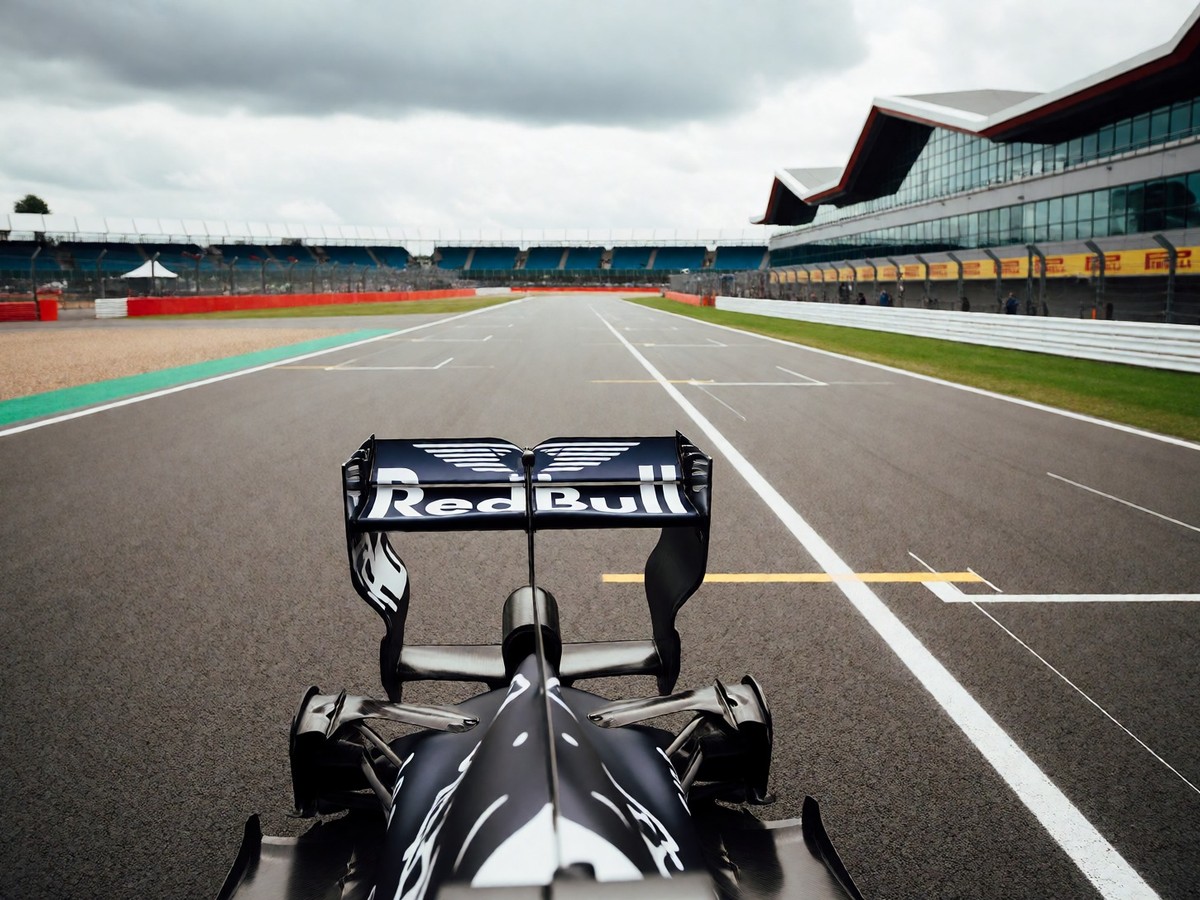
The Silverstone wing failure
Verstappen’s retirement at the British Grand Prix occurred because the rear wing failed to close properly. The failure happened when the car moved from straight-line mode to corner entry. Verstappen was chasing second place behind Lewis Hamilton when the failure occurred with four laps remaining. This failure followed a similar incident in Austria during qualifying. Verstappen called the car super-dangerous. He said he was lucky to avoid injury in both instances. Red Bull is now switching to a conventional rear wing for the Belgian Grand Prix. Spa features five Straight Mode zones where the wing must cycle through its closing sequence.
The aerodynamic physics
Gary Anderson says the problem is a transient aerodynamic condition. The Red Bull and Ferrari systems rotate 225 degrees. Most other cars on the grid only rotate 45 degrees. The Red Bull wing rotates one degree in 0.0017 seconds. The standard system rotates one degree in 0.0088 seconds. This makes the Red Bull system five times faster than the standard approach. The last five degrees of the slot gap closure are the most important for airflow reattachment. If the airflow does not reattach quickly, the car becomes unstable.
The weight and performance gap
Christian Horner suggested Red Bull was too ambitious with weight-cutting measures. The 2026 cars are 30kg lighter than previous models. This weight reduction affects the car’s stability during aero changes. Verstappen’s performance in 2026 is inconsistent. He has two podiums this year, finishing third in Canada and third in Austria. He is currently seventh in the Drivers’ Championship. The decision to abandon the experimental aero package for a conventional rear wing at the Belgian Grand Prix follows a pattern of failures that Max Verstappen described as super-dangerous after his retirement at the British Grand Prix where he was chasing second place.
Technical specifications of the 2026 cars
The 2026 regulations changed the dimensions and weight of the single-seaters. The cars are smaller and lighter than the previous generation.
| Specification | 2026 Value |
|---|---|
| Minimum weight | 768 kg |
| Wheelbase | 3.4m |
| Width | 1.9m |
| Downforce reduction | 30% |
| Drag reduction | 55% |
| Electrical energy split | 50% |
The wheelbase is 3.4m, which is 200mm shorter than the previous 3.6m. The width is 1.9m, which is 100mm narrower than the previous 2m. The aerodynamic downforce is 30% lower and the drag is 55% lower. The tyres are also smaller. The front tyres are 25mm narrower and the rear tyres are 30mm narrower.
The driver input myth
Verstappen says the 2026 cars are numb to driver inputs. He calls the machinery Formula E on steroids. He believes the energy management requirements take away from the driving challenge. Drivers must often lift or brake early to maintain top speed. This is unnatural for a driver. He thinks the fastest drivers still win, but the car limits them. You already know that driver skill is the most important part of racing. Lawson and Tsunoda’s results support his claim. Lawson took seventh in Zandvoort. Tsunoda scored a point in Monza. Both drivers were stand-ins.
The Azerbaijan Grand Prix chaos
The 2026 Azerbaijan Grand Prix in Baku was a chaotic race. George Russell won the race. He finished 0.1s ahead of Verstappen. Isack Hadjar finished third. The race had two Safety Car periods. One was for Alex Albon’s crash at Turn 6. The second was for Franco Colapinto’s collision with Pierre Gasly and Lando Norris. The Red Bull drivers achieved a double podium. Verstappen gained spots from Gasly and Hamilton early in the race. The top ten finishers were Russell, Verstappen, Hadjar, Leclerc, Antonelli, Hamilton, Lindblad, Ocon, Bearman, and Sainz. Drivers chose different tyres. Russell, Norris, Gasly, Verstappen, and Colapinto used mediums. Leclerc, Piastri, Hadjar, Hamilton, Bearman, Alonso, and Stroll used softs. Piastri led the race for much of the first half. He finished 14th after a lock-up. Norris locked up at Turn 5 and lost two places to Gasly and Antonelli. Albon crashed at Turn 6. Colapinto hit Gasly and Norris at the Turn 1 braking zone. This caused two retirements. Lawson finished 12th after contact with his teammate. Perez finished 20th after a penalty for impeding Piastri.
The 2026 energy management system
The 2026 power unit has a 50/50 split between electrical and combustion power. This is a change from the 47 percent electrical split in previous years. The MGU-K power output increased threefold. Drivers must manage energy to avoid starvation. The FIA added a fourth Straight Mode zone in Canada to help with energy recovery. Straight Mode reduces drag by moving wing flaps to an open position. Overtake Mode is different. A driver can activate Overtake Mode if they are within one second of the car ahead. The detection line in Canada is at 3870m. The activation line is at 3982m. At speeds over 290 kph, the electrical power reduces. It disappears completely at 355 kph. Drivers can use an extra 0.5 MJ of energy when exceeding 290 kph.
The aerodynamic design verdict
I believe Red Bull’s wing design is the reason for the instability. The speed of the 225-degree rotation prevents the airflow from reattaching. This is a technical design issue. The team’s decision to use a conventional wing at Spa is the only way to avoid more accidents. Will the switch to a conventional wing resolve the instability at high-speed circuits like Spa?