Alpine’s 2026 rear pull-rod suspension layout and ride height
Alpine's A526 utilizes a pull-rod front suspension and a push-rod rear suspension to optimize center of gravity and aerodynamic airflow. This architecture aims to improve performance and stability through complex interactions between suspension geometry and ground-effect aerodynamics.

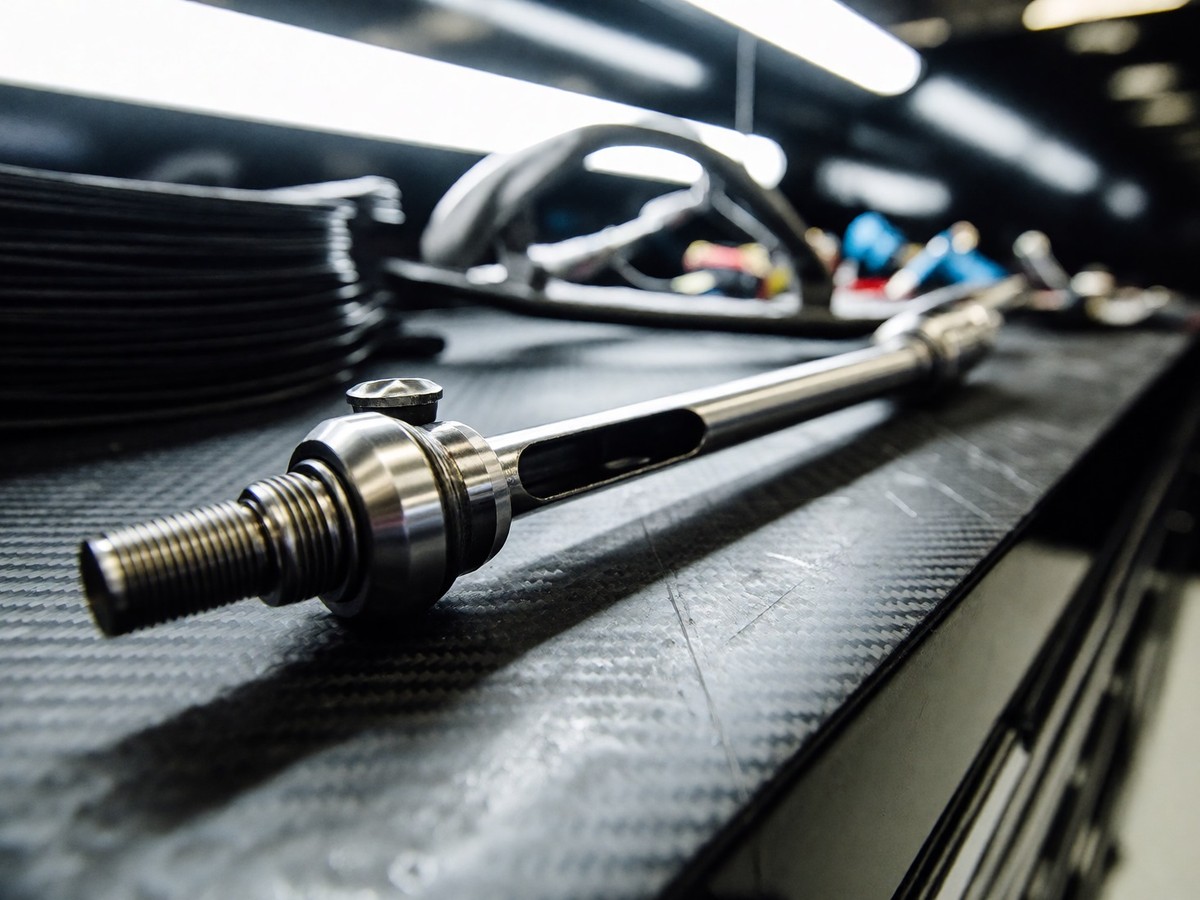
Alpine’s A526 uses a pull-rod front suspension which differs from the push-rod setups used by Mercedes, Red Bull, and Ferrari. This design choice aims to lower the center of gravity. Most teams in 2026 opted for push-rod suspension at both the front and rear. Alpine and Cadillac chose pull-rod for the front. The A526 also uses a Mercedes-AMG W17 E Performance engine. The team aims to improve its performance through this new architecture.
The mechanics of pull-rod and push-rod systems
The pull-rod configuration mounts the rod at a diagonal angle from a low point on the chassis to a high point on the wheel assembly. This setup pulls the torsion spring when the tyre hits a bump. The pull-rod system places the inboard rocker assembly high on the chassis while the outboard end sits low on the wheel assembly, which effectively lowers the center of gravity for the entire vehicle. Engineers choose between pull-rod and push-rod based on packaging and aerodynamics. Pull-rod can clean up airflow to the sidepods and floor. Push-rod makes components easier to access for mechanics.
Push-rod suspension mounts the rod higher on the car and lower on the wheel assembly. This increases the center of gravity. It also makes the springs and dampers easier to reach for setup changes. A pull-rod arrangement can lower mass within the chassis and help clean up airflow into the sidepods and floor. This makes it attractive from an aerodynamic and weight distribution standpoint. The downside of pull-rod is increased complexity and more difficult access for mechanics. It also results in a narrower tuning window.
Every change carries a cost. A team must weigh the perceived gains against the compromises. Packaging decisions influence how quickly and efficiently setup changes can be made. Poorly accessible components can cost time during race weekends. The decision to use one solution over the other depends on a complex mix of aerodynamic targets, weight distribution, and cooling demands.
Alpine’s front suspension and wishbone geometry
Alpine’s front suspension uses pull-rods and extremely inclined wishbones. The top wishbone’s rear leg reaches down to the lower edge of the monocoque. This geometry affects how airflow moves around the front tyre. The front wing profile rises sharply toward the endplate. An underwing fence marks this transition. The footplate encroaches on the inboard side of the endplate. A large conical footplate exists on the outer end. These elements help manage the wake from the front tyre.
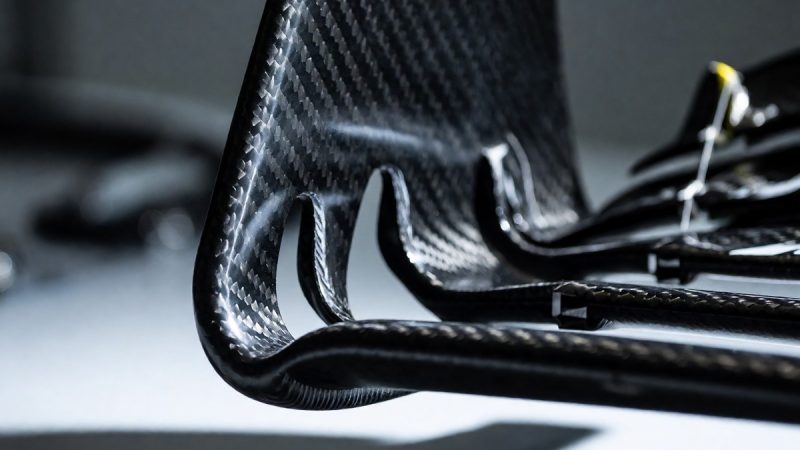
The front wing contributes between 25% and 30% of a car’s total downforce. This is possible because composites combine strength with controlled flexibility. Engineers design these wings to pass the FIA’s static load test, which allows no more than 0.79 inches of deflection under a 220-pound vertical load. However, they build them to flex under high-speed aerodynamic forces. This aeroelasticity allows the outer edges of front wings to bend back during high-speed straights. This reduces drag while maintaining downforce through slower corners.
The front suspension members also interact with the wake from the front wing. In 2026, it is harder to use front suspension members to control the wake from the trailing edge of the front wing because of active aerodynamics. A reduced blockage from a pull-rod should assist this. Alpine uses a deflector array made of three elements. Two slats at the bottom have creases along the forward portion that angle the section outward before cranking rearward and upward. The third, uppermost element is an L-shaped surface. This surface is taller in the outwash portion than what most teams use.
Rear suspension packaging and the diffuser interface
Rear suspension packaging creates tension between aerodynamic needs and mechanical access. A push-rod rear suspension allows more room to optimize the trailing edge of the underfloor and the start of the diffuser. This is the area where the double diffuser originated. Pull-rod rear suspension can encounter difficulties due to the reduced wheelbase in 2026. The flywheel, clutch, and gear cluster occupy the space where a pull-rod would be mounted. Alpine’s A526 uses a push-rod rear suspension. This choice provides more space for the engine and gearbox components.
The floor and Venturi tunnels require extreme stiffness to resist deformation. Intense suction forces can warp these structures and compromise ground-effect performance. Teams use sandwich structures with carbon fiber skins and aluminum or Nomex honeycomb cores to increase stiffness sevenfold. These composite materials allow for intricate underfloor designs, including scrolled edges and strakes. These strakes guide air effectively to downstream aerodynamic components.
The sidepods and diffusers also depend on composites to maintain their shapes under high pressure and suction. Using the same sandwich construction as the floors prevents deformation that could upset the aerodynamic balance. These components must hold their shape to manage airflow around the midsection and accelerate air through the diffuser at the rear. Traditional metals cannot match the manufacturing flexibility of carbon fiber. Its adaptability allows for highly curved geometries.
Porpoising and ride height management
Ride height management is a primary concern for ground-effect cars. As speed increases, downforce pulls the car closer to the track. If the car gets too low, the airflow in the diffuser tunnel separates. This causes the car to lose downforce and rise up. The car then regains downforce and the ride height increases. This cycle repeats at reasonable frequency. This bouncing is porpoising. It causes chassis instability and affects braking. It also ruins driver vision. Lando Norris noted that McLaren manages this better than others. You already know that F1 engineers spend months obsessing over every millimeter of suspension geometry to manage airflow.
The FIA introduced a technical directive in Canada to reduce the impact of vertical oscillations from cars at high speed. A way around porpoising is to raise the ride height at a cost to performance. This makes the ride more comfortable but impacts the team in the competitive pecking order. Mercedes previously stated the impact on their drivers reached up to 10G in Baku. This is twice the peak g-forces they experience on their necks in high-speed corners.
Porpoising is a common issue for ground-effect cars that produce high amounts of downforce. As the car is sucked towards the track, the ride height decreases. If the flow separation in the diffuser tunnel throat occurs, the downforce decreases. This causes the ride height to increase. This behavior is difficult to predict in wind tunnels because the model cannot run on a moving belt. Simulation tools like CFD also struggle to simulate boundary layer separation due to porpoising.
Aerodynamic stability through composite materials
Formula 1 cars rely on composite materials, primarily carbon fiber, to achieve lightweight and aerodynamic designs. These materials make up 85% of a car’s volume but only 20% of its weight. This allows engineers to place material only where strength is needed. They can redistribute saved weight lower in the car to improve handling. Engineers adjust fiber orientations and resin systems to balance flexibility and stiffness for specific aerodynamic loads.
Precision in manufacturing is essential. Technicians manually layer pieces into molds using laser projection systems. This ensures each ply is perfectly positioned for structural strength. These layered materials are sealed inside a vacuum bag and placed in an autoclave. High pressure and temperature cure the resin and fuse the layers into a single structure. Manufacturing a front wing can take up to seven full days of continuous work. The first layer determines the entire wing’s structural integrity.
The use of composites has evolved from the 1980s. In that era, teams used two or three types of carbon fiber and basic resin systems. Today, F1 cars incorporate around 40 different types of carbon fiber. Each is paired with custom resins for specific needs. Modern cars use multiple bespoke resins for different applications, such as a suspension arm or a side intrusion pod.
| Component | Alpine A526 Specification |
|---|---|
| Chassis | Carbon fibre composite with honeycomb structure |
| Front Suspension | Double wishbone pull-rod |
| Rear Suspension | Double wishbone push-rod |
| Engine | Mercedes-AMG W17 E Performance 1.6 L V6 turbo |
| Weight | 770 kg |
| Fuel | Petronas |
| Drivers | Pierre Gasly, Franco Colapinto |
Racing at the Circuit of the Americas
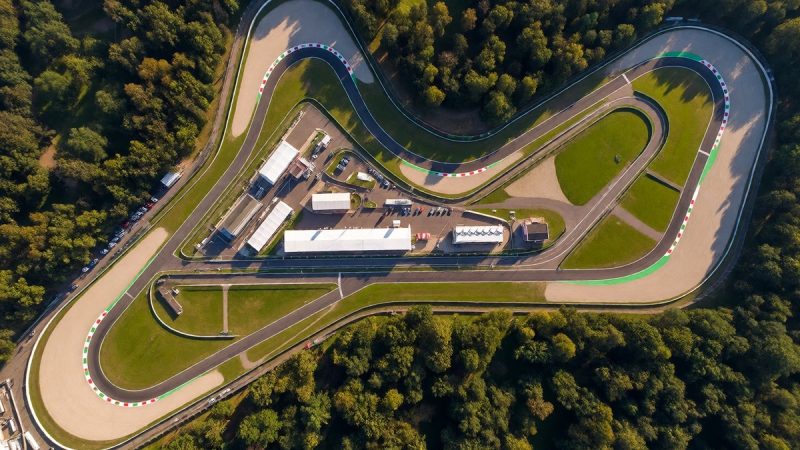
The Circuit of the Americas tests all aspects of a car in equal measure. Sector one focuses on high speed turns and quick direction changes. Sector two focuses on power unit performance with a long back straight. The final sector examines lower speed performance. High downforce configurations are common because of the long full throttle stretch between Turns 11 and 12. This requires teams to run as little load as possible to claw back top speed.
Turn 1 is an uphill, blind entry hairpin. It rewards late braking and driver commitment. Turn 11 requires good traction on the exit to apply full power as early as possible before the back straight. Turn 15 is difficult to maximize because braking and turning occur simultaneously. This can induce tyre locking. The wide track at Turn 15 allows different lines, making it a popular passing place.
The chassis needs a wide operating window at Austin. The vast range of cornering speeds and turn angles places the car in different scenarios regarding roll, pitch, and yaw. Drivers must manage the car through high-speed corners and slow sections. The suspension must balance the need for downforce with the need for stability. Will the A526’s unique front end provide enough stability at high speeds?
Alpine’s competitive position in 2026
Alpine’s A526 is a significant departure from its predecessor. The team changed its power unit supplier from Renault to Mercedes. This change aims to make progress after several seasons of struggle. The car uses a Mercedes-AMG W17 E Performance engine. The team aims to improve its position in the midfield. Pierre Gasly and Franco Colapinto drive the car.
The A526 features unique aerodynamic solutions. The rear wing uses active aero. Instead of opening flaps like a DRS setup, the Alpine flattens the flaps. This creates one long flat rear wing in Straight Line Mode. This creates more drag, but the downforce effect is more predictable. When the wing returns to Corner Mode, the downforce increases steadily. This allows drivers to possibly close the mode later to get a speed boost over a straight.
The sidepod design is wider and taller than many counterparts. It includes a waterslide component on the upper surface. This component does not reach down to the floor, unlike previous designs. The engine cover also has winglets behind the airbox to help the airflow move closer to the engine cover. This prevents the air from spreading outwards and affecting the rear wing performance. Alpine works to improve its status in F1 through these technical changes.