Aerodynamic Management of Front Wing Endplates and Wake at Zandvoort
The 2026 F1 regulations introduce a 100mm narrower front wing and in-washing wheel wake control boards to reduce turbulent wake. These changes aim to improve racing quality by managing the complex interaction between wing tip vortices and front wheel airflow.

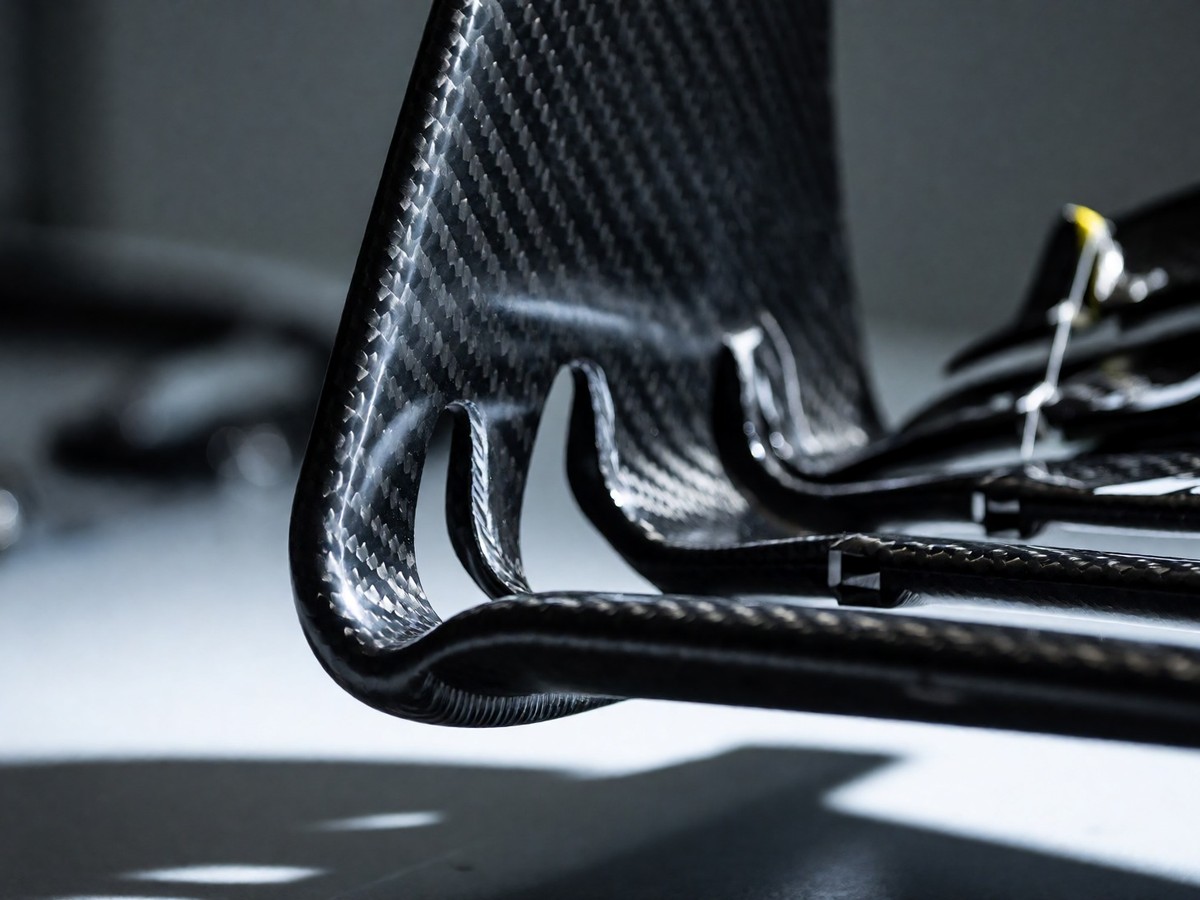
The front wing produces 25% to 40% of the downforce for an F1 car. This component sits at the front of the car and directs airflow to the sidepods and the underfloor. Designers focus much of their work on the interaction between the wing profile and the front wing endplate. The endplate redirects airflow around the front tyres to minimize drag. It also prevents high pressure air on the top of the wing from rolling to the low pressure area beneath the wing.
The front wing tip vortex and the front wheel wake are the most important things to control in F1 aerodynamics. Designers want to stop vortexes and the front wheel wake from going to places where they do damage. Effective aerodynamic design concentrates 50% to 60% of front wing aerodynamics in this area. In 2026, the front wing is 100mm narrower and has a two-element flap. These elements are shorter laterally and no longer sit directly in front of the wheels. The 2026 regulations mandate a simpler front wing design that uses fewer elements and more detail around the endplates to manage the complex interaction between the wing tip vortex and the front wheel wake.
The mechanics of outwash and inwash
Engineers use the endplate to create an outwash effect. This effect generates a low pressure area on the outside of the front wheel. This prevents the front flap from being blocked by a wheel positioned right behind it. The outwash effect also directs the oncoming airflow around the front tyres to reduce drag. In the past, as wheels moved closer to the chassis, the front wing ends overlapped the front wheels. This created turbulence in front of the wheels which reduced aerodynamic efficiency and increased drag.
The 2026 regulations shift the focus toward in-washing. The FIA removed the front wheel arches and added in-washing wheel wake control boards to the front of the sidepods to achieve optimal wake performance. The 2026 front wing elements are shorter laterally. This change works alongside the in-washing boards to manage how air moves around the tyres. You know the importance of managing the front wheel wake to maintain aerodynamic performance. The new design aims to prevent the mass of roiling turbulent air from being pushed out to the sides, which previously made it difficult for a following car to stay close.
Will the increased width of the endplate footplate in 2026 effectively compensate for the loss of aerodynamic stability during high-speed cornering?
Managing the Y250 vortex and floor airflow
Teams try to use undisturbed airflow along the Y250 axis to drive air over the center of the car. The Y250 axis is a line starting 25cm from the centerline of the car. Components that work along this axis include the front wing mounting pillars, under-nose vanes, the T-Tray splitter, and the intersection of the front wing and the neutral center section. Many teams create more downforce towards the front outer wing tips. This pressure distribution reduces the load on the inboard end of the wing to manage the airflow headed below the car.
Renault previously used a design where they split one of the wing flaps into two. This created a stack of five elements for a small span of the front wing width. This design was not for high downforce. Instead, each step created tip vortices to drive airflow along the Y250 axis. These smaller vortices have lower energy and spread over a wider area. These vortices act as a barrier to keep high pressure air from entering the low pressure underbody region. This maintains more downforce.
2026 dimension and weight specifications
The 2026 regulations make the cars smaller, lighter, and more agile. The FIA slashed the wheelbase to 3400mm and the width to 1900mm. The floor width is also 150mm narrower. The minimum weight is 768kg, which is 30kg less than the 2022 machines. The 18-inch wheel size remains the same, but the front tyres are 25mm narrower and the rears are 30mm narrower. These changes reduce the load capacity of the tyres.
| Specification | 2026 Measurement |
|---|---|
| Minimum Weight | 768 kg |
| Wheelbase | 3400 mm |
| Total Car Width | 1900 mm |
| Front Tyre Width | 25 mm reduction |
| Rear Tyre Width | 30 mm reduction |
| Downforce Change | 30% reduction |
| Drag Change | 55% reduction |
The 2026 rules reduce downforce by 30% and reduce drag by 55%. The reduction in downforce and drag aims to improve efficiency and handling.
Active aerodynamics and driver control
The 2026 machines use active aerodynamics to promote closer racing. This system includes moveable elements on the front and rear wings. The front wing has two elements and the rear wing has three elements. The system is driver-activated and works in two modes. In Z-mode, the elements open and angle to allow for greater cornering speeds. In X-mode, the flap angle changes to maximize straight-line speed by reducing drag. The system is available for any straight line longer than three seconds.
This active system is similar to the Drag Reduction System used since 2011. The rear wing has had an active element for years, but the 2026 rules allow the front wing to also realign. This helps to trim the car and provide stability in harmony with the rear wing movement. The 2026 front wing elements are shorter laterally. This is a departure from older designs where the wing tips sat directly ahead of the wheels.
Challenges at the Circuit Zandvoort
The Circuit Zandvoort presents unique aerodynamic challenges because of its layout and location. The circuit is located in the dunes near the North Sea. The proximity to the sea means wind and sand can change track grip. The Tarzanbocht is a 180-degree bend that sits right after the main straight. It requires precise braking. The Scheivlak is a fast and blind bend that descends sharply. Drivers must rely on memory and skill to navigate this section at high speed.
The Mastersbocht is Turn 8 and remains a challenge for drivers because of its speed character. This corner was built to replace a previous left-right combination at the Hondenvlak. The Hugenholtz corner also provides a challenge because it has banking that was added in 2020. This banking increases corner speed and allows for earlier acceleration on the exit. The 2026 cars must manage these cornering speeds while dealing with the new aero configurations. The drivers must also manage the car’s attitude as they navigate the elevation changes in the dunes section.
Complexity of CFD and wheel wake modeling
Computational Fluid Dynamics (CFD) is a major part of aerodynamic development. However, modeling front wheel wake in CFD is difficult. The airflow in the wheel wake is unsteady. It changes with every movement of the steering wheel and the attitude of the car. Rival engineers claim that standard F1 CFD cannot accurately measure front wheel wake. They state that the only CFD program capable of modeling unsteady flow is owned by NASA and costs $1 million a month to run.
The aerodynamicists in a team are specialized. They work in front and rear bodywork groups. Surfacers support the aerodynamicists by creating the wetted surfaces for CFD. In 2026, the endplate footplate is roughly the width of the tyre. The regulations only allow two Z-sections for the endplate footplate. This is a restriction for such a large piece of bodywork. If a designer follows a conventional approach, they can only make a concave footplate before running out of Z-sections.
Engineering verdict on 2026 aerodynamics
The 2026 technical regulations prioritize cleaner airflow over maximum downforce. The FIA aims to allow cars to run closer together by reducing outwash. The new in-washing boards and simplified front wings are the primary tools for this goal. The removal of the ground-effect Venturi tunnels also reduces the reliance on ultra-stiff setups. This reduces the issues of bouncing and porpoising that teams faced with previous ground-effect cars.
The 2026 front wing is 100mm narrower. The front suspension fairing must have an angle of attack between 10 degrees nose down and 0 degrees. The rear suspension fairing must have an angle of attack between 10 degrees nose down and -10 degrees nose up. The front impact structure is now a two-stage structure to prevent secondary impacts. The roll hoop load requirements increased from 16G to 20G. These rules change the way teams manage the interaction between the wing, the tyres, and the floor.