The SF-26 thermal management challenge in Las Vegas
Ferrari engineers face significant thermal management difficulties with the SF-26 during the Las Vegas night race. Managing the 10°C ambient temperature requires precise heating blanket calibration to offset the cooling effects of the new BBS wheel rims.

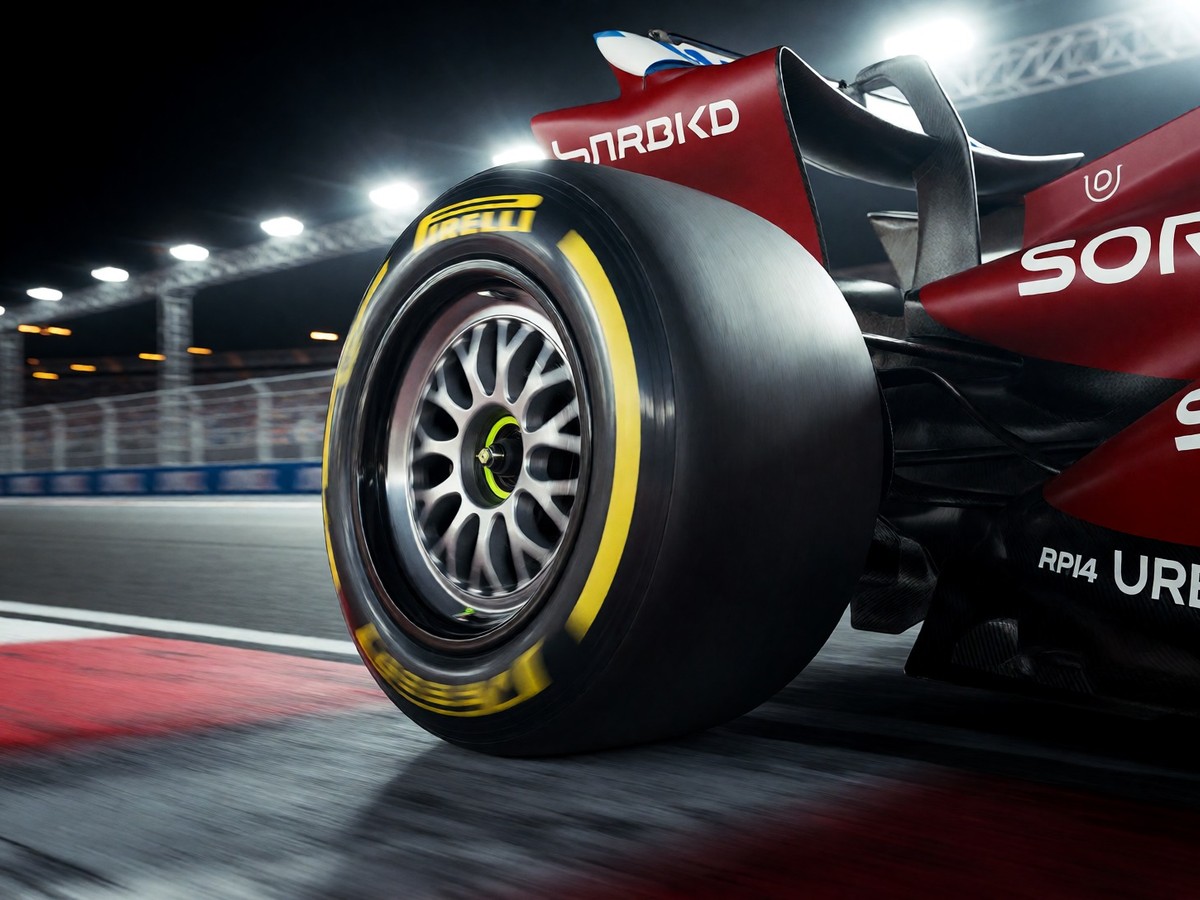
The SF-26 faces significant thermal management difficulties during the 50-lap night race at Las Vegas where temperatures drop toward 10°C. Scuderia Ferrari engineers, led by Loic Serra and Diego Tondi, must balance the cooling effects of the new BBS wheel rims with the immediate need for tyre warmth to prevent graining. The cold desert air strips heat from the tyres during long straights, while heavy braking zones spike it back. This creates a narrow operating window for the drivers, Charles Leclerc and Lewis Hamilton.
The 2026 technical regulations changed the way teams manage tyre temperatures. The SF-26 utilizes a 1.6 L Ferrari 067/6 direct injection V6 turbocharged engine that reaches 15,000 RPM. The car has a weight of 770 kg including the driver, coolant, and oil. This mass and the power delivery to the rear axle affect how the tyres absorb energy. In the cold Las Vegas night, the thermal balance becomes a primary struggle for the team.
| Component | Specification |
|---|---|
| Chassis | Carbon fibre composite with survival cell and honeycomb structure |
| Engine | Ferrari 067/6 1.6 L direct injection V6 turbocharged |
| Engine RPM | 15,000 RPM |
| Transmission | 8 forward + 1 reverse |
| Weight | 770 kg (including driver, coolant and oil) |
| Suspension | Double wishbone push-rod (front and rear) |
| Fuel | Shell V-Power sustainable Ethanol |
| Lubricants | Shell Helix Ultra |
| Tyres | Pirelli P Zero (Dry/Slick) |
BBS Rim design and convection physics
The new BBS wheel rims include air chambers to manipulate temperatures inside the tyre. Cooler air hits the inside external surface of the wheel rim as it travels through the spoke area on the outside. This process cools the magnesium surface at the bottom of these chambers. Through convection, this cooler air circulates around the inside of the tyre. This design aims to improve thermal management, but it adds complexity to the heating process.
The engineering team, which includes Fabio Montecchi and Corrado Onorato, focuses on how these rims handle airflow. The air chambers help manage the temperature of the magnesium surface. If the air moves too quickly through the spokes, it pulls heat away from the tyre carcass too efficiently. This cooling effect is a major concern when the ambient temperature is near 10°C. The team must ensure the rim does not strip too much energy from the rubber.
The cooling capability of the rims is a response to the need for better tyre management. Pirelli’s chief engineer, Simone Berra, noted that some teams stabilize tyre temperatures very high while others stabilize very low. This variation comes from the rim geometry and how it interacts with the air. The Ferrari design seeks to use convection to maintain a steady state. However, the desert night air complicates this stability.
Rear axle thermal asymmetry
The power unit delivers massive energy to the rear axle, which accentuates a thermal asymmetry between the front and rear tyres. This imbalance requires precise calibration of the tyre blankets before the race starts. Because the rear tyres receive different loads than the front, the team differentiates the blanket temperatures to balance the car. If the calibration is off, the rear tyres may not reach the necessary operating window.
The SF-26 uses a double wishbone push-rod suspension at the rear. This setup influences how the tyres interact with the track surface. In slow rotation zones like Turn 5 and Turn 7, the rear tyres struggle to maintain heat. If the heating blanket does not provide enough initial energy, the rear tyres will fail to stay in the window. This failure leads to immediate loss of traction.
The thermal delta between the front and rear axles is a constant struggle for the engineers. Simone Berra stated that rear carcass temperatures can be stabilized much lower than the front. This difference is equivalent to a pressure change of approximately 1.5 psi. The team must account for this 15°C difference when they set the blanket temperatures. An incorrect calculation leads to a car that is impossible to drive predictably.
Heating blanket calibration mistakes
The mistake in calibration occurs when the team fails to account for the cooling effect of the BBS rims. If the engineers set the blanket temperature too low, the convection inside the air chambers pulls too much heat away. This prevents the rear carcass from reaching the ideal temperature. The driver then faces a car that slides in the technical sections of the Strip. This sliding triggers graining almost immediately.
The team must also avoid over-heating the tyres during the blanket application. If the blanket temperature is too high, the internal pressure rises too much before the car even leaves the garage. This makes the tyre too sensitive to the track surface. The drivers, Leclerc and Hamilton, need a predictable grip level to manage the 50-lap distance. A miscalibrated blanket destroys that predictability.
The decision to use specific blanket temperatures is a high-stakes calculation. The team must consider the 10°C ambient temperature and the high-speed nature of the circuit. If they prioritize cooling to prevent blistering, they risk the graining mentioned earlier. If they prioritize warmth to prevent graining, they risk the pressure spikes that cause instability. The narrowness of the window makes every degree of calibration significant.
Graining and the cold desert air
Graining happens when the outer layer of the tyre overheats while the core remains cool. This causes chunks of rubber to tear off and stick to the surface. The resulting bumpy texture reduces contact and grip. Low temperatures in Las Vegas make this a constant threat for the SF-26. If the rear tyres do not stay warm, the graining will degrade the performance of the tyres quickly.
The Pirelli compounds used in 2026 include the C3, C4, and C5. The C3 is the hardest, the C4 is the medium, and the C5 is the soft. In the cold Las Vegas night, the soft C5 provides high grip but is very fragile. The medium C4 offers a balance but can grain if the temperature drops. The hard C3 provides the most stability but struggles to find initial bite.
The temperature window for these tyres is narrow. The team must manage the energy delivered to the tyre to stay within this window. If the tyre falls out of the window, the driver loses the ability to put power down. This is especially true for the rear tyres on the SF-26. A driver who cannot manage the first five laps will struggle for the rest of the race.
Downforce and thermal stability
The aerodynamic configuration of the SF-26 impacts how the tyres absorb heat. The team, led by Marco Adurno and Diego Tondi, must choose between low drag and high downforce. Low drag helps with speed on the long Las Vegas straights, but it reduces the load on the tyres. This reduction in load makes it harder to generate heat in the rubber.
High downforce provides more load to the tyres, which helps with warm-up. However, high downforce also increases the energy demand from the power unit. This extra load can lead to blistering if the internal temperature of the tyre gets too high. The team must find a balance where the downforce provides enough load for warmth without causing thermal degradation.
The T-tray and the aerodynamic elements near the diffuser also influence airflow around the rear wheels. Updates to these components aim to manage the airflow more effectively. The goal is to provide a stable platform for the tyres. If the aerodynamics are inconsistent, the load on the tyres will fluctuate. These fluctuations make it even harder to maintain a steady tyre temperature.
Technical personnel and development
The development of the SF-26 involves a large group of specialists. Loic Serra directs the chassis development, while Enrico Gualtieri manages the power unit. Diego Tondi and Franck Sanchez lead the aerodynamic efforts. This hierarchy ensures that every aspect of the car receives attention. The goal is to create a cohesive package that handles extreme conditions.
The team also includes experts like Marco Adurno and Fabian Montecchi. They work on the vehicle performance and project engineering. Their work involves processing the data from every session to refine the car. This data is vital for understanding how the new rim design affects the tyre. The engineers use this information to adjust the calibration for the next race.
The pressure on this team is high because of the results in previous seasons. Ferrari struggled in 2025, finishing fourth in the constructors’ standings. Hamilton and Leclerc both faced frustrations with the SF-25. The 2026 season is a fresh start with new regulations. The technical staff must prove that their development path is correct.
The struggle for thermal balance
The reality of the SF-26 is that thermal management is a zero-sum game. If the team solves the cooling problem of the rims, they create a heating problem for the tyres. If they solve the heating problem with the blankets, they risk the pressure issues of the rims. The 10°C Las Vegas night stays in the way of a perfect solution.
The drivers must also adapt to these technical shifts. Hamilton and Leclerc rely on their experience to manage the car when the grip levels change. They must feel the difference in the tyres and communicate it to the engineers. If the communication is poor, the team cannot adjust the strategy in time. The driver’s ability to manage the tyre energy is as important as the engineer’s calibration.
The technical challenge of the SF-26 remains an open question. Will the air chambers in the BBS rims provide the stability the team needs? Can the engineers find the perfect blanket temperature to offset the desert cold? The answer will decide if Ferrari can compete at the front in Las Vegas.