The history of Silverstone’s abandoned 1949 airfield layout
The 1949 International Trophy marked a major shift at Silverstone by moving racing from runways to perimeter roads. This evolution saw average speeds rise from 72.28 mph in 1948 to 77.31 mph in 1949 as the layout changed.

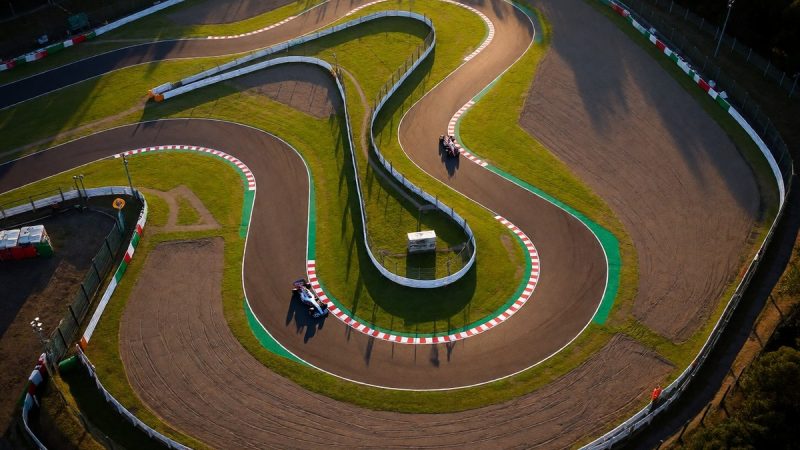
The 1949 International Trophy forced a departure from the original 1948 airfield runway configuration. While the 1948 race used the main and second runways with tight hairpins, the 1949 event switched to the perimeter roads. For the 1949 Grand Prix, the layout included a chicane at Club Corner, but the International Trophy dispensed with that chicane. This 1949 shape remained in place for 25 years. The 1949 perimeter layout remains the most significant evolution in the history of the airfield.
The 1948 Runway Era
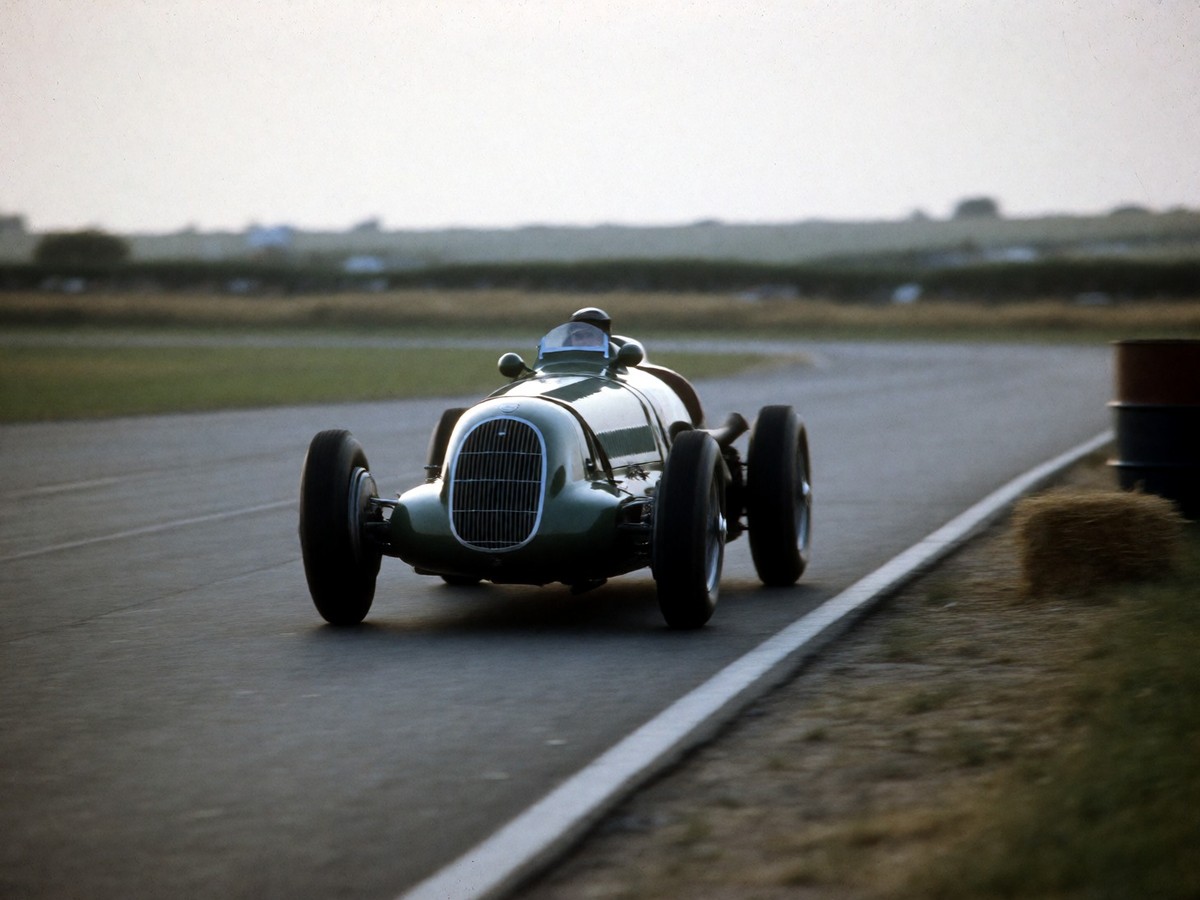
In 1948, the Royal Automobile Club leased the RAF Silverstone airfield to host the first major post-war Grand Prix. James Brown created the circuit in less than two months to meet the August deadline. The 1948 course used both the main and second runways with parts of the perimeter road. Drivers raced on the runways, which had long straights separated by tight hairpins. Spectators watched the race from behind rope barriers, and officials occupied tents. Oil drums and straw bales marked the track.
The 1948 race took place on 2 October after the event began on Thursday 30 September. An estimated 100,000 spectators watched the race. Scuderia Ambrosiana entered two Maserati 4CLT/48s for Luigi Villoresi and Alberto Ascari. These drivers finished first and second despite starting from the back of a 25-car grid. Bob Gerard took fourth place in his ERA R14B/C. The race spanned 239 miles and maintained an average speed of 72.28 mph. Louis Rosier took fourth in a Talbot-Lago T26, while Prince Bira finished fifth in another Maserati 4CLT/48.
The first major race in the British Isles occurred in 1946 at Gransden Lodge, followed by events on the Isle of Man. No permanent venue on the mainland suited the needs of post-war racing until the Royal Automobile Club considered ex-RAF airfields. They looked at Snitterfield near Stratford-upon-Avon and the airfield behind the village of Silverstone. The Air Ministry controlled the Silverstone site, but the club arranged a lease in August 1948. This decision allowed the club to run the first British Grand Prix since the 1927 Brooklands event.
The 1949 International Trophy
The first running of the International Trophy occurred on 20 August 1949. This event consisted of two heats and a final. Prince Bira won the first heat, and Giuseppe Farina won the second heat. Both drivers utilized Maserati 4CLT/48s. In the final, Alberto Ascari won in his Ferrari Tipo 125. He finished ahead of Farina and Luigi Villoresi, who drove another Ferrari. This event used the perimeter road layout without the chicane at Club Corner.
The 1949 British Grand Prix on 14 May provided a different set of results. Emmanuel de Graffenried won in a Maserati 4CLT/48. Bob Gerard took second in his ERA R14B/C, and Peter Walker finished third in an ERA. The race spanned 100 laps and saw the winner finish one minute ahead of Bob Gerard. Louis Rosier finished fourth in a Talbot-Lago T26C, and Reg Parnell took fifth in a Maserati 4CLT/48. Tony Rolt took sixth in an Alfa Romeo Aitken Special. Philippe Etelinc finished eighth in a Talbot-Lago T26C. The grid for this race included 14 cars.
The 1949 race season also saw the Talbots of Chiron and Giraud-Cabantous struggle with mechanical issues. The race included a variety of machinery, such as the ERA raced by John Bolster and the Maserati 4CLT/48s driven by Prince Bira and Toulo de Graffenried. In the 1949 British GP, the grid included 14 drivers. The race featured a wide range of competition, from the pre-war ERA armada led by Bob Gerard to the Maserati 4CLT/48s.
1940s Racing Results and Data
The performance of the cars during the late 1940s varied significantly based on the machinery. In the 1949 British Grand Prix, the Maserati 4CLT/48s showed high competitiveness. However, the Talbot-Lagos of Chiron and Giraud-Cabantous experienced engine failures. The race results highlight the diversity of the field.
| Race Event | Winner | Vehicle | Position |
|---|---|---|---|
| 1948 British GP | Alberto Ascari | Maserati 4CLT/48 | 1st |
| 1948 British GP | Luigi Villoresi | Maserati 4CLT/48 | 2nd |
| 1949 British GP | Emmanuel de Graffenried | Maserati 4CLT/48 | 1st |
| 1949 British GP | Bob Gerard | ERA R14B/C | 2nd |
| 1949 International Trophy | Alberto Ascari | Ferrari Tipo 125 | 1st |
| 1949 International Trophy | Giuseppe Farina | Maserati 4CLT/48 | 2nd |
You already know the basics regarding the shift from runways to perimeter roads. The speeds of the cars increased as the layouts evolved. The 1948 race had an average speed of 72.28 mph. The 1949 Grand Prix saw the average speed rise to 77.31 mph. By 1950, the average speed reached 90.96 mph. These increases reflect the progression from the airfield runways to the more dedicated perimeter road tracks.
Names of the Corners
The corner names at Silverstone honor the local landscape and historical figures. Luffield Abbey comes from the 11th Century Luffield Abbey remains found 200 metres from Stowe Corner. Maggotts and Becketts and Chapel names honor St. Thomas Becket. The Becketts spelling uses one ‘t’. The Chapel name commemorates the 15th Century St Thomas A Becket’s Chapel, which the airfield construction destroyed in 1943. Stowe Corner takes its name from Stowe House in Buckinghamshire. Copse comes from a small wood near the corner. Club Corner honors the RAC Club in Pall Mall. Woodcote comes from Wood Park in Surrey. The Hangar Straight honors the aircraft hangars that once stood there.
Other names provide historical context for the site. Village commemorates Silverstone village. Ireland honors Innes Ireland, a Grand Prix driver and President of the BRDC. Wellington Straight honors the Vickers Wellington bombers that operated from the training base. Brooklands honors the first purpose-built racing track in the world in Weybridge, Surrey. The Loop refers to the shape of the corner.
The names of the corners provide a link to the airfield’s past. The Maggotts corner name comes from the Maggots Moor field. The Becketts and Chapel names refer to the ruins of a chapel. The Hangar Straight refers to the large aircraft hangars. These names ensure the history of the site remains part of the racing experience.
Safety and Speed Revisions
The circuit underwent several changes to improve safety. In 1973, a mass pile up occurred at Woodcote after Jody Scheckter lost control of his McLaren. This incident happened at the end of the first lap. In 1975, a chicane was added at Woodcote to manage speeds. In 1990, the redesign changed the Maggotts, Becketts, and Chapel sequence. This modification turned the independent corners into a single, high-speed, left-right-left-right-left complex. Engineers directed the changes toward the Becketts section to increase technicality. Drivers praised the new flow through the sequence. This change helped define the modern character of the Grand Prix layout.
In 1994, following the deaths of Senna and Ratzenberger at Imola, the circuit saw further safety modifications. Copse, Stowe, Abbey, and Priory corners all received re-profiling to increase run-off areas. A chicane was added at Abbey in 1994 after Pedro Lamy crashed his Lotus during testing. The 1994 changes also included tightening the entry to Club.
The 2010 redevelopment introduced the Arena section. This section added three new grandstands. The track also saw the addition of the Hamilton Straight. This new section was used from the 2010 Formula 1 British Grand Prix. How many more technical refinements will the circuit undergo before the airfield layout feels like a distant memory?
The Daily Express Bridge
The Daily Express bridge was built to allow access to the land without interrupting the track. Construction began on 6 January 1967. A meeting on 9 January 1967 between Gerald Lascelles and Tom Blackburn arranged the payment terms. The bridge sat on a fast, straight part of the circuit where cars approached a viewing bank. The bridge cost £8,000 after accounting for an extra £1,000 over the expected £7,000 cost. In 1986, the Company decided to resite the bridge. The new location at the Club Straight was less attractive for advertising because it sat off the Grand Prix circuit.
The bridge provided visibility to spectators and television broadcasts. The site was chosen because it sat on a high-speed section of the track. In 1987, the construction of the new bridge began after the decision to move the Daily Express bridge. This decision led to a legal dispute between Silverstone Circuits Limited and Express Newspapers plc. The court eventually ordered the company to permit advertising on the new bridge at the approach to Woodcote Corner.
The bridge was a simple construction that carried a single carriageway. It carried no separate pedestrian accommodation. The placement of the bridge influenced the visibility of sponsors. The relocation of the bridge in 1986 changed the commercial value of the advertising rights.
Modern Specifications and Layouts
The current Grand Prix configuration differs significantly from the 1949 layout. The track length and corner complexity reflect decades of evolution.
| Configuration | Length (Miles) | Key Features |
|---|---|---|
| Grand Prix | 3.660 | Maggotts, Becketts, Chapel, Stowe, Hamilton Straight |
| National | 1.640 | Uses Maggotts and Aintree |
| International | 1.85 | Includes Hamilton Straight and Stowe |
| Stowe | 0.796 | Uses original runways near Vale |
The Grand Prix circuit measures 3.660 miles. It includes 18 corners. The Hamilton Straight, renamed in 2020, is part of the current configuration. The layout remains a downforce track where aerodynamic efficiency matters. The Maggotts, Becketts, and Chapel sequence remains one of the most challenging sets of turns in Formula One. The loop corner is the slowest corner on the track with a speed of 56 mph. The Maggotts corner reaches 190 mph in Formula One.