The economics of the Haas Ferrari supply relationship
Haas manages tight financial constraints and a rising $215 million budget cap through a technical partnership with Ferrari. The team also leverages driver commercial packages, such as Rafael Camara's $15 million in personal backing, to maintain competitiveness.

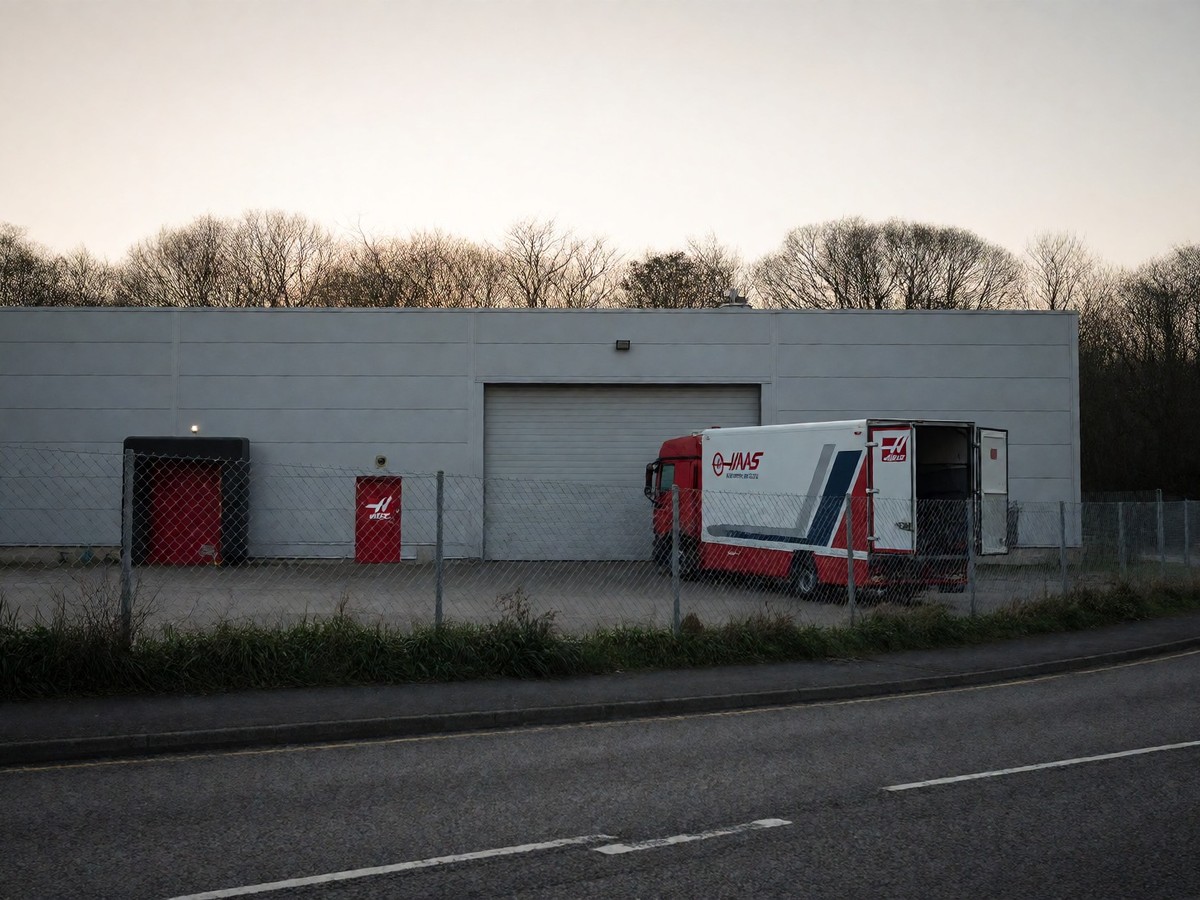
Haas relies on Ferrari to supply its power unit, transmission, and technical support. This multi-year agreement allows the American squad to utilize Ferrari’s extensive knowledge and technical expertise. Marco Mattiacci, the Ferrari team principal, views this relationship as a way to grow Ferrari’s commercial interests in the United States. He notes that the partnership can evolve beyond a simple supply arrangement. Haas also uses Dallara to build its chassis, making the team dependent on external partners for almost every component. Ferrari currently provides similar supply deals to Sauber and Marussia. This arrangement provides the American squad with a foundation to compete on the grid.
The collaboration between the two entities is a natural progression of a relationship that began on a commercial level. Mattiacci stated that the deal is a way to reinforce the power unit development program for all customer teams. He also pointed to the importance of the United States as a market for Ferrari. Haas views the partnership as an opportunity for success in 2026 and beyond. Gunther Steiner, the Haas team principal, says the technical support from Ferrari helps the team develop its people at an exceptional pace. Ferrari possesses deep knowledge and determination in the Formula One arena.
The budget cap and development hurdles
Haas operates as a customer team within a highly regulated financial environment. Ayao Komatsu, the Haas chief, says the team faces challenges in achieving the $215 million budget cap for the 2026 season. This follows a $135 million target that the team met in 2025. Komatsu remains positive about the budget for next year, but he is not entirely certain about hitting the higher target. The team’s status as the smallest squad creates a specific set of economic pressures.
The financial constraints affect the team’s ability to keep pace with larger rivals. While most teams bring upgrades every three races, Haas only brings upgrades every nine races. This disparity in development frequency makes it difficult to remain competitive when the rate of change in the car is fast. Oliver Bearman, the Haas driver, says the team’s weaknesses became obvious this year. He notes that the team cannot match the development intensity of a team like Red Bull. This lack of resources acts as a burden on the team’s performance.
Driver economics and the Camara deal
The team confirmed on September 30, 2026, that Esteban Ocon leaves at the end of the season. He loses his seat to 18-year-old Ferrari junior Rafael Camara. Camara replaces him alongside Oliver Bearman for the 2027 season. Bearman showed significant dominance over Ocon during their shared time. In 2025, Bearman outscored Ocon 41 to 38. In 2026, the gap grew as Bearman led Ocon 20 to 7. Bearman also out-qualified Ocon 13 times to 6.
The team decided not to pay Ocon a multi-million dollar salary because his results fell behind a rookie. Camara brings approximately $15 million in personal backing from Brazilian sponsors. This financial injection helps the team manage its budget. You know how much a driver’s bank account influences the paddock. The team also passed over Kazuki Hirakawa, a Toyota-backed driver, in favor of Camara. This decision shows that commercial packages are a significant factor in driver selection.
| Component | 2026 Specification |
|---|---|
| Engine Architecture | 1.6-litre turbocharged V6 |
| Electrical Component | 50% power deployment |
| MGU-K Output | 350kW |
| Compression Ratio Limit | 16:1 |
| Fuel Type | Advanced Sustainable Fuel |
Technical specifications of the 2026 power unit
The 2026 power units represent a significant shift in Formula One technology. These engines utilize a 1.6-litre turbocharged V6 design. The new regulations increase the electrical power component to 50% of the total output. This is a major increase from the 20% electrical deployment seen in previous years. The MGU-K is much more powerful now, delivering 350kW to the rear wheels compared to the previous 120kW.
The new design deletes the MGU-H, which was a complicated system used in previous hybrid units. This change makes the power unit simpler and more road-relevant. The engines also use advanced sustainable fuels to help the sport reach net zero by 2030. These fuels come from sources like carbon capture and municipal waste. A new overtake mode replaces the Drag Reduction System. This mode allows a driver to generate an additional electrical power profile when they are within one second of the car in front.
The compression ratio controversy
Mercedes and Red Bull face scrutiny over the compression ratio of their 2026 engines. The FIA limits the ratio to 16:1 when measured in ambient conditions. While Mercedes engineers reportedly found a way to exceed the 16:1 compression ratio once the engine reaches full operating temperature, Ferrari has stuck to the strict 16:1 limit during both stationary checks and active track use. This thermal expansion method could potentially allow for a higher compression ratio during racing.
The potential advantage of this solution is significant. Insiders suggest the trick could shave up to four-tenths of a second off lap times. Ferrari expressed fury regarding the situation and filed complaints with the FIA. Ferrari argues that this interpretation undermines the spirit of the rules. Mercedes received early confirmation from the FIA that their concept would comply with the regulations. Will the FIA enforce the compression ratio limits after the first race in Melbourne?
The manufacturing rule threat
A proposal from Aston Martin, Williams, and Alpine could change how customer teams operate. This rule mandates that any customer team finishing in the top five of the Constructors’ Championship must build all its own components. Such a rule would allow for a three-year transition period. Ayao Komatsu calls this a killer for the small teams. He argues that David winning against Goliath helps the sport.
The rule would force teams to move away from the model Haas uses today. Haas currently buys all permissible parts from Ferrari and builds its chassis with Dallara. Komatsu says the Haas model does not provide a competitive advantage under the cost cap. He notes that the budget cap assigns a nominal equivalent value to purchased components. This value is high enough that the team gains no advantage from buying parts. Haas currently sits in P7 in the championship, three points behind Alpine.
Development speed and performance gaps
Oliver Bearman says the team’s weaknesses became evident this year. The VF-26 started strong with 17 points in the first three events. This placed Haas fourth in the standings initially. However, the team added only four more points after that. Haas now sits in seventh place. Bearman says the team remains the tenth-best squad. He notes that rivals like Red Bull bring a new car every three races. Haas only brings upgrades every nine races.
The lack of consistency also troubles the drivers. Esteban Ocon reported that the car’s performance fluctuates in ways that do not make sense. He noted that the car can have good balance during Friday practice but lose all rear grip during Saturday sessions. This instability makes it hard to refine the car’s setup. The team struggles to identify the cause of these changes. Bearman says the difference in performance feels like the size of an upgrade.
The American market and BWT rumors
The commercial future of Haas involves looking at new sponsorship prospects. Ayao Komatsu mentioned that the team talks to many prospects. He expressed positivity regarding the budget for next year. Rumors have linked the team with BWT, an Austrian company that handles water treatment systems. BWT previously ran a pink livery with teams like Racing Point and Alpine.
Alpine will have Gucci as its title sponsor from 2027. This means BWT is free to join a different team on the grid. Komatsu confirmed that the team knows who BWT is but did not confirm any talks. He also ruled out the possibility of the team using pink cars. Haas currently uses white, red, and black as its corporate colors. A deal with BWT could provide a significant boost to the budget. This would help the team address the financial pressures of the 2026 season.