FIA 2026 technical regulations for brake cooling and aerodynamics
The 2026 technical regulations introduce the Nimble Car Concept to reduce car weight to 768kg and decrease dimensions. Teams must balance thermal loads from brake drums with the need to control aerodynamic wake and tyre temperatures through complex ducting designs.


The thermal function of the brake drum
Brake drums, often called cake tins, provide a thermal enclosure for the brake assembly to prevent airflow from being overly influenced by the wheel rim. Teams vary these designs to balance temperature control against aerodynamic influence. Designers utilize drilled carbon discs to help dissipate heat generated during braking. These discs operate at temperatures up to 1000°C. Manufacturing improvements over a ten-year span increased the number of drill holes in the center of the disc from 100 to over 1500. These drill holes appear at the exposed end of the disc and at the inboard end where the discs mate with the central bell.
The brake calipers, which weigh approximately 2kg, receive airflow through specific cooling windows housed within the body. This air travels via pipework installed within the brake duct assembly directly to the calipers. Because the 2026 technical regulations mandate a significant reduction in car dimensions and weight, teams must find new ways to manage the thermal loads from the brakes while simultaneously controlling the aerodynamic wake produced by the rotating wheel assembly.
FIA oversight of cooling channels
The FIA regulates the area around the brake duct via a prescribed dimensional box. During the 2020 season, Red Bull queried Mercedes regarding the use of an area outside this box. The Mercedes W11 used a triangular intake located between the upper wishbone wheelhub extension and the brake duct. This design led to the issuance of Technical Directive 014/020. The directive insisted that no channels directed into the wheels from that area outside the prescribed zone could exist.
For the first three scheduled races, the FIA accepted an outlet on the other side of the duct to ensure air traveled straight through. This regulation helps the FIA clarify rules and shut down interpretations which the governing body deems outside the spirit of the regulations. In 2020, Mercedes worked to modify the ducting around the W11 rear wheels to comply with these changes.
Managing tyre temperatures and aerodynamic wake
Managing the aerodynamic wake of the tyre remains a priority for technical teams. The brake drum influences the wake profile, which affects the car’s overall aerodynamic performance. In 2020, Mercedes demonstrated that air channeled between the drum and the wheel rim could control rear tyre temperatures. Ferrari queried a similar arrangement on the Mercedes W10. The FIA judged the W10 arrangement legal after Mercedes showed the channels did not lead to the brakes.
Recently, the FIA conducted an intensive inspection of the McLaren MCL39 after the Miami Grand Prix. This inspection concluded the McLaren rear brake design remained legal, despite concerns from rivals regarding how the team controlled rear tyre temperatures. Red Bull reportedly used thermal images to show cold spots on the McLaren rear brake drums. Will these cooling variations lead to further regulatory interventions?
Divergent architectures: Mercedes and Red Bull
Mercedes and Red Bull diverge significantly in their brake duct and caliper architectures. Red Bull positions its brake calipers in the 4-5 o’clock position, while Mercedes prefers a more upright 3 o’clock position. This placement dictates the route for cooling pipework. Both teams utilize a bypass pipe near the top of the assembly that has no brake cooling purpose. This pipe instead directs captured airflow to influence the turbulence created by the rotating wheel. Red Bull also applies a reflective surface to the drum to reduce heat transfer from the brakes.
The placement of the calipers affects how the cooling pipework travels through the assembly. Because each team chooses the caliper location, they must design different ducting routes. Red Bull and Mercedes use different design profiles because of how the caliper positions interact with the flow regimes created by the wheel.
Inlet and caliper cooling specifics
Mercedes utilizes an elongated inlet scoop that sits inverted compared to its 2020 design. This scoop includes a smaller ancillary inlet hidden among the winglets on the lower half of the brake duct fence. Mercedes also captures airflow in the gap between the end fence and the tyre sidewall. Red Bull started the season with a wider ear-shaped inlet scoop but later moved to a squared-off design.
Mercedes brake bells include a cluster of diamond-shaped outlets to assist with cooling and aerodynamic throughput. The calipers receive air through specific windows. You should understand that these small variations in design change how the car interacts with the surrounding air.
| Feature | 2026 Specification |
|---|---|
| Maximum Wheelbase | 3400mm |
| Maximum Width | 1900mm |
| Minimum Weight | 768kg |
| Front Tyre Width | 25mm narrower |
| Rear Tyre Width | 30mm narrower |
| ERS Electrical Power | 350kW |
| Downforce Reduction | 30% |
| Drag Reduction | 55% |
Ferrari’s aerodynamic stacking strategy
Ferrari employs a different strategy for managing airflow through the brake assembly. The team stacks elements of the brake drum on top of one another to create multiple airflow channels. One crossover channel absorbs heat rejected by the brakes and filters it through the wheel face. A second piece of the drum’s bodywork uses an open channel to expose airflow to the wheel rim.
A looped section of the drum guides this airflow out through the wheel face. These structures help reduce the turbulence created by the wheel and tyre. By stacking these elements, Ferrari creates complex flow regimes that influence how the air leaves the wheel assembly. This methodology allows the team to manage both the thermal rejection of the brakes and the aerodynamic wake of the tyre.
The 2026 Nimble Car Concept
The 2026 technical regulations introduce the Nimble Car Concept to improve racing quality. This concept moves away from larger, heavier machines toward more agile vehicles. The 2026 cars will be two seconds faster than those designed under the original rules. The changes make the cars smaller and lighter to improve the quality of racing.
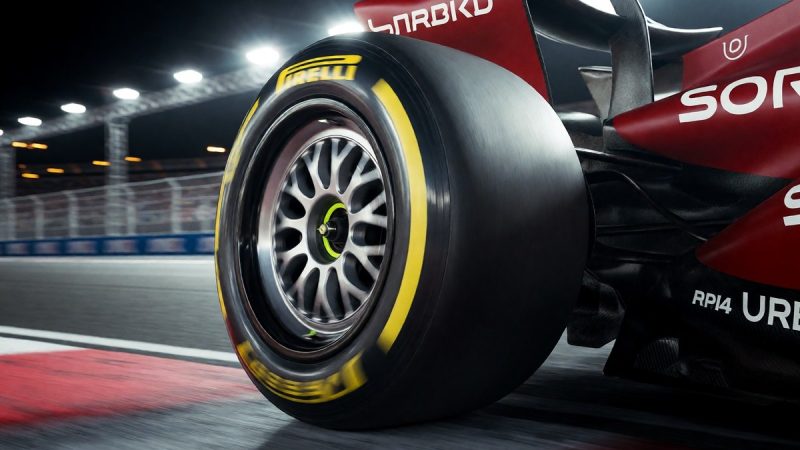
The wheelbase decreases by 200mm to a maximum of 3400mm. The overall width also decreases by 100mm to 1900mm. The minimum weight limit reaches 768kg, which represents a 30kg reduction. Pirelli will supply narrower rubber for the 18-inch wheels. The front tyres measure 25mm narrower and the rears measure 30mm narrower than current specifications. These changes aim to reduce aerodynamic drag and unsprung weight. The FIA expects the cars to retain 90% of their downforce when following another car due to a 30% reduction in downforce and a 55% cut in drag.
Energy management and active aerodynamics
The 2026 power units feature a 50/50 split between internal combustion and electrical power. The electrical power from the Energy Recovery System (ERS) triples to 350kW. The FIA eliminated the Motor Generator Unit-Heat (MGU-H). Drivers manage energy through active aerodynamics and new strategic modes. Active aero allows both front and rear wings to change configuration. Drivers use a low-drag mode on straights and a high-downforce mode in corners.
Overtake Mode grants an extra burst of electrical energy when a driver remains within one second of a rival at a specific detection point. Drivers also use a Boost Button and manage battery levels through the Recharge process. This process requires drivers to work with engineers to harvest energy by lifting off the throttle before a corner. The 2026 cars run on 100% advanced sustainable fuel made from non-food biomass, municipal waste, or carbon capture. Safety improvements include a two-stage front nose design and roll hoops that withstand 23% more load.