FIA 2026 technical regulations and scrutineering changes
Nikolas Tombazis and Jan Monchaux address engine compression ratio disputes while the FIA implements new laser scanning technology to monitor car geometry. The 2026 regulations also introduce a 724kg minimum weight and active aerodynamics to improve racing.

The FIA Single Seater Director Nikolas Tombazis and technical director Jan Monchaux are working to resolve the compression ratio issue before the season begins because some engineers found ways to increase the ratio when the engine runs hot. This dispute involves the 16:1 maximum compression ratio limit for the internal combustion engine. While the 2026 regulations specify that the ratio must be measured at ambient temperature, some manufacturers use materials with specific thermal expansion coefficients to bypass this. This trick increases the ratio when the engine is at operating temperature, and it could be worth 0.3 seconds per lap. Mercedes is a primary focus of these discussions, and teams like McLaren, Williams, and Alpine use its engines. Rival manufacturers argue that this violates the rule that cars must comply with regulations at all times.
Scrutineering shifts and laser technology
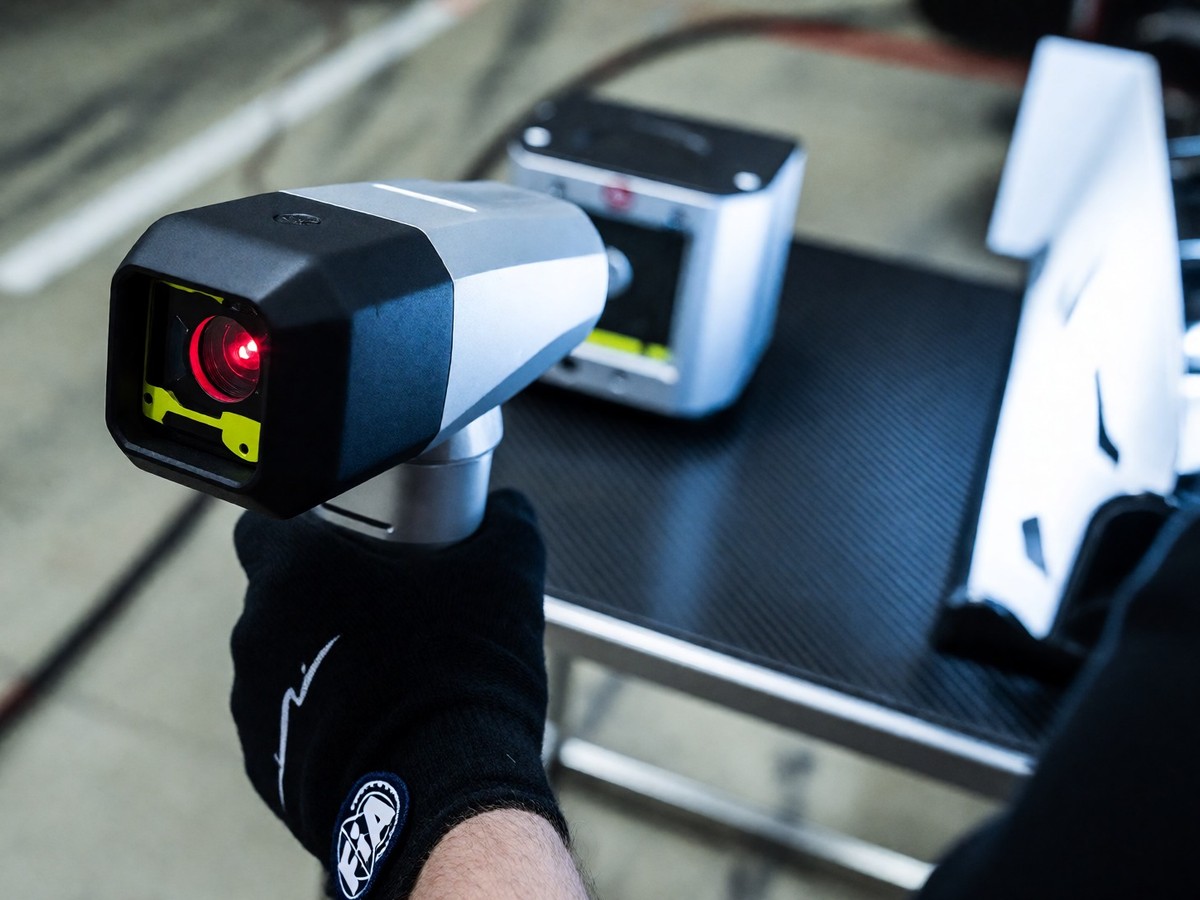
The FIA uses a new laser scanning system to check car geometry at every race weekend. This process includes a quick check of width and height and a more detailed scan of the whole surface. The technical delegate, Jo Bauer, uses a tracker to detect the position of a sensor held by a scrutineer. This system checks the physical car against a computer model of the CAD coordinates to make sure it satisfies all geometric constraints. The FIA uses these scans to catch teams that attempt to find advantages through illegal aero shapes or bodywork dimensions.
The FIA also performs checks on specific points to verify the car matches the official design. These scans are often random to encourage compliance among all teams. If a competitor has a concern or if a car is protested, the FIA selects a specific car for a detailed scan. The system uses the Leica Laser Tracker from Hexagon Manufacturing Intelligence to obtain the necessary data. This electronic scanning process replaces older methods because the aerodynamic regulations are now more complex.
The nimble car concept and chassis dimensions
The 2026 technical regulations change the physical dimensions and the weight of the Formula 1 cars. The FIA aims for a significantly lower weight limit and wants to reduce the weight by 40 to 50 kilos. This change supports the nimble car concept and addresses the issue of bulky cars. The car and driver must together weigh at least 724kg in 2026. The chassis must include a safety cell with a cockpit and a fuel cell. The car also has roll structures and a titanium halo to protect the driver.
The dimensions of the car are also smaller than previous years. The wheelbase is 3400mm, which is a reduction from the 3600mm maximum. The width is 1900mm, which is less than the previous 2000mm limit. The wheels are 16-inch rims with a smaller diameter and smaller width. These changes help the cars follow each other more closely and reduce dirty air.
| Specification | 2026 Limit | 2027 Limit |
|---|---|---|
| Compression Ratio | 16:1 | 16:1 |
| Minimum Weight | 724kg | 724kg |
| Maximum Width | 1900mm | 1900mm |
| Maximum Wheelbase | 3400mm | 3400mm |
| Electric Power | 470bhp | 470bhp |
| Race Distance | 305km | 290km |
Power units and the move to active aerodynamics
The 2026 power unit relies on a 50-50 split between combustion and electric power. The electric component delivers about 470bhp or 350kW. This increase in electrical power makes energy management a difficult task for drivers. The FIA uses different charging and discharge limits at different venues to control this. In Monaco, the FIA caps full electric deployment to stop cars from reaching 350kph in the tunnel. The FIA also uses manual override mode to help cars overtake. This mode gives the following car a speed advantage through an electronic boost.
The 2026 rules replace the Drag Reduction System with active aerodynamics. Both the front and rear wings can rotate between two positions. The wings stay in a closed corner mode to increase downforce for cornering. The wings move to a flat straight mode to reduce drag on the straights. This system aims to make overtaking a fight between drivers rather than a simple pass on the straight. You already know that F1 engineers find every possible way to bypass the rules.
| Component | 2026 Allocation | 2027 Allocation |
|---|---|---|
| ICE | 4 | 3 |
| Turbocharger | 4 | 3 |
| Exhaust | 4 | 3 |
| MGU-K | 3 | 2 |
| Energy Store | 3 | 2 |
| Control Electronics | 3 | 2 |
Driver dissatisfaction and energy management
The drivers have expressed significant criticism regarding the 2026 power unit regulations. Max Verstappen called the regulations Formula E on steroids during testing in Bahrain. Oscar Piastri questioned the use of self-learning elements and the behavior of computers during qualifying. The driver complaints about energy management and algorithms show that the current power unit regulations are a failure for the athletes. The FIA acknowledges that drivers are demanding clients and expected this feedback.
The difficulty with energy management comes from the limited capacity of the batteries. The balance between combustion and electric power is a major challenge. The FIA enforces gradual energy cut-offs on straights to avoid unnatural power drops. This creates an unpredictable environment for the drivers. The FIA attempted to make adjustments to these rules, but the governance structure prevented the approval of these changes.
The 2027 roadmap and regulatory changes
The FIA is planning further changes for the 2027 season to address current issues. The total race distance will drop from 305km to 290km to align with fuel flow changes. This reduction equals two or three laps. The FIA will also remove gearbox homologation in 2027 to allow for more supplier development freedom. The power split will move toward a 60-40 ratio between combustion and electric power in 2027 and 2028.
The FIA also wants to change how it handles races with rain or other disruptions. The three hour limit for a race from start to end will be removed. A hard stop time will be introduced for the end of racing activity instead. The two hour limit for actual racing stays the same. These changes aim to give spectators a better chance to see a full race.
| Regulatory Area | 2026 Status | 2027 Change |
|---|---|---|
| Race Distance | 305km | 290km |
| Power Split | 50:50 | 60:40 |
| Gearbox | Homologated | Removed |
| Race Time Limit | 3 hours | Hard stop time |
Championship battle and technical investigations
The 2026 championship features a tight battle at the top of the standings. Kimi Antonelli leads the championship with 320 points for Mercedes. George Russell is in second place with 236 points and Lewis Hamilton is third with 214 points. Max Verstappen is in sixth place with 188 points. The Mercedes engine has dominated much of the season, which leads to investigations.
The technical delegate, Jo Bauer, investigated Lewis Hamilton for an alleged infringement in Brazil. The investigation concerned the gap of the Drag Reduction System on the rear wing. A larger gap allows the car to produce a higher top speed. The FIA stewards adjourned the hearing to wait for more evidence. Mercedes also has to deal with engine penalties because Lewis Hamilton used a fifth engine this season.
| Position | Driver | Team | Points |
|---|---|---|---|
| 1 | Kimi Antonelli | Mercedes | 320 |
| 2 | George Russell | Mercedes | 236 |
| 3 | Lewis Hamilton | Ferrari | 214 |
| 4 | Charles Leclerc | Ferrari | 191 |
| 5 | Lando Norris | McLaren | 188 |
| 6 | Max Verstappen | Red Bull | 188 |
| 7 | Oscar Piastri | McLaren | 128 |
| 8 | Isack Hadjar | Red Bull | 96 |
| 9 | Liam Lawson | Racing Bulls | 65 |
| 10 | Pierre Gasly | Alpine | 41 |
Technical safety and chassis constraints
The F1 car must meet strict safety standards for impact and structural integrity. The car must survive a 30mph head-on impact into a steel barrier. The average deceleration cannot exceed 25g and the maximum deceleration cannot exceed 60g for 3 milliseconds. The chassis must have no damage beyond the nose section after this impact. The car must also survive a rear impact from a 30mph sled.
Side impacts are also heavily regulated to protect the driver. A 780kg object hitting the car at 10m/s must result in deceleration of less than 20g. The car must absorb between 15% and 35% of the total energy. The 80kN force cannot be exceeded for more than 3 milliseconds. The cockpit must survive 25kN of force with no failure. The fuel tank must survive 12.5kN of force and allow no more than 3mm of deformation.
| Test Type | Force/Speed | Limit/Requirement |
|---|---|---|
| Head-on Impact | 30mph | Max 25g avg / 60g max |
| Side Impact | 780kg at 10m/s | Max 20g deceleration |
| Side Impact Force | 80kN | Max 3ms duration |
| Cockpit Squeeze | 25kN | No failure |
| Fuel Tank Squeeze | 12.5kN | Max 3mm deformation |
| Nosebox Impact | 40kN | No failure for 30s |
The driver must be able to exit the cockpit by only removing the steering wheel. The steering wheel must survive an 8kg object hitting it at 7m/s without any deformation. The roll hoop cannot crush more than 50mm. Structural failure is only allowed in the top 100mm of the body. Will the manufacturers agree to the 60-40 power split for 2027?
| Event | Date |
|---|---|
| Singapore GP | 09-11 October |
| United States GP | 23-25 October |
| Mexico City GP | 30 October-01 November |
| Sao Paulo GP | 06-08 November |
| Las Vegas GP | 19-21 November |