Ferrari vs Red Bull: Navigating the FIA’s 2026 Enforcement Scrutiny
Ferrari faces behavioral scrutiny due to driver errors like Lewis Hamilton's penalties, while Red Bull contends with technical compliance investigations regarding engine compression ratios. These divergent challenges highlight the split between driver precision and engineering legality.

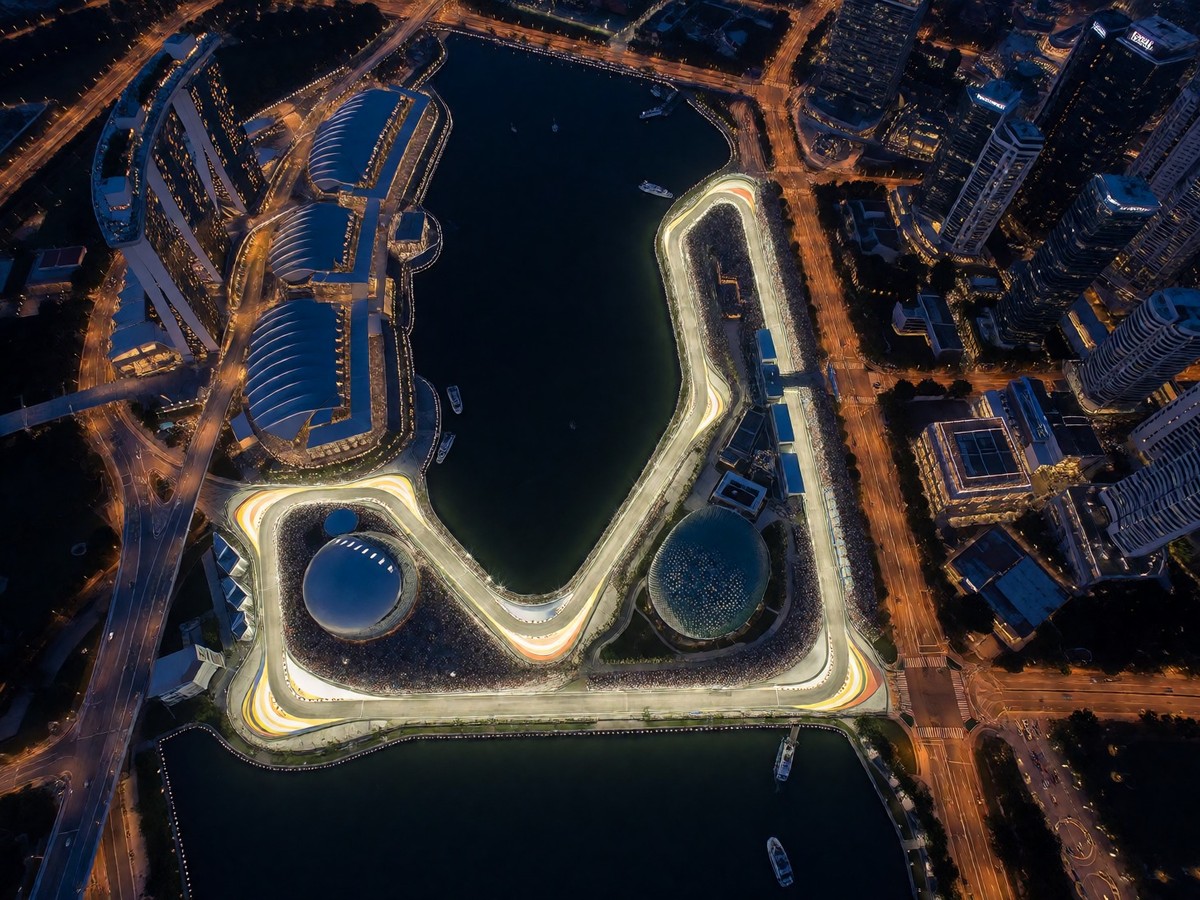
The 2026 Singapore Grand Prix takes place at the Marina Bay Street Circuit, a temporary venue where 19 tight and bumpy corners challenge every driver. This night race involves 62 laps of intense competition under high-power floodlights. Drivers face 50°C cockpit heat and 80% humidity as they fight for position. You might think the Singapore heat is the biggest challenge, but the FIA’s track limits enforcement is just as demanding for the teams.
The rules regarding track limits remain simple: the white line at the edge of the racing surface marks the limit. A driver only leaves the track when all four wheels are fully beyond that white line. Any part of a single tyre that remains on or over the line means the car is legal. Drivers push to this edge because a wider line through a corner increases speed. If they go beyond it and gain a time advantage, the stewards intervene.
The mechanics of track limit penalties
The FIA uses an escalating system of penalties to manage drivers who repeatedly leave the racing surface. The first two offences result in warnings. A third offence earns a black-and-white flag, which is the official final warning from the stewards. If a driver commits a fourth offence, they receive a 5-second time penalty. A fifth offence results in a 10-second penalty, but the tally then resets to allow a driver to commit another four offences before receiving another 5-second penalty.
In qualifying, the punishment is different. If a driver puts all four wheels off the track on a flying lap, the stewards delete that lap time. This can drop a driver several places on the grid. During a race, the stewards look for an advantage gained. For example, at the 2023 Austrian Grand Prix, the FIA had to review over 1,200 potential track limits violations. This led to 83 firm cases and forced the final classification to wait nearly five hours after the chequered flag.
| Offence Count | Penalty Type |
|---|---|
| 1-2 | Warning |
| 3 | Black-and-white flag |
| 4 | 5-second time penalty |
| 5 | 10-second penalty |
Ferrari and the driver error problem
Ferrari faces significant scrutiny regarding driver behavior and procedural errors. Lewis Hamilton, who is second in the championship, has struggled with a series of penalties throughout the 2026 season. In Hungary, he received a 3-place grid penalty for impeding Oscar Piastri and a separate penalty for speeding in the pit lane. His earlier 2026 troubles include a 5-second penalty in Monaco for exceeding the pit lane speed limit and a penalty at the Belgian Grand Prix after an opening-lap incident with George Russell. At Silverstone, he also dealt with a penalty for a false start.
These incidents suggest that Ferrari’s enforcement struggles are human and operational. Former technical director Gary Anderson noted that Hamilton must take more responsibility for these mistakes rather than blaming the team. The team must manage the driver’s ability to stay within the lines and follow strict procedures like pit lane speed limits. This type of error is difficult to engineer away because it depends on individual driver precision.
| Driver | 2026 Penalty Type | Race |
|---|---|---|
| Lewis Hamilton | 3-place grid penalty | Hungarian GP |
| Lewis Hamilton | Speeding in pit lane | Hungarian GP |
| Lewis Hamilton | 5-second penalty | Belgian GP |
| Lewis Hamilton | False start | Silverstone |
Red Bull and the technical compliance battle
Red Bull deals with a different kind of enforcement pressure from the FIA. The focus for Red Bull is on the technical legality of their power unit. The 2026 regulations use a 1,600cc V6 turbocharged engine that produces 1,000bhp. The FIA recently investigated a potential loophole regarding the compression ratio. While the regulations set the ratio at 16:1, reports suggest that both Mercedes and Red Bull found ways to achieve a higher ratio when running at higher temperatures.
This technical discrepancy could provide a benefit of up to 0.3 seconds over a single lap. The FIA is currently re-examining the results of the preliminary ADUO evaluation, which identified Red Bull Ford Powertrains as the benchmark engine manufacturer. This evaluation determines how many engine upgrades each manufacturer can introduce. Because Red Bull was classified as the strongest package, the FIA is reviewing the calculations to ensure they are correct. This pressure is technical rather than behavioral.
| Component | 2026 Specification |
|---|---|
| Engine Type | 1,600cc V6 turbocharged |
| Total Power | 1,000bhp |
| Fuel Type | 100% sustainable |
| Weight Limit | 768kg |
| Max Wheelbase | 3.4m |
Circuit design as a deterrent
The FIA is attempting to use track design to solve the track limits problem. At the Red Bull Ring, the FIA installed a 2.5m wide gravel strip behind the kerbs at the exits of Turns 9 and 10. This serves as a natural deterrent because running onto the gravel makes the car slower. At Turn 4, the FIA also moved the white line to make the distance to the gravel less than two metres. This prevents drivers from squeezing between the line and the gravel.
The FIA also added a blue line behind the red and white kerbs at the Red Bull Ring. This extra line helps marshals and the FIA Remote Control Centre identify when a black tyre is over the limit. In the past, a white line against a white kerb made it hard to prove if a tyre was off the track. The blue line provides more clarity for the stewards. Will these physical changes at the track eventually eliminate the need for hundreds of lap deletions?
Comparing the two team profiles
I find that Ferrari and Red Bull master the FIA’s enforcement in completely different ways. Ferrari deals with the immediate, human impact of the stewards’ decisions. Their penalties often come from driver mistakes, such as Hamilton’s pit lane speeding or track limit violations. These are issues of discipline and driver precision. Red Bull’s struggle is with the FIA’s technical auditors. Their challenges involve engine compression ratios and the ADUO evaluation system.
Red Bull’s issues are about engineering the car to the absolute edge of the written rules. Ferrari’s issues are about the driver’s ability to follow the rules on the track. Red Bull’s technical scrutiny is often about what is possible in a laboratory, while Ferrari’s scrutiny is about what happens in the cockpit. This difference defines how each team responds to the FIA.
The 2026 technical landscape
The 2026 cars are smaller and lighter than previous models. The maximum wheelbase is now 3.4m, and the floor width is 1.9m. The cars use active aerodynamics to manage drag and downforce. In X-mode, the flaps on the wings open to reduce drag on straights. In Z-mode, the flaps close to add downforce for cornering. This system replaces the old DRS and is controlled by the car’s aerodynamics.
The power unit also uses a sophisticated MGU-K system. The MGU-K is attached to the crankshaft and recovers energy from braking and engine idling. This energy is stored in a battery. Drivers use a "Boost" button to manually control energy deployment when they need to attack or defend. They also have an "Overtake Mode" that triggers if they are within one second of the car ahead. This mode provides a surge of electric power.
| System | Function |
|---|---|
| MGU-K | Recovers kinetic energy from braking |
| X-mode | Opens flaps to reduce drag |
| Z-mode | Closes flaps to increase downforce |
| Boost | Manual energy deployment |
Divergent enforcement challenges
The distinction between driver error and technical legality is clear. In the 2026 Formula 3 Feature Race at Spa, several drivers faced time penalties for track limits. Brando Badoer received 5 seconds for four offences, and Enzo Deligny received 5 seconds for five offences. These are behavioral penalties that mirror the issues Lewis Hamilton faces at Ferrari. These drivers lose positions because they cannot stay on the racing surface.
Red Bull’s challenges are more complex because they involve the engine’s internal combustion efficiency. The FIA is reviewing the Power Unit Advisor Committee proposals to address the compression ratio issue. This is a matter of technical compliance rather than a driver crossing a white line. While Ferrari must coach its drivers to avoid the stewards, Red Bull must coordinate with engineers to satisfy the FIA’s technical audits.
| Driver | Penalty | Session |
|---|---|---|
| Brando Badoer | 5-second penalty | F3 Spa Feature Race |
| Enzo Deligny | 5-second penalty | F3 Spa Feature Race |
| Kanato Le | 5-second penalty | F3 Spa Feature Race |
| Ricardo Escotto | Two 5-second penalties | F3 Spa Feature Race |
| Nicola Lacorte | Two 5-second penalties | F3 Spa Feature Race |
The Singapore Grand Prix weekend schedule for 2026 is as follows:
| Day | Session | Local Time (SGT) |
|---|---|---|
| Friday, 9 October | Practice 1 | 17:30 – 18:30 |
| Friday, 9 October | Sprint Qualifying | 20:30 – 21:14 |
| Saturday, 10 October | Sprint Race | 17:00 – 17:30 |
| Saturday, 10 October | Qualifying | 21:00 – 22:00 |
| Sunday, 11 October | Grand Prix | 20:00 – 22:00 |