Hydrogen technology and motorsport development
The Pioneer 25 race car demonstrates that hydrogen fuel cell technology can withstand extreme racing stresses, such as 17g landing forces. This success supports the FIA's goal to integrate hydrogen into future safety car programs and achieve Net Zero by 2030.

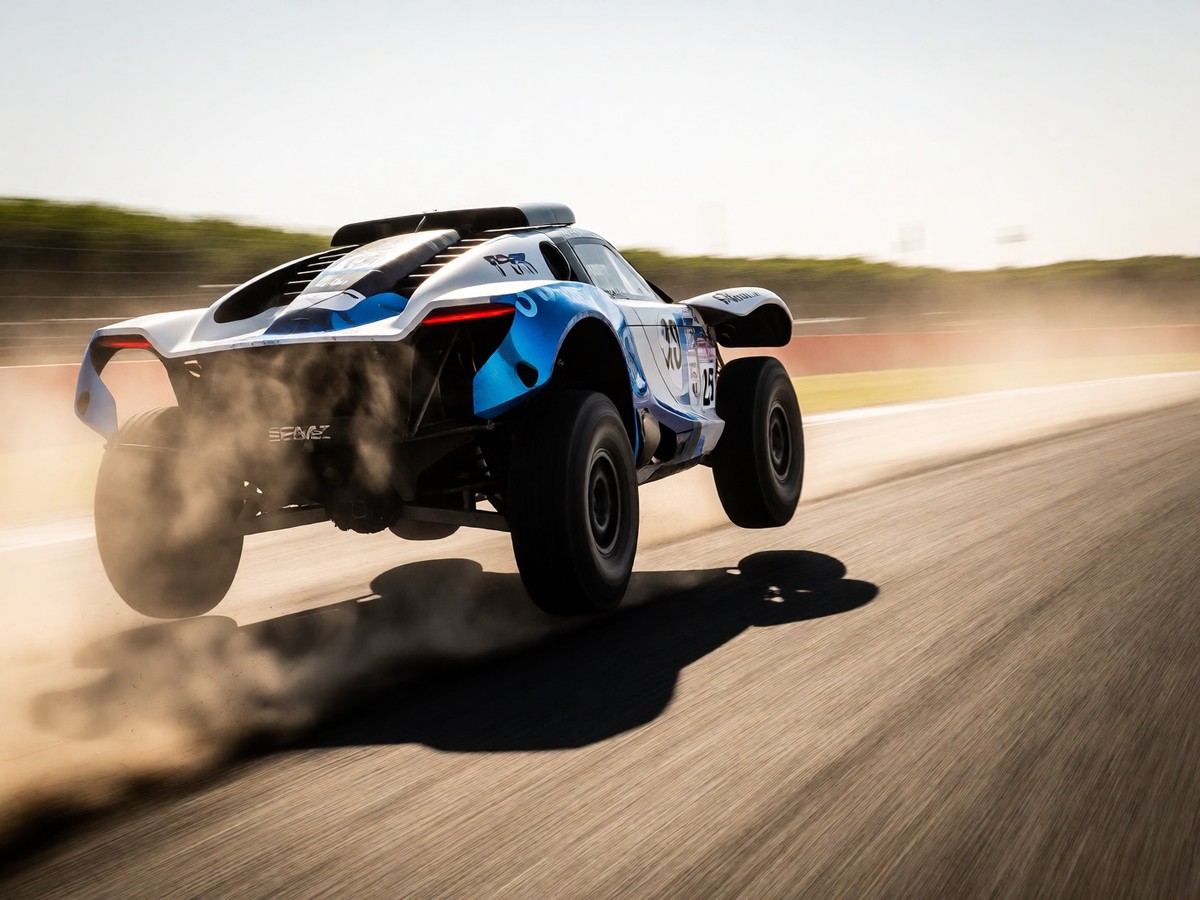
The FIA Extreme H World Cup proves that hydrogen fuel cell technology handles the extreme stresses of off-road racing. Mark Grain and Vincent Gaillardot led the technical development to ensure the Pioneer 25 race car remains safe during intense competition. The first-edition event in Qiddiya City, Saudi Arabia, showed that hydrogen technology works in punishing conditions. This success suggests a path for the FIA to integrate hydrogen into other racing categories, including safety car programs. Hydrogen technology provides a way to decarbonize mobility. The FIA moves toward sustainable fuels for safety and medical cars already, using 40% sustainable fuel in Formula 1. This transition supports the Net Zero by 2030 target. The FIA uses its platform to drive innovation for the wider automotive industry. Hydrogen technology provides a viable way to decarbonize mobility and is ready for the rigors of high-performance motorsport.
Extreme H and the Pioneer 25
The Pioneer 25 uses a hybrid configuration with an electric battery and a hydrogen fuel cell. Electric motors provide power bursts for acceleration, jumps, and regenerative braking. The fuel cell generates electricity from hydrogen gas to keep the battery charged. The exhaust produces only water. The 2,200kg vehicle hits 100kph in 4.5 seconds and manages gradients of up to 130 percent. The 2.4-meter-wide race car produces 400kw or 550hp. Eight vehicles raced through a desert course over six days. The fleet covered 550km without a single powertrain failure despite temperatures reaching 40C and dusty terrain. This performance followed 3,000km of testing before the cars reached the teams.
The racing environment demands high durability. The Pioneer 25 handles heavy loads and intense mechanical strain. The technical team developed the car to manage high-power energy bursts during jumps and acceleration. The fuel cell uses hydrogen gas to provide a steady flow of energy. This setup ensures the electric motors receive the power they need for racing. The configuration allows for fast refuelling in minutes. This capability is a significant advantage for racing teams that need to return to the track quickly.
Driver Development and Testing
Molly Taylor and Kevin Hansen provided feedback on the Pioneer 25 during testing in Fontjoncouse, France. Taylor noted the car possesses more potential for growth and feels confidence inspiring. She observed that the suspension provides more scope in rough conditions. She also noted the steam from the exhaust during hydrogen startup. Hansen described the Pioneer 25 as a more robust development from the Extreme E car and called it a proper race car. These drivers tested the vehicle’s performance and technical components. The testing program evaluated tyre developments and technical components to handle unique racing environments.
The driver feedback helps engineers refine the vehicle. Testing involves evaluating how the car reacts to different terrains and speeds. Taylor mentioned that sitting in the middle of the car felt natural. The drivers aim to push the limits of the hydrogen powertrain. This testing is essential to ensure the vehicle meets the demands of a racing series. The technical team uses these insights to optimize the final product.
Safety Homologation and Testing
FIA crash testing procedures forced the Pioneer 25 to meet stringent safety criteria for homologation. The process includes specific requirements for hydrogen vehicles, such as H2 detector sensors and a full failure mode and effects analysis. Engineers tested the survival cells against violent scenarios. The cars survived jumps that registered 17g upon landing. One driver experienced a rollover at speed without any safety issues. The average road car faces only 10% of the forces the Pioneer 25 encountered. The FIA Technical Department collaborates with the Safety Department to take the design into the real world through a series of physical tests that involve building a storage system with 20 kilograms of liquid H2 on board. These tests check the overpressure system and pipe integrity. Engineers also test what happens when they destroy the storage system or cause a full liquid H2 spill on the ground. Such tests ensure that pressure-control systems operate effectively under extreme conditions. The FIA aims to avoid leaks and potential jet fires through these rigorous procedures.
The testing ensures the safety of the drivers and the stability of the fuel system. The FIA develops new elements in Appendix J of the International Sporting Code to accommodate new technologies. These regulations ensure that every new category meets the same rigorous standards as existing motorsport classes. The safety of the hydrogen fuel cell is a priority for the FIA.
The Liquid Hydrogen Transition
The FIA moves from compressed gaseous hydrogen toward liquid hydrogen (LH2) to improve energy density. LH2 offers lighter storage requirements than gaseous hydrogen. The decision to switch happened in the winter of 2023. Liquid hydrogen requires vacuum jackets to prevent boil-off. Heat from the race car can cause pressure to build. The FIA works with the Ariane group to use expertise from the space industry for these challenges. The FIA Technical Department works with industrial companies like Air Products and FORVIA for tanks. This ecosystem helps manage the technical complexities of liquid hydrogen. Designing a hypercar with gaseous hydrogen presented problems because of the heavy, large tanks.
The management of liquid hydrogen requires precise temperature control. Boil-off must be carefully controlled to prevent over-pressure. The FIA is developing solutions to manage this pressure and avoid leaks. The goal is to create a reliable system for racing environments. This research involves studying how different materials react to extreme cold.
Refuelling and Infrastructure
Refuelling hydrogen tanks takes minutes. The FIA aims to reduce refuelling time to 40 seconds for future endurance racing. This requires a rate of one kilogram per second. Current heavy-duty truck stations in Germany refuel in ten minutes. The complexity of managing temperature and pressure makes fast refuelling difficult. Hydrogen technology remains expensive and lacks the widespread infrastructure found in electric vehicle networks. Most hydrogen currently comes from steam-reforming natural gas. You already know that racing tests technology for the road. Will the racing industry successfully bridge the gap between the laboratory and the consumer market?
The development of refuelling protocols is a primary task for the FIA. The FIA is working with TotalEnergies to handle the delivery of liquid hydrogen for future endurance racing. Existing refuelling methods are not suitable for the fast pace of a race. The FIA seeks to create a protocol that allows for rapid energy transfer. This is necessary to maintain the competitiveness of hydrogen-powered racing.
Comparative Efficiency and Range
Hydrogen fuel cell vehicles and battery electric vehicles offer different advantages. Hydrogen cars can travel between 400 and 600 miles on a single tank. Battery electric vehicles typically travel between 150 and 375 miles. Refuelling a hydrogen tank takes between 5 and 10 minutes. Charging a battery electric vehicle takes between 4 and 8 hours. Hydrogen fuel cells operate at about 60% efficiency. Battery electric vehicles utilize around 80% of total energy. Hydrogen technology lacks the advanced infrastructure found in electric vehicle networks.
| Feature | Pioneer 25 Specification |
|---|---|
| Vehicle Weight | 2,200 kg |
| Power Output | 400kw (550hp) |
| Acceleration (0-100kph) | 4.5 seconds |
| Max Gradient | 130% |
| Fuel Type | Hydrogen Fuel Cell |
| Exhaust Output | Water vapor |
The efficiency of the powertrain is a major point of study. Hydrogen systems convert chemical energy into electrical energy. This conversion process is less efficient than the direct use of electricity in battery electric vehicles. However, the range and refuelling speed provide distinct benefits for certain applications.
The Hydrogen Working Group
The Hydrogen Working Group brings F1, FIA, and Extreme H together. Pat Symonds represents F1. Nikolas Tombazis represents the FIA. Mark Grain represents Extreme H. The group evaluates how hydrogen and battery systems work in motorsport. They focus on increasing sustainability for transport and infrastructure. Symonds notes that hydrogen fuel cells generate significant heat. This requires larger radiators than current systems. The FIA continues to develop new safety standards for liquid hydrogen.
The collaboration allows for the sharing of expertise across different racing disciplines. Manufacturers like Toyota and BMW are interested in this technology. Ferrari investigates hydrogen for internal combustion engines. The FIA Technical Department will bring sporting, safety, and regulatory expertise to the group. This work aims to provide lessons for the wider automotive industry.